Whether you are picking up a squash racket for the first time or you have been playing for years, having the proper equipment can make a real difference in your game. The right gear can add power to your shots, improve your control, help your footwork, and keep you safe from injuries.

In this article we break down the key equipment categories, rackets, balls, shoes, eyewear, and accessories, and explain how the right choice in each can help your play. We also offer practical tips and product suggestions for beginners, intermediate players, and advanced squash fans.

Squash Rackets: Power and Control in Your Hands
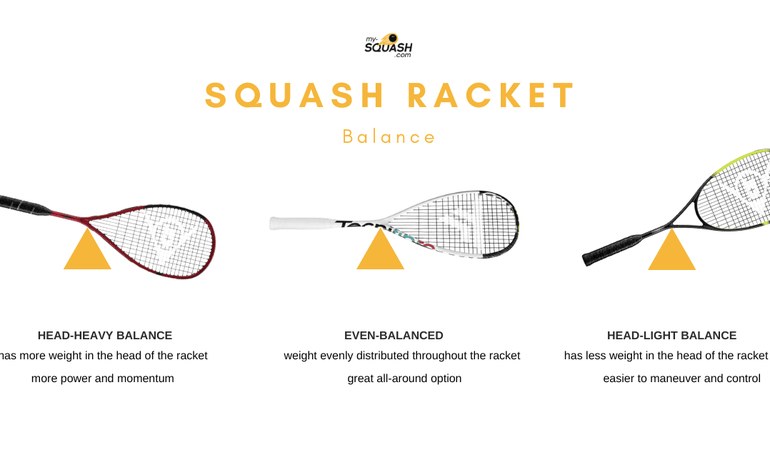
Image coming soon

Your squash racket is arguably your most important piece of equipment, an extension of your arm on the court. The racket you choose influences your power, control, and overall shot consistency. Weight, balance, head shape, and string tension all play a role in how a racket feels and performs.

Within the rules set by the World Squash Federation, a racket can be up to 686mm (27in) long with a maximum strung head area of 500 sq cm, and most modern frames weigh roughly 110 to 145 grams unstrung. As you progress from beginner to advanced, your needs will change, so here is what to consider at each stage.

Beginners

When starting out, opt for a racket that is forgiving and easy to use. Many beginner rackets have a teardrop-shaped head (open throat) which provides a larger sweet spot and more inherent power on off-center hits. A lighter frame (around 115 to 135 grams) with a larger head size helps with control and reduces mishits.

These features help you hit cleaner shots and build confidence as you learn. You do not need to spend a fortune, as there are good quality starter rackets for around $50 that will last you until your skills improve. Look for graphite or composite frames, and avoid the very cheap aluminium rackets, which tend to be heavy and hard to use.

Intermediate Players

As your technique and strength improve, you may want a racket that offers a better balance of power and control. Intermediate rackets are often mid-weight (roughly 135 to 155 grams) and may have a slightly smaller or mid-plus head size for more precision. This weight range gives you enough mass to hit powerful shots while staying agile for volleying and quick exchanges.

Many players at this stage start gravitating toward rackets with more advanced frame technology, such as graphite composites and dampening systems, to improve feel. Lines like the Tecnifibre Carboflex and the Dunlop Sonic Core series are popular intermediate choices. Expect to spend a bit more, perhaps $100 to $150, for a good intermediate frame that can carry you into club play.

Advanced Players

At the top levels, players tend to have very personal preferences, but generally they opt for high-performance rackets that maximise precision and swing speed. Advanced rackets may be lighter (around 120 grams) for fast manoeuvrability, or heavier with a head-light balance to pack a punch when swung hard. It depends on the player's style.

These rackets often have smaller head sizes and stiff frames to allow skilled players to place the ball accurately. Established high-end lines include the Tecnifibre Carboflex, the Dunlop Hyperfibre and Precision ranges, and the Head Radical and Speed models. They do not come cheap, often over $150, but they are built with advanced materials for performance. At this level it comes down to what feels right in your hands and complements your playing style, so advanced players often try several rackets before choosing one.

No matter your level, the racket is there to support your technique. A beginner benefits from a racket that adds some easy power and forgiveness, whereas an advanced player may seek sharper control. As your game develops, do not be afraid to upgrade or restring your racket to match your growing skills.

Squash Balls: Finding the Right Bounce
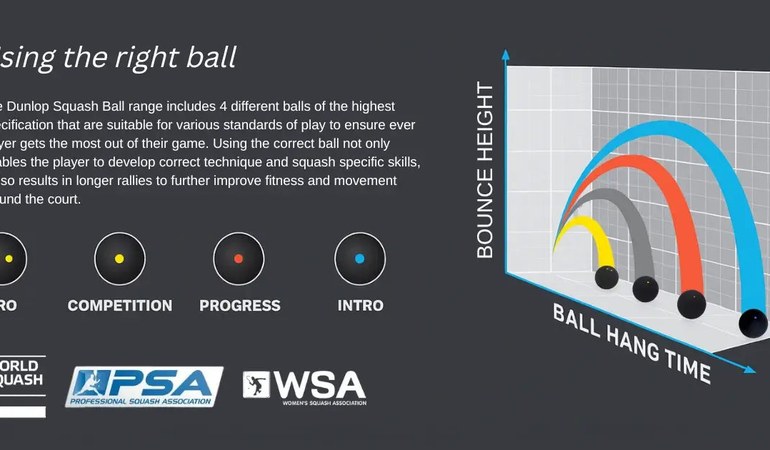
Image coming soon

Squash balls may all look similar, small and black, but they come in different types tailored to skill levels and playing conditions. Using the correct ball for your ability makes your games more enjoyable.

The key difference between balls is their bounce, how lively or fast they are, indicated by a coloured dot. A ball with more bounce gives you longer rallies since it stays in play more easily, while a slower ball that barely bounces will die quickly unless struck hard, making it more challenging. All standard balls share a diameter of about 40mm, and here is how the colours break down using the Dunlop system as a reference.

Dot colourLevelBounceBest for
Blue DotIntroHighest (bounciest)Beginners and young juniors who need extra reaction time and longer rallies. Slightly larger and very lively, so it needs little warming up.
Red DotProgressA step down from blueImproving recreational players. Adds challenge as skills advance, but is still easier than competition balls. A common choice for casual club players who find the double yellow too unresponsive.
Single Yellow DotCompetitionMedium-lowIntermediate players, cooler court conditions, or advanced players practising on a cold court. Rewards harder hits with more bounce but will not fly too high.
Double Yellow DotProLowestThe official tournament ball for advanced and professional players. Hardly bounces when cold and needs a thorough warm-up. Offers the most challenge and control for strong hitters, but can feel dead to less experienced players.

Selecting a ball suited to your level will help you develop. If a beginner used a double yellow dot ball, rallies would be frustratingly short since the ball would not bounce enough for a second shot. That is why manufacturers created these progression balls, to ensure you spend more time hitting and less time picking up a dead ball.

Squash balls are unusual in sport: at room temperature a pro-grade ball barely bounces, but once warmed up from hitting it can bounce well over twice as high as when cold. So as you improve and move to balls with less bounce, remember a good warm-up. Using the right ball for your skill, and keeping it warm during play, will give you better rallies and a more competitive game.

Squash Shoes: Move Better and Stay Safe
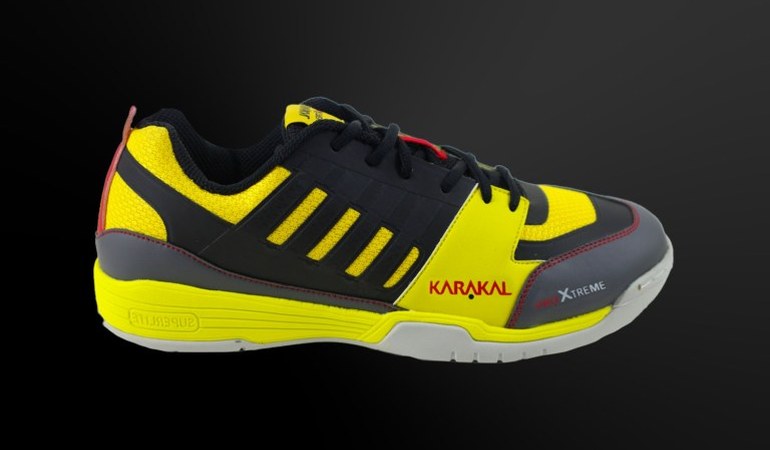
Image coming soon

If you have ever tried to play squash in running shoes, you probably felt like you were on an ice rink. Proper squash footwear is important for quick movement, stability, and injury prevention. Squash involves many sudden stops, starts, and lunges, so you need shoes that grip the floor and support your feet and ankles.

The right shoes give you the confidence to chase down shots without slipping, and they cushion your joints from high-impact movements. Good indoor court shoes can improve your on-court performance by providing the traction, support, and stability needed for fast directional changes. They also help protect you from common injuries such as rolled ankles or strained arches by keeping your footing secure.

What should you look for in a squash shoe? Key features include:

  • Non-marking gum rubber soles, which are standard for any indoor court shoe and give you grip on the court floor.
  • Cushioning and lateral support, since squash is hard on the feet, so a shock-absorbing midsole and a snug fit around the heel and ankle help a lot.
  • Breathability, as your feet get hot, and many shoes have mesh panels to keep them cooler.
  • Weight, since a lighter shoe can make you feel faster, but you do not want to sacrifice too much support.

The good news is you do not have to spend a lot for a decent pair, and there are options around $50 that work well for new players.

Beginners

If you are just starting, any indoor court shoe is better than running shoes or casual sneakers. Look for a basic pair with good grip and some cushioning. Models like the ASICS Gel-Rocket and the Head Grid are frequently recommended as solid entry-level court shoes, usually costing around $50 to $70.

They check the key boxes: non-marking sole, decent padding, and enough stability to get you going. As a beginner, focus on comfort and support, since you want shoes that feel secure when you plant your feet, helping keep you safe during your first months of play.

Intermediate and Advanced

As you move faster and play more competitively, a higher-end shoe can pay off. More advanced squash shoes often have better stability features to protect the ankles during aggressive cuts, enhanced cushioning for repeated hard lunges, and lighter materials for speed. Brands like ASICS, Adidas, Head, Salming, and Eye Rackets all make good squash shoes across price ranges.

Many competitive players favour lines from these brands for being lightweight and grippy, and top-tier options such as the Salming Kobra and Viper series are popular with players who push their movement hard. These tend to run over $100 but offer strong grip and agility.

Choose a shoe that fits your foot well, snug but not painfully tight, and suits your style. An explosive player may prioritise extra support and cushion, while an ultra-fast retriever may want the lightest shoe that still provides stability. Replace your shoes periodically, every 6 to 12 months if you play a lot, because worn soles lose grip and worn cushioning loses its protective effect. With the right pair you can stop quickly, change direction, and sprint to the next shot with confidence.

Protective Eyewear: Do Not Skip Eye Safety
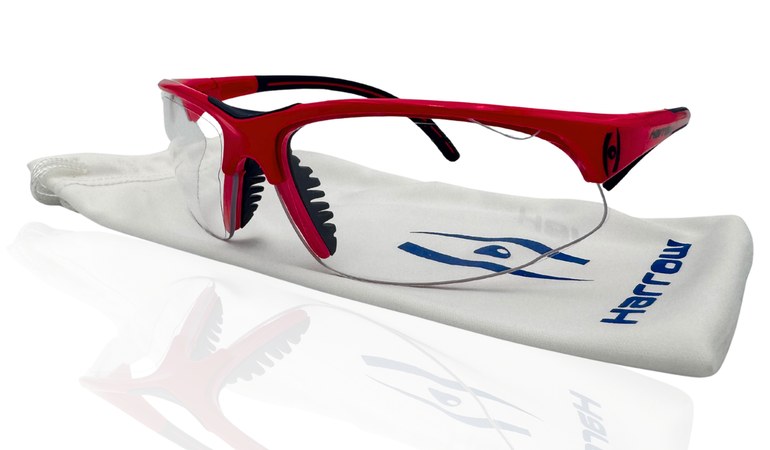
Image coming soon

Squash is a very fast sport, and the ball can act like a rubber bullet at high speeds. That is why protective eyewear matters. A squash ball, or a swinging racket, to the eye can cause severe injuries, and it can happen in a split second, even among friends playing casually.

The governing bodies and the World Squash Federation recommend mandatory eyewear for juniors and their coaches, and junior eyewear is required in many sanctioned competitions. Even as an adult it is wise to protect your eyes on court. Modern squash goggles are lightweight and designed not to interfere with your vision. A good pair of safety glasses can save you a hospital trip, and they are not expensive, with quality anti-fog squash goggles available for around $15 to $25.

Wearing eyewear may feel odd at first if you are not used to it, but you quickly forget it is there. Knowing your eyes are safe lets you play without hesitation and without flinching when your opponent is about to hit hard.

When choosing goggles, look for an anti-fog coating or vented design so they do not steam up during play. Reputable brands like Dunlop, Tecnifibre, Prince, and Head offer squash-specific eyewear. Quality squash goggles use shatterproof polycarbonate lenses and adjustable straps for a snug fit, and the recognised performance standard to look for is ASTM F803, which certifies the eyewear has been impact-tested for racket sports.

If you already wear prescription glasses, you can find covers that fit over them, or get prescription squash goggles made. Wear your eye protection, especially in doubles or any time the ball is flying around unpredictably.

Optional Accessories: Grips, Strings, Bags, and More
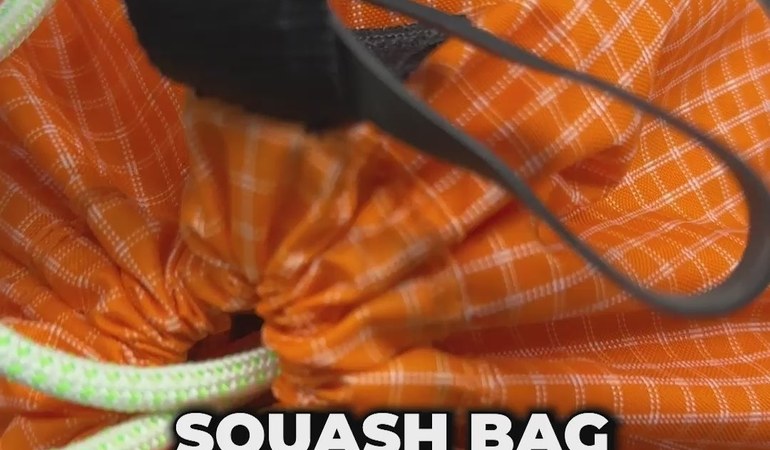
Image coming soon

Beyond the big-ticket items, several smaller pieces of gear can improve your squash experience. These accessories may not win you points directly, but they contribute to your comfort, consistency, and convenience, which helps your performance over time. Here are a few key extras and how they help players at different levels.

Grips

The grip on your racket handle is something you hold every second you play, so it needs to feel right. Over time, factory grips wear out or get slippery from sweat. Replacing or overwrapping your grip can immediately improve control and prevent the racket from twisting in your hand on hard shots. A fresh, tacky grip lets you relax your hand while keeping a secure hold, which can improve your touch and reduce fatigue.

Beginners can stick with the stock grip at first, but should re-grip once it gets worn, too slippery, or too thin. A replacement grip, meant to fully replace the old one, is usually best for squash rackets. One popular choice is the Karakal PU Super Grip, known for its tacky feel and comfort and available in many colours. Other grips emphasise different features, with some extra tacky, some more absorbent for sweat, and some cushioned to reduce vibration.

Intermediate and advanced players often have personal preferences here. Some prefer a very thin grip to feel the bevels of the handle for precision, while others layer two grips for a thicker, softer handle. The key is to re-grip periodically. If you notice yourself tightening your hold or the racket slipping, it is probably time for a new grip. At a few dollars each, grips are a cheap way to keep your connection to the racket solid.

Strings and Tension

The strings are the real contact point with the ball, and their quality and tension can affect performance significantly. For beginners this is not something to worry about much at first, since the factory strings in a new racket are usually fine to start. As you improve, or if you break a string, it is worth learning about your options.

The two big factors are string type and string tension:

  • Lower tension (looser strings) gives more bounce, or trampoline effect, increasing the sweet spot and making it easier to generate power, which helps beginners and casual players.
  • Higher tension (a tighter string bed) provides more control and a crisper feel when you hit the sweet spot consistently, but it reduces power for those still developing technique.

Advanced players benefit from higher tension because they have the skill to use it, gaining precision while supplying their own power, whereas a beginner using very high tension would likely lose power and break strings more often on mishits. Squash tensions generally sit between about 20 and 30 lb. As a guide:

  • Intermediate players tend to settle around 24 to 26 lb for a blend of control and pop.
  • Advanced players often go higher, around 26 to 30 lb, for maximum control, accepting more potential string breakage.

String type also matters. Multifilament strings, such as the widely used Tecnifibre 305, provide a good mix of power, spin, and a softer feel, which makes them popular among high-level players. They tend to offer good touch and feedback, helping with precision on drops and adding bite on the ball for spin. Premium strings are more expensive and can wear out faster, so they are usually an investment for serious intermediate and advanced players.

Recreational players often choose more durable synthetic gut strings or thicker gauges that last longer and cost less. These may sacrifice a little of the finest feel, but they are perfectly adequate for most club play and save you frequent restrings. Whichever string you use, keep an eye and ear on it. If the strings start feeling lifeless or you notice fraying, it may be time for a restring. Fresh strings at the right tension can revive a racket's performance. Advanced players might restring every month or two, while casual players may go a year or more, but do not let very old strings hold back your game.

Bags

Once you have accumulated rackets, shoes, balls, and goggles, you will need a way to carry it all, and a good squash bag helps. For a beginner, a simple gym bag or the basic cover that comes with a racket may do the trick. As you play more, you will appreciate a bag designed for racket sports.

Squash bags come in various sizes, often described by how many rackets they hold, such as 3, 6, 9, or 12. Even if you only have one racket now, a larger bag gives you room for shoes, a change of clothes, a water bottle, and other bits. Many players choose a 6-racket bag as a good medium size, often with two or three compartments so you can keep wet clothes and shoes separate from your rackets.

Separating your gear is not just about odour, it also helps protect your racket and strings, since storing your racket away from damp, sweaty gear extends string life as moisture can weaken them. Most quality racket bags are padded to some degree, shielding the racket from bumps. Consider a bag with backpack-style shoulder straps, which makes carrying everything much easier, especially if you bike or walk to the courts.

There are also squash backpacks, smaller than full gear bags, that hold a racket or two in a special sleeve plus a few other items, which suit beginners or anyone travelling light. Big brands like Dunlop, Tecnifibre, and Head make bags to match their rackets, but any bag with the right features and size will do. A good bag keeps you organised and your equipment in better shape.

Other Handy Gear

A few more accessories can make a difference:

  • Sweatbands for your wrist or head help keep sweat out of your eyes and off your grip, especially in hot courts.
  • A small towel kept courtside lets you dry off between games, since a dry grip and face help you focus.
  • Vibration dampeners, the small rubber inserts for racket strings, are not common in squash but a few players use them to reduce string buzz slightly.
  • Lace locks can help if your laces come undone during play.
  • A large water bottle, as hydration is key to playing your best.

As you get more serious, you might carry spare strings or a small first-aid kit with blister pads in your bag. These extras seem small, but together they ensure you are comfortable and prepared every time you step on court.

Having the right equipment for your level makes a real difference. A beginner who chooses a forgiving racket and a bouncier ball will improve faster and enjoy the game more. An intermediate player who upgrades their shoes and racket will notice gains in confidence and capability. An advanced competitor who fine-tunes strings and gear will find the marginal gains that matter in tournament play.

Across all levels, staying safe with proper footwear and eyewear means you can keep playing without interruptions. Invest in equipment that matches your needs, and squash becomes even more rewarding as your game develops.