
Coaches shape players from raw talent into world champions. Below is a list of some of the most influential squash coaches in the world, spanning historic figures and today's top trainers.
For each one we cover their notable achievements, the players they coached, and their contributions to the sport. The list includes coaches of professional stars, junior prodigies, and pioneers in player development.
Historic Pioneer Coaches
Jonah Barrington (Ireland/England)
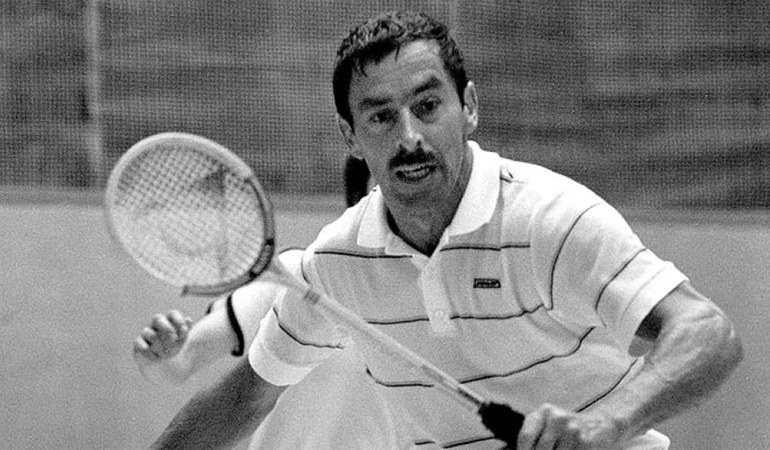
Often called a father of modern squash training, Jonah Barrington moved from a champion playing career in the 1960s to an influential role as a coach and mentor. After winning six British Open titles as a player, Barrington became England's national Director of Coaching, where he helped develop young talent.
He emphasised rigorous fitness and mental toughness, setting new training standards for the sport. He organised coaching roadshows across the British Isles and helped build a national team structure. His contributions as a coach and administrator earned him a place in the World Squash Hall of Fame.
Mohamed "Dardir" El-Bakary (Egypt/New Zealand)
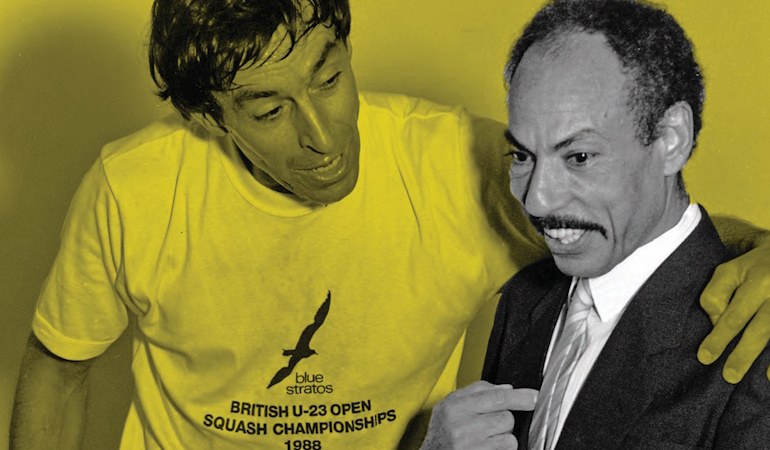
Mohamed Dardir Ali El-Bakary, known simply as Dardir, is regarded by many who worked with him as one of the finest squash coaches the game has known. An Egyptian who had ranked among the world's best as a player, Dardir moved to New Zealand in 1967 to become the country's first full-time professional coach.
Over the following decades he had a profound effect on New Zealand squash, teaching attacking tactics such as the drop shot and precise corner drives that were new to Kiwi players. He influenced a generation of champions, including Ross Norman and Susan Devoy, who both went on to win world titles. His coaching dramatically improved New Zealand's international results, and his influence lives on in the nation's playing style.
Rehmat Khan (Pakistan)
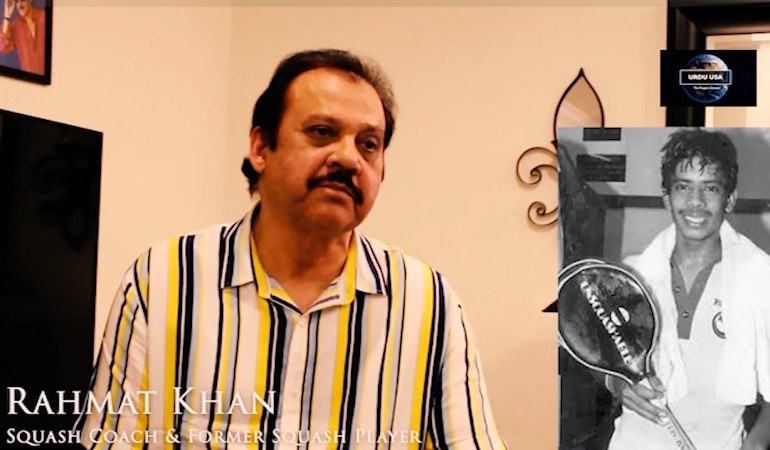
Rehmat Khan, also written Rahmat Khan, is best known as the personal coach of Jahangir Khan. A cousin of Jahangir, Rehmat took charge of his coaching after the death of Jahangir's brother Torsam in 1979 and guided the Pakistani star through most of his career.
Under Rehmat's tutelage, Jahangir won 10 British Open titles and 6 World Open titles, including a run of 555 consecutive match wins from 1981 to 1986, recognised as the longest winning streak in top-level professional sport. The training regime was famously demanding, with sessions lasting many hours a day.
Rehmat later served as national coach of Pakistan and Kuwait and also worked with Canada's Jonathon Power, but his work with Jahangir stands as his defining achievement.
Influential Coaches of the Late 20th Century
Malcolm Willstrop (England)
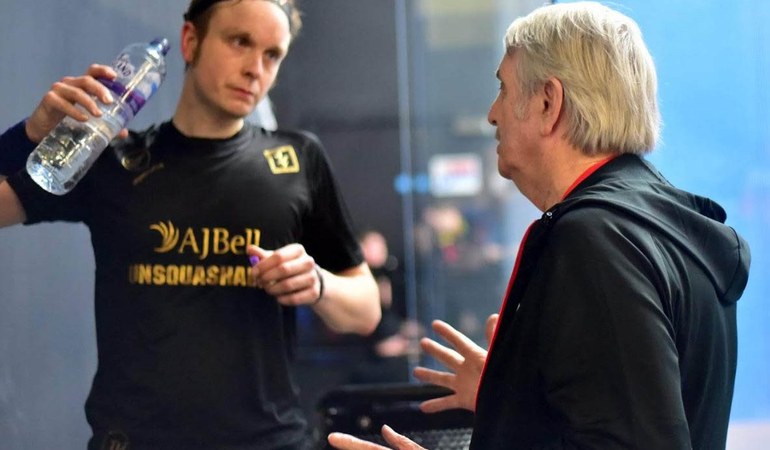
The late Malcolm Willstrop was an English coach known for developing world-class players over a career spanning more than five decades. Based at Pontefract Squash Club, he made it one of the most famous squash clubs in the world.
He worked with England's junior and senior squads and coached multiple players who reached World No.1, including his son James Willstrop, Lee Beachill, and the Netherlands' Vanessa Atkinson, as well as Cassie Jackman, a former World Champion. He also coached India's Saurav Ghosal for several years.
He emphasised discipline, tactical understanding, and a love for the game, and was widely respected across the squash community.
Neil Harvey (England)
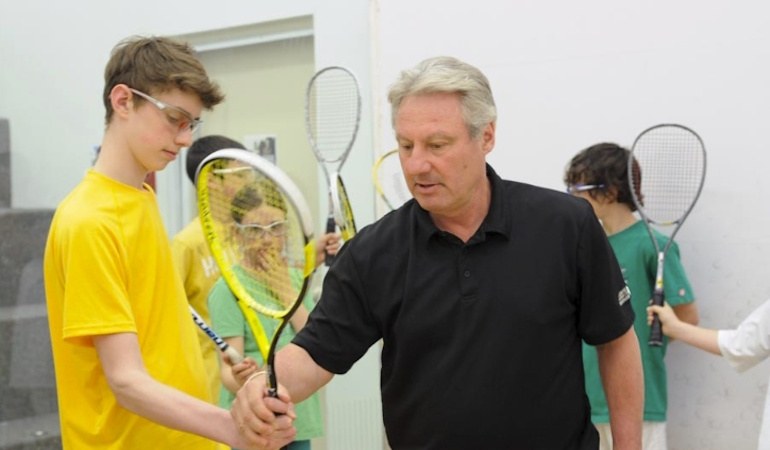
Neil Harvey is an English coach known for guiding leading professionals in the 1990s and 2000s. He is most often associated with Peter Nicol, whom he began coaching in 1992 and guided to World No.1 and a World Open title over the next decade.
Harvey also served as an England national team coach and worked with Malaysia's Ong Beng Hee, who moved to England to train with him in 1997. Known for his focus on technique, he stressed precision and consistency. He later concentrated on coaching clinics and junior development.
Elite Coaches of the 2000s Era
David Pearson (England)

David Pearson is one of England's most accomplished squash coaches, having worked with multiple World Champions. A former England national coach for about 15 years, he led the men's and women's squads to numerous Commonwealth Games and World Championship titles.
He coached Nick Matthew to three World Open titles and the World No.1 ranking, and guided Laura Massaro to the 2014 World Championship and World No.1. He also worked with Jenny Duncalf and Peter Nicol.
Pearson is known for his detailed technical work, including adjusting Matthew's swing and grip to counter Ramy Ashour, and for developing complete players. His record earned him Coach of the Year recognition.
Liz Irving (Australia)
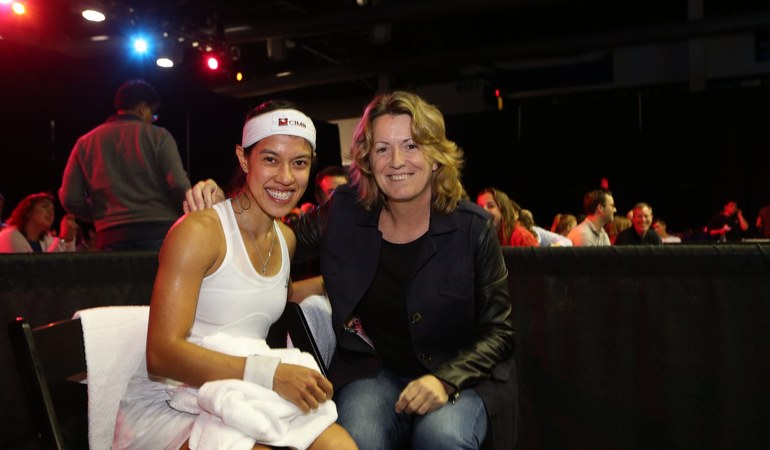
Liz Irving turned her career as a former World No.2 player into an influential coaching role. An Australian based in Amsterdam, she is best known for coaching Malaysia's Nicol David, the eight-time World Champion, for more than a decade, a period that included an extended reign at World No.1.
Irving also coached Vanessa Atkinson, a Dutch former World Champion, along with Samantha Teran and Aisling Blake. She runs a high-performance academy in the Netherlands and is known for blending disciplined training with a focus on mental confidence. Her contribution to women's squash is significant, having shaped one of the greatest female players the game has seen.
Amir Wagih (Egypt)
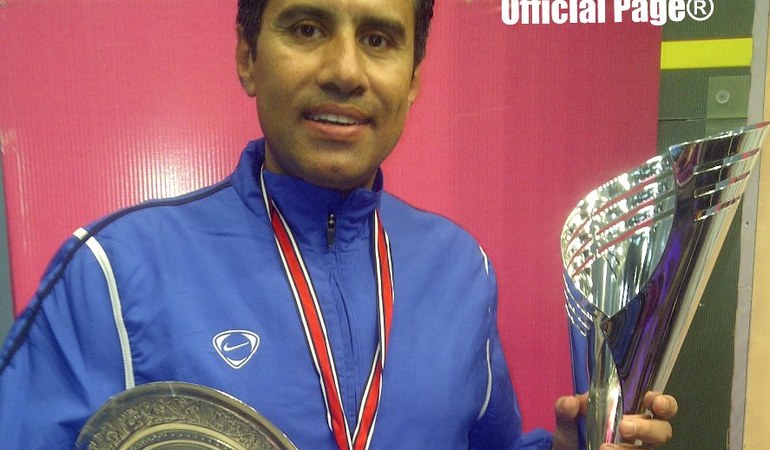
Amir Wagih was a driving force behind Egypt's rise in squash. He served as head coach of the Egyptian Squash Federation, including a long spell through the 2000s, and helped develop a strong generation of Egyptian players.
He led Egypt's squads to international success, including multiple world titles, and was known for his work with juniors. His coaching record includes world champions such as Ramy Ashour and Raneem El Weleily.
As Egypt's head coach, he was confident in his players' potential: in 2012 he predicted that the teenage Nour El Sherbini would reach World No.1 within three years, which she went on to do. His ability to develop young talent and promote an attacking Egyptian style left a lasting mark on the sport.
Contemporary Coaching Leaders
Paul Assaiante (United States)
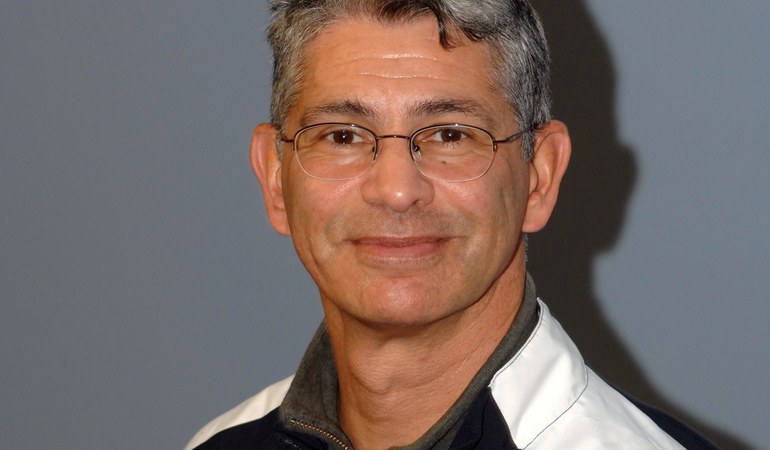
Paul Assaiante built one of the most successful records in U.S. squash. As the long-time coach of Trinity College men's squash in Hartford, Connecticut, he guided the Bantams to 13 consecutive College Squash Association national titles from 1999 to 2011, part of a 252-match unbeaten streak that is the longest in intercollegiate varsity sports.
In total his teams won 17 national titles during his tenure. He also served as U.S. National Team coach, leading the men's team to a best-ever sixth-place finish at the 2011 World Team Championships. Assaiante is known for motivating and uniting players from many countries, and for a focus on both athletic excellence and personal growth.
Mike Way (Canada)
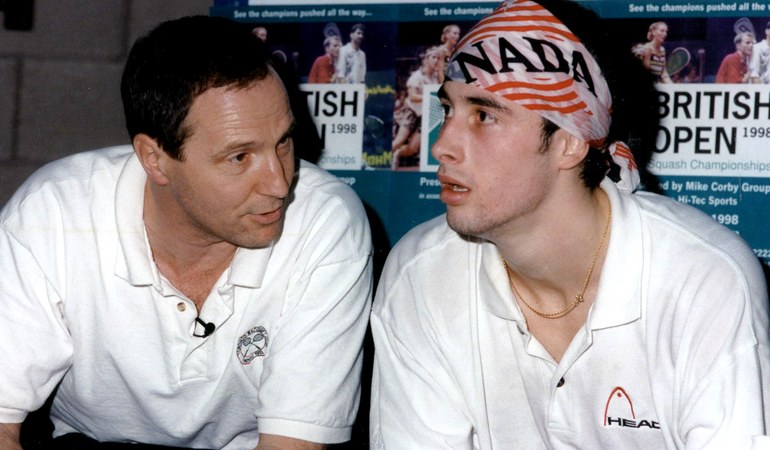
Mike Way is a Canadian coach known for producing champions and raising the level of squash in North America. After starting his career in England, he moved to Canada and helped found the national training centre in the 1990s, where he developed a group of Canadian juniors and coached Jonathon Power, who became world champion in 1998. He also guided Graham Ryding to Canadian national titles.
In 2010 he became head coach at Harvard University, where he has led the squash teams to numerous U.S. collegiate titles and coached individual national champions including Amanda Sobhy and Gina Kennedy. His focus on fundamentals, depth of shot, and mental preparation has shaped players from juniors to elites.
Rodney Martin (Australia)
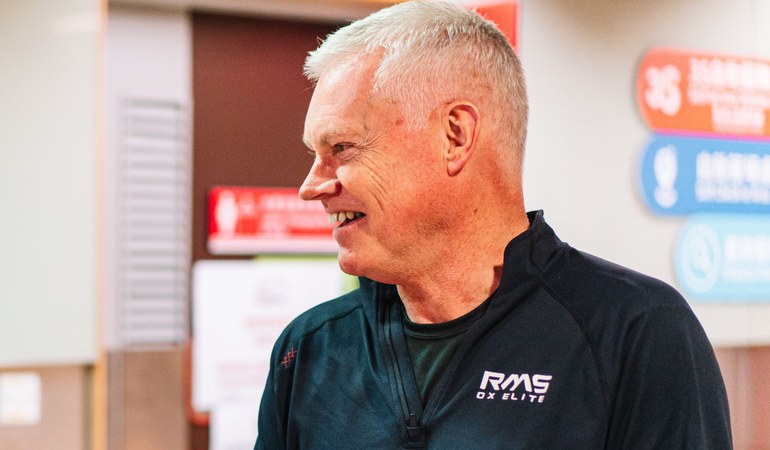
Rodney Martin, the 1991 World Open champion, became a respected coach known for technical detail. He coached at the Australian Institute of Sport from 1996 to 2010, where he rose to head the high-performance academy.
He coached Australia to the Men's World Team Championship in 2002 and developed many Australian players of that era, including his sister Michelle Martin, a former World No.1 and multiple World Champion, along with Stewart Boswell, Anthony Ricketts, and Dan Jenson.
After moving to the United States, he set up his own academy and worked with a new group of players, including Egypt's Mohamed ElShorbagy, a future World No.1, as well as Ryan Cuskelly and Abdulla Al-Tamimi. His coaching emphasises tactics and stroke mechanics, drawing on the same approach that helped him beat Jahangir Khan as a player.
Hesham El Attar (Egypt/USA)
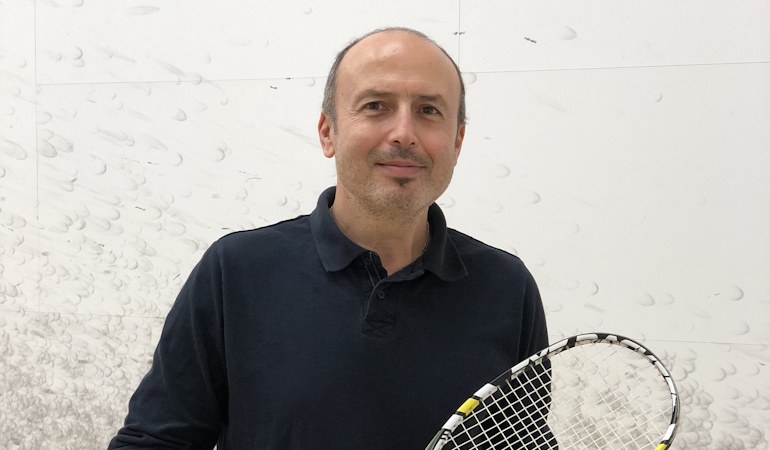
Hesham El Attar is an Egyptian coach whose work with both elite champions and young players has drawn high praise. He was a formative coach for several Egyptian players in their youth, including Karim Darwish, a former World No.1, and Karim Abdel Gawad, the 2016 World Champion.
Darwish has called him one of the greatest squash coaches of all time after years under his guidance, and Ramy Ashour described him as one of the best coaches he has worked with, citing his mental approach and skill development.
El Attar's style focuses on strong fundamentals, strategy, and mental toughness for both established professionals and juniors. Now based in the United States running a squash academy, he continues to develop top U.S. juniors while still mentoring professionals.
Summary of Notable Coaches
The table below summarises these coaches with their home countries, key players coached, major accomplishments, and main coaching focus.
| Coach | Country | Key players | Major accomplishments | Coaching focus |
|---|---|---|---|---|
| Jonah Barrington | Ireland (born) / UK | Irish and UK junior players | Six-time British Open champion as a player; England national Director of Coaching; developed modern training methods | Pioneer of modern squash fitness and training; set new training standards |
| Mohamed "Dardir" El-Bakary | Egypt / New Zealand | Ross Norman, Susan Devoy | First full-time New Zealand professional coach (1967); influenced two future World Champions in Norman and Devoy | National development in New Zealand; introduced attacking Egyptian tactics |
| Rehmat Khan | Pakistan | Jahangir Khan, Jonathon Power | Personal coach to Jahangir Khan through 10 British Opens and 6 World Opens, and his 555-match unbeaten run; later national coach of Pakistan and Kuwait | Elite professional coaching; trained the most dominant player in squash history |
| Malcolm Willstrop | England | James Willstrop, Lee Beachill, Vanessa Atkinson, Cassie Jackman, Saurav Ghosal | Coached multiple World No.1 players; made Pontefract a world-renowned squash club | All levels from juniors to professionals; produced champions over decades |
| Neil Harvey | England | Peter Nicol, Ong Beng Hee | Guided Peter Nicol to World No.1 and a World Open title; England national team coach in the 1990s | Professional elite coaching; technical and tactical work for top players |
| David Pearson | England | Nick Matthew, Laura Massaro, Jenny Duncalf, Peter Nicol | Coached World Champions Nick Matthew and Laura Massaro; former England national coach; Coach of the Year recognition | Elite professional coaching; strategic adjustments and long-term player development |
| Liz Irving | Australia | Nicol David, Vanessa Atkinson, Samantha Teran, Aisling Blake | Coached Nicol David, an eight-time World Champion, for over a decade; also coached World No.1 Vanessa Atkinson | Elite women's coaching; runs an academy in Amsterdam emphasising mental toughness and skill |
| Amir Wagih | Egypt | Ramy Ashour, Raneem El Weleily | Head coach of the Egyptian Squash Federation; developed world champions and oversaw Egypt's rise | Junior development and national teams; fostered Egypt's attacking style |
| Paul Assaiante | United States | Trinity College teams; U.S. national team players | 13 straight U.S. college national titles (1999 to 2011); 17 titles in total; 252-match win streak; U.S. Squash Hall of Fame | Collegiate and team coaching; building a strong team culture |
| Mike Way | Canada | Jonathon Power, Graham Ryding, Amanda Sobhy, Gina Kennedy | Coached Jonathon Power to the 1998 World Championship; Harvard coach with multiple college titles; Canadian Squash Hall of Fame | Junior and collegiate development; technical coaching in North America |
| Rodney Martin | Australia | Michelle Martin, Anthony Ricketts, Stewart Boswell, Mohamed ElShorbagy, Ryan Cuskelly | Coached Australia to the 2002 World Team Championship; developed multiple top players including his sister Michelle, a World No.1; later coached professionals in the United States | High-performance coaching at national academy and professional level; technique and tactics |
| Hesham El Attar | Egypt / USA | Karim Darwish, Ramy Ashour, Karim Abdel Gawad | Coached several Egyptians who reached World No.1 and won world titles; widely praised by his former players | Guiding elite juniors to professional success and now developing juniors in the U.S.; mental, technical, and developmental coaching |
What links these coaches is influence that outlived their own time on court. The champions they built and the training ideas they introduced still shape how squash is taught and played now.