
Professional squash champions combine elite skill with strong mindsets and disciplined training habits. Below we draw practical advice from several of the game's greats, including Mohamed ElShorbagy, Ali Farag, Nour El Sherbini, Nicol David, and Ramy Ashour, focusing on the mental and physical sides of performance.
These insights, taken from interviews and documented routines, apply to players of any level. They cover training discipline, handling losses, focus, confidence, recovery, and long-term motivation.
Mohamed ElShorbagy: relentless drive and mental toughness
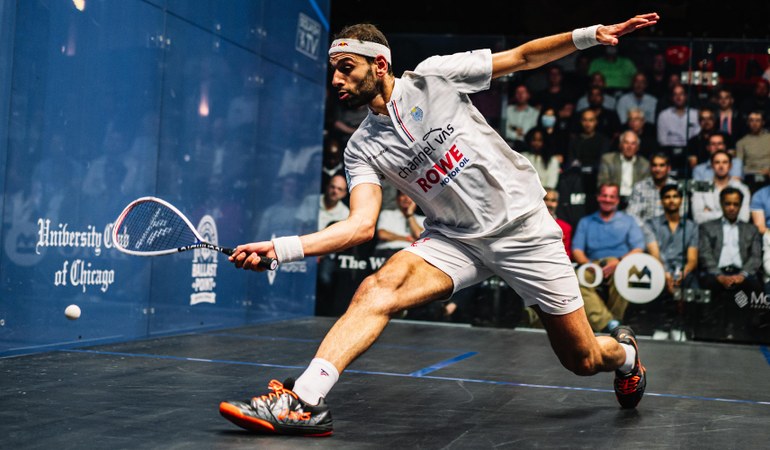
No excuses, just persistence. ElShorbagy is known for an uncompromising work ethic. His view is that if you want to be the best in the world you cannot give yourself excuses, you just keep pushing.
This habit of relentless effort, even when tired or under pressure, builds both physical stamina and mental resilience.
Big goals as motivation. He openly uses long-term goals to fuel his daily training. ElShorbagy has said his motivation has always been to end his career as a great of the sport, and the idea of his name sitting among the all-time greats keeps him wanting more. Keeping an eye on a lasting legacy helps him stay hungry day to day.
Give full effort every time. Consistency at the top comes from full effort in every match and training session. ElShorbagy wants to be remembered as a tough competitor who gave everything every time he stepped on court.
The lesson is to approach each practice or match with maximum intensity and focus, because the habit of total effort builds both a reputation and a self-image of toughness.
Reignite motivation after setbacks. Even champions hit slumps. ElShorbagy went through a career-worst run of losses where he doubted his game. Rather than quit, he sought help from former rival Gregory Gaultier, who devised a new training plan and helped him get his hunger back. Within a couple of months he had gone from talking about retirement to reaching a World Championship final.
When you face a downturn or lose motivation, try these moves:
- Change your environment.
- Seek coaching advice.
- Set fresh goals to rebuild your drive.
Ali Farag: balanced preparation, learning, and composure
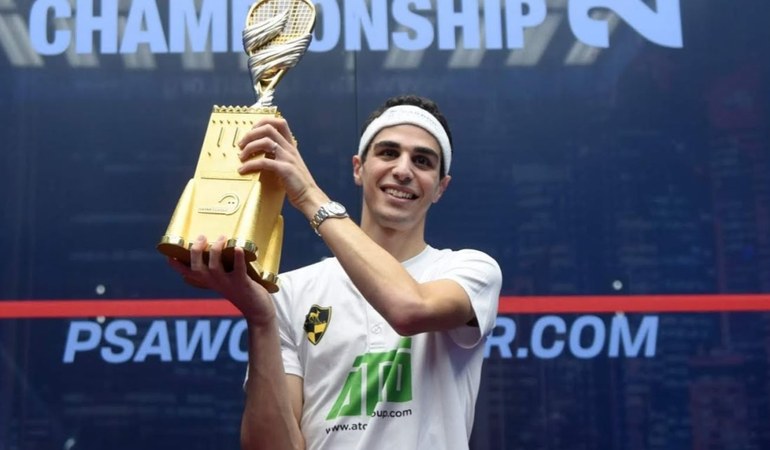
Hard work and lifelong learning. Farag believes success comes from being a student of the game. A Harvard graduate, he is constantly studying and improving, and he cites the book The Art of Learning by Josh Waitzkin as a favourite, embracing the idea that dedicated effort can take anyone to the top of any pursuit.
At any level, staying curious by analysing your matches, picking up new tactics, and staying open to feedback, paired with hard work, will yield improvement.
Visualise and accept all outcomes. Mental preparation is central to Farag's approach. He visualises before matches and prepares for the tough moments, rehearsing how he wants to play and how he wants to react in difficult positions.
By mentally rehearsing scenarios, from executing your game plan to coping with things going wrong, you enter competition focused and without fear of the unknown. This practice helps him stay calm and adaptable, and it can help any player avoid panic when a match takes an unexpected turn.
Treat mental health support as normal. Despite his usually composed manner, Farag stresses that mental health matters for sustained performance. He has said that no matter how good a player you are, you will have your downs, and at those points you need the right people around you.
He has also said there is no shame in seeking professional advice when things are not going well, just as you would hire a coach for technique or a physio for injuries. Seeking help from sports psychologists, counsellors, or mentors is a sign of strength, and it can provide tools to handle stress, dips in confidence, or the pressure of competition.
Balance squash with life. Farag is known for keeping perspective. He pursued academics while playing and keeps family life in focus, which helps him stay grounded. Ensuring rest, intellectual interests, and time off court helps prevent burnout.
Maintaining interests and identity outside squash can improve on-court performance by reducing stress and keeping the game fresh and enjoyable.
Nour El Sherbini: passion, personal goals, and composure under pressure
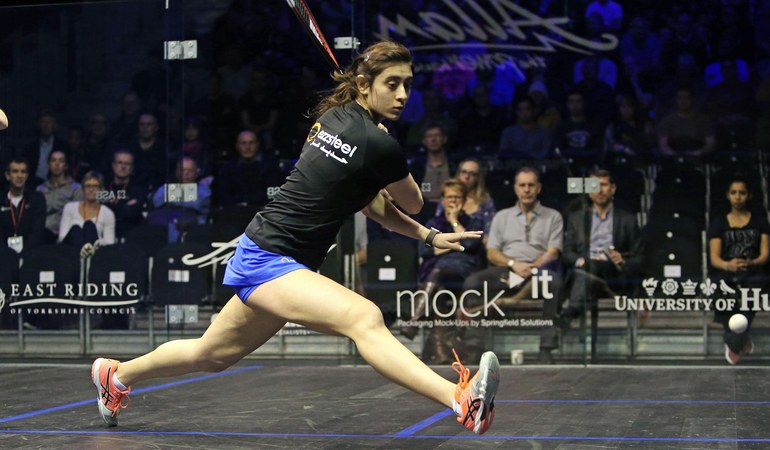
Play for passion, not just titles. Despite being a record-breaking champion from a young age, Sherbini says her motivation comes from love of the game rather than chasing accolades. She has said it never crossed her mind that she would win eight World Championships, the mark she reached in 2025 to equal Nicol David's record.
Instead she focuses on enjoying squash and improving. She has spoken about simply wanting to play, loving the sport as her life, and feeling at her best on court, and she frames her goals around winning for her own satisfaction rather than breaking records. The wider point is the value of intrinsic motivation: play because you love playing, and success tends to follow.
Keep setting personal targets. To stay motivated over the long term, Sherbini gives herself new challenges even after major wins. She has said she tries to motivate herself as much as she can, that the drive can fade at times, and that she keeps targets in front of her. Her rivals push her too, because she wants to challenge them.
Whether you are a beginner or a club player, setting incremental goals, such as improving a specific shot or winning a local tournament, keeps you focused. Refresh your targets regularly so you always have something to strive for.
Build mental strength, and use experts if needed. Sherbini learned that mental strength can be as decisive as physical fitness. She had traditionally relied on her father as a sounding board, but before a recent World Championship she worked with a sports psychologist for the first time, and afterwards said she felt much better mentally, which helped her on court.
In one match she found herself close to defeat but stayed calm, deciding that if she was going out she would go down fighting, and she saved several match points to turn the match around. Train your mind as you train your body. Whether through visualisation, breathing techniques, or professional coaching, a stronger mental game helps you stay composed at critical moments.
Handling losses and pressure. Even a top champion faces pressure and setbacks. In 2024, with everyone expecting her to equal the world title record, she felt heavy pressure and lost in the final. Afterwards Nicol David consoled her, telling her it was fine, that you always drop one and will get back there, and that she would win the next year. Sherbini did come back the following year to claim her record-equalling title.
Losses happen to everyone, even the best, and one loss does not define you. Accept that pressure is normal, learn from the experience, and believe you can come back stronger next time.
Nicol David: discipline, resilience, and staying at number one

Train with discipline and consistency. Nicol David dominated women's squash, holding the world number one ranking for a record 108 consecutive months, close to nine years, and won eight World Open titles. You can read more about her career on her Wikipedia page.
A key was her training discipline. She has described training two sessions a day, between two and four hours a day, six days a week, splitting time between on-court squash and physical conditioning, and paying close attention to nutrition and recovery based on her training load.
Consistent training habits and a healthy routine build the foundation for success. Even with a far lighter schedule, a regular weekly plan that mixes technical practice, fitness work, and rest will produce steady improvement.
Practise mental skills such as visualisation and goal setting. David credits much of her mental strength to training her mind from early in her career. As a young player she worked with national team mental trainers on visualisation and goal-setting techniques, and she later refined these with a sports psychologist over several years to focus on another level.
This paid off when matches got hard. She has said the hardest thing is to be down in a match and find something more inside to keep believing she can push through to the end, even when her body is hurting, and that overcoming that brings the most satisfying feeling.
Build mental exercises into your training, such as visualising yourself executing your game plan or coming back from behind, and set clear goals for each season.
Bounce back by learning. After a loss, David's approach is to analyse and move forward rather than dwell on disappointment. She admits a loss takes a toll, but with her coach Liz Irving and her psychologist she would review what went wrong and get ready for the next competition. That turns every loss into a lesson, and the next match becomes a clean slate with new knowledge about what to improve.
When you lose, resist getting demoralised for long. Review the match objectively, find one or two things to do better, perhaps discuss it with a coach or teammate, then focus on the next challenge.
Set goals and visualise success. David is a strong advocate of goal-setting. She has said everyone should have something to strive for, and encourages players to write their goals down. These can fall into two kinds:
- Outcome goals, such as winning a league or improving a ranking.
- Process goals, such as mastering a shot or training a set number of times a week.
Once goals are set, she suggests visualising yourself achieving them in a positive way, whether in training, competing, at work, or anything else. She emphasises that this takes hard work, belief, and patience, but it builds a strong sense of purpose, boosting confidence when training gets tough and helping you stay focused under pressure.
Build self-belief. Known for her nerve in comebacks, David defines mental toughness as self-belief in your own capability to take on a challenge. She notes that the main thing that stops us is often ourselves, when we underestimate our own abilities. Her mindset was to always believe she could find a way to win, even against the odds.
Nurturing this confidence is key: trust that you are stronger and more capable than you think, especially when you put in the work. Facing a tough opponent or a bad day, remind yourself that you have handled challenges before and can rise to this one. Keeping a positive inner voice can tilt the balance in critical moments.
Ramy Ashour: creative training, joy, and resilience
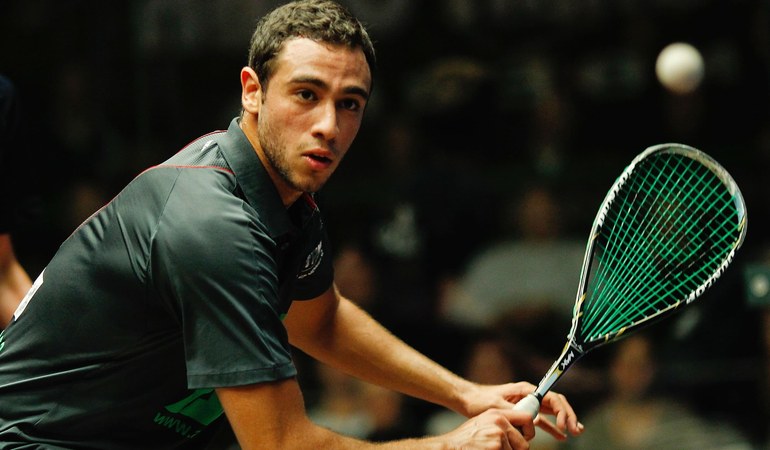
Balance talent with hard work. Often called a genius of squash, Ashour combined flair with the belief that talent alone is not enough and must be matched by equal hard work. He has said that talent and hard work have to be equal and work parallel to each other, and that he cannot be more talented than he is hard-working.
To stay at the top in a demanding sport he aimed for a fine balance between honing his squash skills and building fitness. However naturally gifted you feel, success comes from disciplined training. Skills and fitness go hand in hand, so dedicate time to both and never become complacent.
Train smart, quality over quantity. Ashour made his training highly efficient. He has said he always thought of it as a quality thing rather than quantity, focusing on how effective each session is rather than grinding for hours. In later years he shortened his workouts but intensified them, with fitness sessions lasting an intense ninety minutes at most and never less than forty-five minutes, and court sessions of similar focused length.
Every drill has a purpose and is done at match-like intensity. Make your practice count: a concentrated hour with full effort and clear objectives beats three unfocused hours. This also helps avoid burnout while keeping conditioning steady.
Keep training fun and creative. One of Ashour's trademarks was his creativity on court, and he cultivated it in practice, sometimes playing music through headphones while training. He found that it helped him come up with a lot of new shots and gave him so much room in his head that he could be more creative.
Keep joy and creativity in your routine, whether by experimenting with shots during solo practice, varying your drills, or linking practice to things you love. Having fun keeps you motivated and can lead to breakthroughs.
Find strength in adversity. Ashour's career was marked by serious injuries, including hamstring and knee trouble that often sidelined him, yet he repeatedly staged dramatic comebacks, including World Championship wins on limited preparation. He has said you never know how strong you are until you are put in a situation where you have no option but to be strong.
He learned this after an ACL operation at sixteen and further setbacks, and his way through was a refusal to give up on the sport he loves, saying he has never been able to imagine his life without sport. He credits his mother's mental strength and positive attitude with helping him persevere, saying she is always positive and he learned that from her.
For any player dealing with injury or personal struggles, the lesson is to stay positive and determined. You often discover your real resilience when facing hardship, and with patience and the right mindset you can come back stronger.
Stay humble and focus on the process. Despite his status, Ashour learned not to let success inflate his ego. He admits that once or twice his success went to his head and his level of play started to drop. From that he realised he should not think about how good he is and should just do the work.
He has said he now does his best, surrounds himself with the best people he can, tries to be as genuine as possible, and accepts that he cannot control everything. Focus on improving your own game rather than comparing accolades. Seek good coaches and training partners, keep your love for the game central, and stay coachable.
By not getting carried away with wins or crushed by losses, you maintain steady growth, and results tend to take care of themselves once you have given your best.
Applying the champions' mindset
Each of these players shows that greatness comes from a blend of physical training, mental strength, and passion for the sport. For beginners and intermediates the lessons scale down but still apply:
- Practise with purpose.
- Train your mind as well as your body.
- Never stop learning.
- Enjoy the process.
They also remind us that even at the elite level athletes face setbacks, including slumps, injuries, and losses, and that what counts is how they respond. Here is how each champion responded:
- ElShorbagy's refusal to make excuses.
- Farag's commitment to learning from every experience.
- Sherbini's joy in playing for its own sake.
- David's disciplined goal-setting.
- Ashour's creativity and grit in adversity.
None of this needs elite talent to copy. Pick one habit, the goal-setting, say, or staying calm a point down, and work it into your own training; small changes there tend to show up in both your results and how much you enjoy playing.