
Exercise is one of the most reliable stress-busters, and squash, a fast, physically demanding, mentally engaging racket sport, offers more than good cardio: it can be an effective way to relieve stress and lift your mood.
What follows is the science linking exercise to mental health, the specific ways squash helps, and a few players' own stories of finding relief on court.
The Link Between Exercise and Mental Health
Exercise prompts the release of endorphins, the brain's "feel-good" chemicals, along with serotonin and dopamine, while reducing stress hormones like cortisol and adrenaline. The result is an improved mood and the post-workout calm people call an "exercise high," and over the longer term regular exercise is linked to lower rates of anxiety and depression.
A large cross-sectional study of about 1.2 million people in the United States, published in The Lancet Psychiatry in 2018, found that people who exercised reported roughly 43% fewer days of poor mental health per month than those who did not, with the biggest benefits for team and social sports. Exercise is not a substitute for professional care, but the evidence that staying active supports mental well-being is strong.
Squash: A High-Intensity Game with Unique Benefits
Squash is often ranked among the most intense sports: in its 2003 ranking of the healthiest sports, Forbes placed squash at number one for its cardio demands, agility, and full-body engagement. A typical session is 30 to 45 minutes of continuous sprinting, lunging, twisting, and hitting, a vigorous interval workout you can scale to your level.
Dr. Sue Strachan, a physician and keen squash player, says the game delivers a strong post-exercise buzz from endorphins: "the higher the intensity the bigger the post exercise buzz." Because it demands sharp hand-eye coordination and quick decisions, it keeps the mind fully engaged, and "the time passes so quickly because you are playing games," which helps adults fit an intense workout into a busy schedule.
How Squash Boosts Mental Well-Being
- Immediate mood boost (endorphins): the high intensity releases endorphins, serotonin, and dopamine, leaving players upbeat and energized. The Anxiety and Depression Association of America notes exercise produces endorphins and improves sleep, which together reduce stress.
- "Meditation in motion" (focus and flow): chasing the ball in a confined court leaves little bandwidth for worries, forcing you to be present like mindfulness practice. The Mayo Clinic calls this "meditation in motion," noting that after a fast game you may have forgotten the day's irritations. This flow state interrupts stress rumination.
- Physical release of tension: vigorous full-body exertion loosens tense muscles, and the body practices handling the fight-or-flight response in a controlled way. Harvard Health notes the same stretches that relax muscles after a workout also relax the mind.
- Better sleep and mental sharpness: exertion leads to deeper, more restorative sleep, and the fast, strategic play works the brain too. Dr. Strachan observes that after squash "the blood runs faster round your brain so you can think more clearly and remember things better" for a while afterward.
- Social connection and confidence: played one-on-one or in doubles, with friendly clubs and leagues, squash brings human connection that buffers against stress, plus the self-esteem of learning skills, getting fitter, and reaching goals like improving a serve or winning a tough match.
Squash Players Speak: Stress Relief in Action

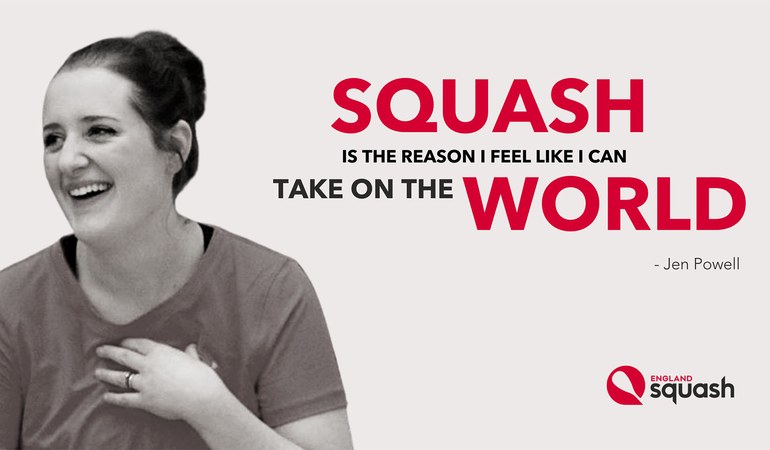
Jen Powell, a club player in England, had struggled with self-esteem and depression for years, including postnatal depression after the birth of her child. She joined a beginners' session at her local club: "Squash gave me the opportunity to have something that was mine, almost as a form of escapism. From the moment I stepped on court I felt a new positive energy I'd never felt before." The group sessions were deeply supportive, she says: "Being a team sport, as well as an individual one, meant I never felt alone." Through squash she got fitter, found a community, and regained her confidence.
Billy McLafferty, who has ADHD and often felt restless and stressed, took up squash at a club in Glasgow after moving to a new city: "Squash is a great way to burn off some energy and relieve some stress," and it helps him manage his ADHD symptoms. The supportive, open community and his on-court confidence carried into his personal life, giving him "so much more confidence to just go for things," including winning a promotion at work. The common theme: squash works as both a stress outlet and a source of joy.
Squash vs. Other Exercises: How Does It Stack Up?
Any activity you enjoy helps with stress, and the best exercise is the one you will stick with. That said, squash combines several features that can amplify its stress-relief power.
| Feature | What squash offers |
|---|---|
| Intense cardio in a short time | Vigorous play drives endorphin release even in a short session; 30 minutes can match a longer moderate workout. Research suggests even about 10 minutes of activity can start to produce anti-anxiety effects, and squash's stop-and-go bursts clearly qualify as vigorous aerobic exercise. |
| Mental engagement and skill mastery | Unlike repetitive treadmill running, squash is mentally stimulating: tracking the bounce, planning shots, and anticipating the opponent keep the brain busy. A 2025 study in Scientific Reports found adolescents in strategic sports (racket or team games) reported lower stress than those doing only individual, self-paced exercise, while self-paced activity was better for some measures of executive function. |
| Social interaction | Squash involves at least one other person, and people who play sports with others often report better mental health than those doing purely solo routines. The friendly competition and post-game camaraderie add enjoyment and stress relief. |
| Competitive yet fun | The competitive element gives a motivating goal, while at the recreational level it stays light-hearted, the thrill of competition without high stakes. The playful side, chasing and whacking a bouncy ball, helps stress melt away. |
Everyone is different, but squash hits a sweet spot for many: engaging, social, and a full-body workout in a short time. As the Mayo Clinic advises, the most important exercise is the one you love, because that is the one you will keep doing.
Conclusion
The effect is real and well documented: hard exercise lifts mood and lowers stress hormones, and squash adds the parts a treadmill cannot, a problem to solve, an opponent to read, and an hour where you think about nothing else. Most players leave the court in a better state of mind than they walked in with.