Squash is a fast-paced sport that challenges both the body and the mind. Beginners and intermediate players often face a steep learning curve, where a few fundamental errors can hold back progress.

The good news is that these mistakes are common and fixable. This article breaks down common squash mistakes across three areas, technical skills, tactical decisions, and fitness, and gives clear tips and drills to help you correct them.

By understanding what you are doing wrong and why it matters, you can speed up your improvement and start winning more rallies.

Technical Mistakes (Grip, Swing, Footwork)

Image coming soon

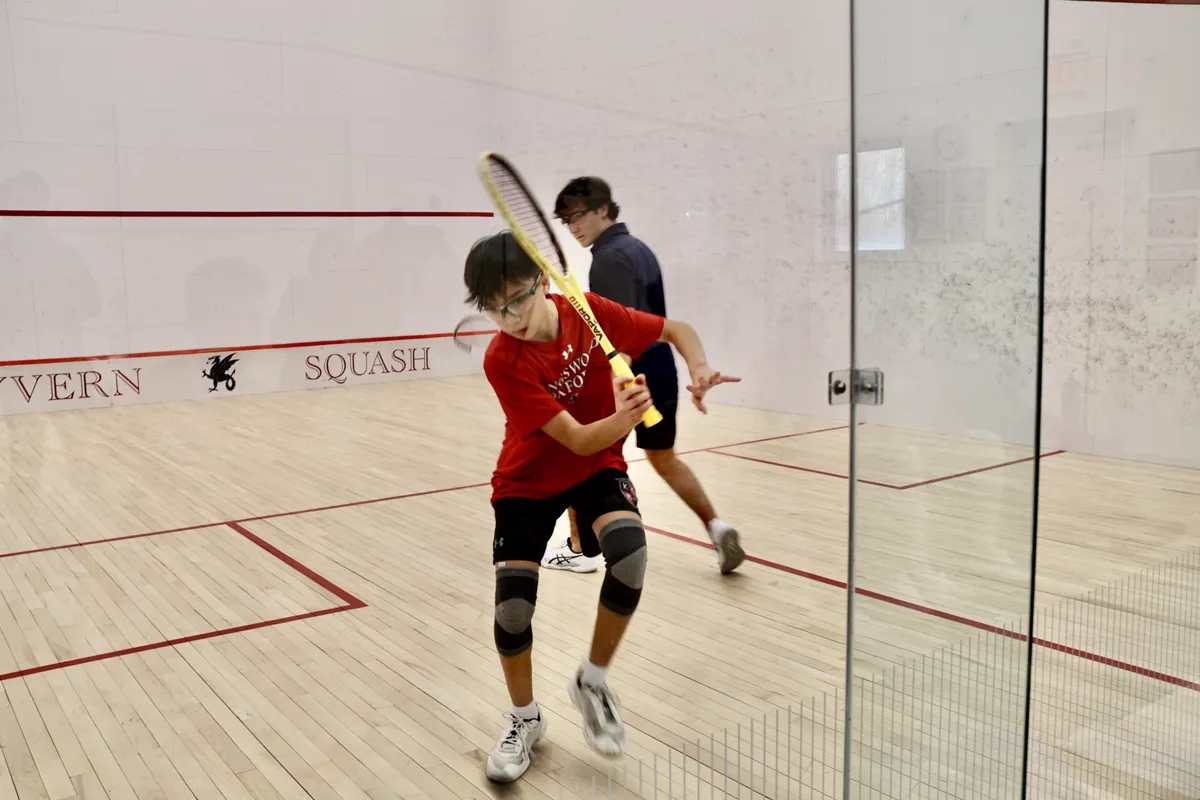
Technical skills form the foundation of your squash game. Flaws in your swing mechanics or footwork can lead to inconsistent shots and wasted opportunities. Below are some frequent technical mistakes and how to fix them.

Mistake 1: Incorrect Grip and Stance

What it is: Many beginners hold the racket the wrong way or stand facing the front wall. A poor grip, for example "panhandling" the racket or holding it too flat, will make your shots erratic and weak.

Likewise, if you position your body incorrectly, for example facing the front wall instead of side-on to the side wall, you limit your swing and angle options. These mistakes often feel natural at first but set you up for inconsistent strokes.

Why it matters: The grip is the link between you and your racket. If it is off, everything else suffers. An improper grip angle can make the racket face point down or sit too open, making it hard to hit straight or lift the ball high.

Standing with your chest facing the front wall also reduces swing range and power. Aligning your body side-on, with your shoulder toward the front wall, allows a fuller swing and better shot placement. A correct grip and stance give you control and the ability to hit to all corners with consistency.

How to fix it:

  • Learn the proper grip: Use a handshake grip, also called the continental grip. Hold the racket as if shaking hands, with the V between thumb and index finger along the edge of the handle. The racket face should be slightly open. A good grip can feel a bit unnatural at first but it prevents the frame from pointing down on strokes. Ask a coach to demonstrate, or watch a video tutorial on the squash grip.
  • Grip pressure: Keep your grip firm but flexible, not a death squeeze. You want control, but also the ability to adjust and generate racket head speed. A common tip is to hold the racket lightly until just before ball contact, then tighten slightly, which prevents tension.
  • Turn side-on: Practice hitting drives while sideways to the front wall. Your front shoulder should point toward the front wall and your feet should be in a comfortable lunge position. Avoid facing the front wall during your swing, and align yourself with the side walls for better angles. This encourages proper hip and shoulder rotation in your swing.
  • Drill, shadow swings: Stand on court with no ball and rehearse your swing with correct grip and stance. Take a backswing with your shoulders turned, then swing through, stepping into a lunge. Do 10 forehands and 10 backhands focusing on form. If possible, record yourself or use a mirror to check that your body is side-on and your grip is correct each time.

Mistake 2: Flawed Swing Mechanics (Too Much Wrist, No Follow-Through)

What it is: Swing mechanics issues are very common for new players. One big error is using too much wrist to try to generate power. Many beginners, especially those coming from sports like badminton or tennis, have a habit of snapping or flicking the wrist during the swing.

Another issue is not following through completely, for instance chopping down on the ball or stopping the racket abruptly. These habits lead to mis-hits and a lack of control.

Why it matters: In squash, power should come from a full swing and body rotation, not just the wrist. Overusing your wrist is inefficient and can cause injury, since snapping the wrist with a squash racket is a common cause of wrist pain.

A stable wrist gives you a consistent racket face through contact, whereas a flicky wrist makes your shots unpredictable. Similarly, a short or incomplete follow-through reduces your accuracy and power. The ball may die into the tin or sit up for your opponent if you snatch at it instead of swinging smoothly.

Good swing mechanics, with the racket back early, a stable wrist, and a full follow-through, help you strike the ball cleanly and with control.

How to fix it:

  • Keep a stable wrist: Focus on locking your wrist in a comfortable but firm position from the start of your swing through impact. Your forearm and shoulder should generate the swing, not a last-second wrist flick. A helpful image is to think of your racket as an extension of your forearm, so they move as one unit.
  • Use your whole arm and body: Practice a smooth swing that starts with your racket up, then your shoulders and hips rotating, and a full follow-through toward your target. Avoid the temptation to whip only your forearm. Think long swing, long follow-through. This will produce power without a violent wrist snap.
  • Drill, racquet drop and swing: Stand near the T, raise your racquet as if preparing to hit, then drop a ball in front of you and swing through to hit it after one bounce. Concentrate on a firm wrist and a full follow-through, with your racket finishing around shoulder height or higher. Do this repeatedly on both forehand and backhand. It reinforces using your whole arm and body, not just the wrist, to hit the ball.
  • Slow down for control: If you find yourself slicing down on the ball or mis-hitting, slow your swing speed in practice. Hit some drives at half-power, focusing on technique. Once you can execute a smooth, wrist-stable swing consistently at slow speed, gradually increase the power. The principle is precision before power. Many coaches warn that too much power leads to errors, and advise players to focus on precision and control rather than brute force.

Mistake 3: Poor Footwork and Positioning to the Ball

What it is: Footwork errors affect many beginners. You might be flat-footed, slow to react, or not give yourself enough space to swing.

Common signs of poor footwork include reaching for the ball with your racket instead of moving your feet, getting too close to the ball so you feel jammed during the swing, or being off-balance while hitting. If you find yourself lunging late, hitting off your back foot, or constantly feeling rushed, your movement to the ball likely needs work.

Why it matters: Footwork is the engine of your game. Without proper foot placement and balance, even a great swing will not save you. If you arrive too close to the ball or off-balance, you will hit weak or inaccurate shots, or miss completely.

Taking extra steps or wrong steps makes you slower and wastes energy, so fatigue sets in faster. Efficient footwork lets you set up for shots early, choose better shot options, and recover quickly for the next ball. Every fraction of a second you gain from good movement can be used to play a higher-quality shot.

How to fix it:

  • Stay on your toes: Adopt an athletic stance between shots, with knees slightly bent and weight on the balls of your feet. Avoid standing flat-footed. A slight bounce or ready hop as your opponent hits, often called a split-step, prepares your body to move in any direction. This readiness improves your reaction time.
  • Get to the ball early: Train yourself to move immediately when you see where the ball is going. It is better to arrive a bit early and wait than to be consistently late. Take quick adjustment steps as you approach the ball to position yourself at a comfortable distance, roughly an arm's length from your body for a full swing. If you are often too close, practice taking an extra small step back from where you think you should hit the ball.
  • Use proper footwork patterns: For front court balls, lead with the foot closest to the ball, so for a ball on your forehand front corner step forward with your right foot if you are right-handed. This puts your body in a stable lunge and keeps you side-on. For deeper balls, use a few side-shuffle steps or crossover steps to cover ground quickly, then plant your outside foot to hit. Avoid running straight at the ball, and think in terms of lining up side-on to it.
  • Drill, ghosting: One of the best ways to improve movement is ghosting, moving around the court without a ball. Mark four corners of the court and move to each corner in a pattern, simulating a shot there with a full swing, then return quickly to the centre. For example, ghost to the front right corner, swing, recover to centre, then ghost to front left, and so on. Focus on taking the direct route to each corner and arriving in a good hitting position, side-on and balanced. Ghosting regularly improves your agility and positioning, making real rallies feel easier.
  • Drill, ladder and cone exercises: Off the court, agility ladder drills teach your feet to move faster and more precisely. Practice various footwork patterns such as two feet in each rung and lateral shuffles. You can also set up cones and practice short sprints and lunges to each cone, mimicking squash movements. Quick feet and good balance from these drills translate into better reach and shot execution on court.

By addressing these technical fundamentals, grip, swing, and footwork, you build a solid base for your game. Next, look at tactical mistakes, which often stem from poor decision-making rather than technique.

Tactical Mistakes (Shot Selection and Court Positioning)

Image coming soon

Tactics in squash are about making smart decisions: where to hit the ball, when to attack or defend, and where to position yourself. Even players with decent shots can lose rallies because of strategic errors. Below are some common tactical mistakes and how to avoid them.

Mistake 4: Neglecting the "T" (Poor Court Positioning)

What it is: Failing to return to the centre of the court, the T, after your shots is a classic beginner mistake. You might admire your shot or simply forget to move, ending up stuck in the back or front corner you just hit from.

Another scenario is hanging back near the rear of the court because you expect a deep shot, which leaves the front open. Poor positioning means you are not holding the central T area, the best spot to cover the next shot.

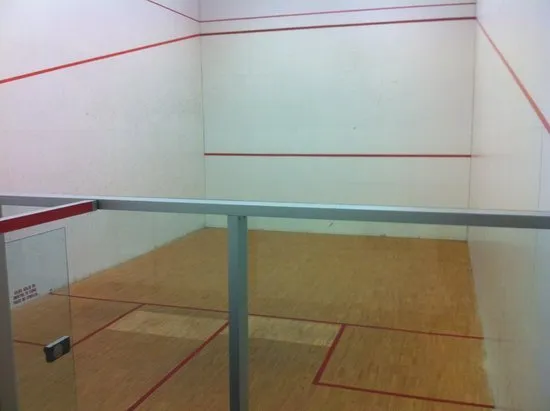
Why it matters: The T, where the lines intersect in the middle of the court, is squash's prime real estate. From the T, you have roughly equal distance to all four corners. If you linger in a corner, any shot to the opposite side or front forces you into a long sprint.

For example, if you stay back in the rear left corner after hitting and your opponent puts the ball to the front right, you have to sprint the full length, width, or diagonal of the court and will likely be late. This is exhausting and puts you on the defensive.

If you return to a spot just behind the T after each shot, the furthest you will ever run is about half the court's length or width. Good positioning improves your court coverage and shows your opponent you are ready for whatever comes next.

How to fix it:

  • Always recover to the T: Make it a habit that immediately after you strike the ball, your next step is toward the centre. Aim to be about a half-step behind the T line, which lets you move up for drops or back for deep shots efficiently. A helpful cue is to finish your shot, then move your feet, and never admire your shot flat-footed.
  • Use the T as home base: Think of the T as your home position. After each shot, ask yourself quickly whether you are returning home. At first you may need to do this consciously. Over time it becomes muscle memory. From the T you can dictate the rally by volleying more and cutting off your opponent's options.
  • Drill, movement plus shot: Stand at the T, have a coach or partner feed you a ball to a corner, hit it, then move back to the T before the next ball is fed. Do this for all four corners repeatedly. This drill ingrains the recovery movement. If solo, ghost to a corner, pretend to hit, and ghost back to centre, repeatedly. Make the drill harder by reducing the time between feeds so you must return faster.
  • Watch the pros: A good way to understand positioning is to watch professional matches, since PSA World Tour matches are on YouTube. Notice how often the pros return to centre and how early they are there waiting. Top players often stand almost on the T line to volley and dominate rallies. Try to copy a pro's habit of constant movement back to the T.
  • Stay balanced: When you get back toward the T, be sure you are in a ready position: on your toes, slight knee bend, racket up. It is not just about location, but also about being prepared to move out of the T to the next shot. Good positioning is active, not static, so think of yourself as a coiled spring at the T, ready to move in any direction.

Mistake 5: Poor Shot Selection (Rushing or Low-Percentage Shots)

What it is: Shot selection refers to which shot you decide to play in a given situation. A common mistake is choosing inappropriate or low-percentage shots, often out of impatience or wrong judgment. Examples include:

  • Going for winners too early: Trying to hit a roll-out drop or trick shot from the very start of a rally, or from a poor position, for example attempting a risky drop from the back court. New players often try to end the rally by dropping the ball short too soon, and these shots are risky, so you may end up losing more points than you win.
  • Constantly attacking when under pressure: Instead of extending the rally, you go for a kill shot even when you are on the run or off-balance, which leads to errors such as hitting the tin or out of court.
  • Overusing certain shots predictably: For instance, hitting too many cross-courts in a row. Some players hit them nearly every time, which opponents quickly figure out and start cutting off. A common guideline is that when hitting to the back of the court, you should hit 80 to 90 percent of your shots straight and only 10 to 20 percent cross court, yet many club players do the opposite. Overusing the boast, hitting the side wall first, is another example: it might work occasionally, but if you do it too much it becomes predictable.
  • Blasting every shot: Some players think hitting the ball as hard as possible is the best way to win points. This often leads to overhitting, where the ball is not accurate. You may also be playing into your opponent's hands by giving them pace to use against you. Sometimes a slower, well-placed shot is more effective.

Why it matters: Good shot selection is about patience and percentages. If you go for a difficult winner at the wrong time, the odds of success are low and you will probably gift the point to your opponent.

A drop shot from the back court might work one time in five, while the other four times it will sit up or hit the tin, immediately putting you on defence or ending the rally in a loss. A deep drive to a back corner is a much higher-percentage play when you are not in an attacking position, since it keeps the rally going and can force an error from your opponent.

Overusing one shot like the cross-court or boast makes you predictable, so the opponent can anticipate and pick off your shots. Aggression has its place, but hitting the ball too hard all the time usually backfires, leading to less accurate shots, more unforced errors, and unnecessary fatigue. Choose shots that maximise your chances of winning the rally over time, not one-hit gambles.

How to fix it:

  • Be patient and build the rally: Especially as a beginner or intermediate, make your opponent do the work. Avoid going for winners from defensive positions. A good rule of thumb: if you are behind the service box in the back court or scrambling to retrieve a ball, play a safe shot, a straight drive or a high defensive lob, to reset the rally. Only attack, for example with a low drop or kill, when you have taken control of the rally, such as when you are on the T and your opponent is pushed deep or off-balance.
  • Use mostly length: Try to hit a high proportion of straight drives to the back until you get a weak return. Keeping the ball deep moves your opponent and gives you time to get back into position. Rely on your straight drives a lot, and add cross-courts sparingly for surprise or when you are pulled wide. If you catch yourself hitting four cross-courts in a row, consciously switch to a straight shot unless there is a very good reason not to.
  • Limit the boasts and trick shots: The occasional boast or trick shot is fine, and can be useful if it is well-disguised, but do not make it a habit every rally. A good guideline is to avoid the boast unless you have to, for example when you are truly stuck in a back corner. The same goes for going for nicks or tweeners, which are fun but low percentage. Save those for when you are already well ahead in a game or just practising.
  • Vary your shots when on offence: When you get an easy ball, you can be a bit creative. Mix a hard low drive, a soft drop, or a cross-court to wrong-foot the opponent. Variation keeps your opponent guessing and prevents them from camping on one response. After a few straight drives, you might add a high cross-court lob to change the pace, or a drop shot to bring them forward.
  • Focus on length and width: Two fundamental tactical aims in squash are to hit the ball deep enough and wide enough. Deep, or length, means your drives reach the back wall area, giving the opponent fewer attacking chances. Wide means your cross-courts go around your opponent, not through the middle where they can volley. This conservative strategy often wins at club level because opponents make mistakes under pressure.
  • Drill, conditioned games: A good way to improve shot selection is to play modified games that force better decisions. For instance, play a game where drops are not allowed unless you are in front of the service line. This trains you to drop only when you are truly forward. Or play games where you must hit straight drives off any serve or deep ball, disallowing cross-courts except when your opponent boasts. Over time, your natural game will include this discipline even without the rules.
  • Slow it down when needed: If you have a habit of going too hard, practice dialling back your power. A slower, well-placed shot can be more effective. In a tough rally, instead of trying to blast a low kill that might tin out, consider lifting the ball high to give yourself a break. A high lob or a softer shot can give you time to recover back to the T and get back in the rally, while also breaking the opponent's rhythm.

Mistake 6: Ignoring Opponent and Court Awareness

What it is: This is a more subtle tactical mistake: not paying attention to your opponent's positioning, or losing track of the ball. A typical example is, after hitting a deep shot, staring at the front wall or where you hit the ball instead of checking what your opponent is doing behind you.

Many beginners lose track of the ball once it is behind them, or fail to watch the opponent's body language. Another aspect is general court awareness, not noticing openings. You might keep hitting to your opponent instead of into the open space they left. In effect, you are playing without adjusting to where your opponent actually is on court.

Why it matters: Squash is often described as physical chess. To make the right move, you need to know where the other player is. If you are not watching your opponent, you react late. If your opponent is about to play a drop shot and you are still looking at the front wall, you will realise too late and never reach it.

By watching them, you pick up cues. A high backswing might signal a deep shot, and a certain shoulder angle might hint at a cross-court. Over time this gives you something close to anticipation.

If you do not notice your opponent's position, you may hit the ball straight back to them, for example volleying to the centre when they are standing there, instead of away from them. Awareness lets you exploit openings: if your opponent is slow to return to the T or caught off to one side, you can put the ball where they are not.

How to fix it:

  • Keep your eyes on the opponent and the ball: After you hit the ball, make a habit of quickly locating your opponent behind you. A simple head turn can make a big difference. As soon as you strike the ball and start moving back to centre, glance at your opponent and actually see them hit the ball. Watch the ball as it leaves your racket to make sure it is going where you intended, then switch your gaze to the opponent as they set up. Never stare blankly at the front wall or floor.
  • Practice anticipation drills: One drill is to have a partner stand behind you and call out where they will hit the ball, front or back, at the last moment as they swing, and you react and go there. A simpler version is to play games and force yourself to call out, just to yourself, what shot you think the opponent will hit as they are about to strike. You will start observing their racket preparation and positioning more closely. Even when your guess is wrong, it sharpens your awareness.
  • Exploit open spaces: Start being mindful of where your opponent is not. If they are stuck in a back corner, that is your cue to hit to the opposite front corner, a classic way to wrong-foot them by hitting away from their position. If they are hugging one side wall expecting a straight drive, consider a cross-court to the other side. Take a quick mental note each shot: where is my opponent, and are they out of position anywhere. Then hit away from them.
  • Use deception carefully: As you become more aware of your opponent's movement, you can introduce a bit of deception, for instance shaping as if you will hit cross-court when they are leaning that way, then hitting straight at the last second. This is advanced, but even basic awareness sets the stage for it later.
  • Stay safe and avoid interference: A side benefit of better awareness is improved safety and fewer lets. By knowing where your opponent is, you can avoid hitting them or running into them. If they are right behind you, you might choose a different shot, such as a lob, to prevent a dangerous situation. Good awareness leads to smoother rallies with less stopping for interference.

By sharpening your tactical game, holding the T, choosing smart shots, and staying aware, you will start dictating rallies rather than reacting to them. Now consider the third piece of the puzzle: fitness and movement efficiency.

Fitness-Related Mistakes (Endurance and Movement Efficiency)

Image coming soon

Physical fitness and efficient movement are critical in squash. You can have great shots and solid tactics, but if you are too tired to execute them or too slow to reach the ball, you will still struggle. Here are common fitness-related mistakes and how to avoid them.

Mistake 7: Poor Endurance and Conditioning

What it is: Squash is very cardio-intensive, with rallies that can be long and demand repeated sprints and lunges. A common mistake is underestimating the fitness required. Many beginners run out of energy after a game or two because they have not built up the aerobic and anaerobic endurance for squash.

You might start a match strong but find yourself breathing heavily and with burning legs by the middle of the second game. At that point your technique starts to break down due to fatigue, for example you stop bending your knees or your swing gets sloppy, and your decision-making suffers.

Lack of stamina turns into a cascade of errors. This mistake can also show up off court, where players neglect fitness training and only play infrequent casual games, leading to slow improvement in endurance.

Why it matters: If you are exhausted, it is almost impossible to play quality squash. Fatigue affects body and mind: you will be slower to the ball and more likely to make tactical mistakes or misjudge the ball. As you tire your form goes and you start making rash choices or giving up on balls.

A well-conditioned player can apply pressure longer, knowing they can endure tough rallies. If your endurance is poor, a fitter opponent will extend rallies until you fade. Squash matches often come down to who can sustain a high level of play deeper into the match. Without a good engine, you might win the first few points or the first game, but later games will slip away as you tire.

How to fix it:

  • Incorporate cardio training: To improve squash endurance, include both aerobic and interval training. For an aerobic base, do steady-state cardio such as running, cycling, or rowing for 20 to 30 minutes at a moderate pace a few times a week. For intervals, since squash is stop-start, try high-intensity drills such as 30-second sprints followed by 30-second rest, repeated 10 to 15 times. You can do this by ghosting on court, sprinting to a corner and back, then resting, or off court on a track or stationary bike.
  • Play more squash or similar sports: There is no substitute for playing to get squash-fit. If you only play once a week and find yourself exhausted, try to increase your on-court time to two or three times a week, even if some sessions are just practice drills or casual games. You can supplement with sports like squash 57, also known as racketball, or badminton, which keep you moving and improve general court fitness.
  • Pace yourself during matches: If you know endurance is a weakness, be smart in matches. Between rallies, take the allowed time to wipe sweat or catch your breath, within reason. Use the game break fully to recover. During play, if you are very winded, it might be worth hitting a high lob or two to extend the rally in a less intensive way and buy a few seconds of recovery.
  • Track and improve: If you are serious, consider using a heart rate monitor or fitness tracker during games and training. It can be motivating to see your heart rate and try to manage it, for example by calming your breathing between rallies to lower it. Over weeks of training you should see improvements, such as your heart rate not spiking as high or recovering faster.
  • Rest and recovery: A fitness mistake can also be overtraining without proper rest, which leads to chronic fatigue. Make sure you have at least one or two rest days a week from intense exercise. Good sleep and nutrition fuel your endurance gains. Hydration is also important, since even mild dehydration makes effort feel much harder. Drink plenty of water before and during play, and consider electrolyte drinks for long sessions.

Mistake 8: Inefficient Movement (Wasting Energy on Court)

What it is: Even with decent endurance, you might burn through your energy reserves faster than necessary due to inefficient movement patterns. This mistake is about how you move on court.

Signs of inefficient movement include taking extra steps that are not needed, frequently being out of position and needing desperate recovery runs, and not moving economically. Some players sprint full speed to every ball even when they had time to spare, only to arrive off-balance and then scramble back. Others zigzag or take roundabout paths to the ball instead of the shortest route.

Another aspect is a lack of balance: if you lunge poorly and have to hop or take multiple recovery steps, you spend more energy. You may be working harder, not smarter, on court.

Why it matters: Inefficient movement saps your energy and can cost you points. If you rush your movements or take too many unnecessary steps, it leads to wasted energy and poor shot execution. Every extra step or wrong step is wasted effort that accumulates over a match, potentially leaving you exhausted in the later stages.

Inefficient movement also means you are not recovering optimally. If you sprint wildly to the front and cannot stop in time, you take longer to change direction for the next shot. Good movement is not just about speed, it is about conserving momentum and controlling your body.

When you move efficiently you appear to glide on court, always balanced and ready, spending energy only as needed. This improves endurance, since good footwork helps you conserve energy through long rallies, and it also means you hit the ball with better technique because you are balanced.

How to fix it:

  • Focus on footwork fundamentals: The earlier section on footwork, Mistake 3, covers much of this. Efficient movement starts with balance and stability. Keep a slight bend in the knees and your centre of gravity low when moving, which helps you change direction quickly without extra steps. Practice moving with small adjustment steps as you approach the ball rather than one big leap that might overshoot. The goal is to arrive at the ball under control.
  • Take the shortest path: Train yourself to move directly to where the ball is going. If a ball is headed to the back right corner, the fastest path is usually a diagonal backward run from the T toward that corner. Avoid looping wide unless you need to get around your opponent. Visualise a straight line from you to the ball and follow it. Drills like ghosting with set patterns, front-right, back-right, front-left, back-left, reinforce moving sharply and directly.
  • Improve your braking and launching: Efficient movement is not just about speed, but about how well you stop and start. Practice your lunges so that you can lunge, hit, and push off back toward the centre in one smooth flow. If you stumble or take multiple steps to recover balance after a shot, work on strengthening your legs, especially quads and glutes, and your core, which help stability. A good exercise is ghosting where you hold your lunge for a second at the imaginary ball, then push back explosively.
  • Use the split step: The split step, a small hop just as your opponent hits, landing in a wide, ready stance, is important for efficient reactions. It readies your muscles to spring and can prevent inefficient first steps. Players who skip the split step often react late and then sprint desperately instead of taking a quick first step. So build a split-step habit: bounce lightly on your toes as the opponent is about to strike, and push off in the direction of the ball as soon as you see it.
  • Drill, court sprints with direction change: Set up a drill to compare inefficient and efficient movement. Place a cone near a back corner. Start at the T, run to the cone and back to the T as fast as possible but under control. Focus on planting your outside foot by the cone and pushing back strongly, rather than running past the cone or stopping too upright. Time yourself for around six round trips. Then do the same but intentionally take a roundabout path to the cone and see the difference in time and effort.
  • Stay balanced during rallies: Remind yourself during play to put balance over hustle. It is better to arrive a fraction later but in balance than super early and off-balance. If you catch yourself flailing, slow down a touch and regain your footing. Often, taking an extra small step or two as you approach the ball, instead of a giant leap, keeps you balanced. Top pros seem to move effortlessly, so aim for that economy of motion.
  • Watch and learn: Watching professional squash teaches you a lot about movement efficiency. Notice how the best players move. They are very fast, but they rarely take more steps than necessary, and they use a combination of large strides and small adjusting steps to always be in position. Try to copy footwork patterns you see in pros, for example the way they move in an L shape to the front corners, up and then across in a smooth two-step.

Mistake 9: Skipping Warm-Up and Flexibility Work

What it is: This mistake happens before you even start playing: not warming up properly. Many players, especially when new or pressed for time, jump on court cold, hit a few soft balls for a minute, and call that a warm-up. In truth, their muscles and heart rate are nowhere near ready for the intense activity of squash.

A proper warm-up gradually raises your body temperature and loosens your muscles and joints. Skipping it leads to a slow start and higher injury risk. Ignoring flexibility, either in the warm-up or cool-down, can reduce your range of motion over time and make you more prone to pulls or strains.

If you have ever felt like you only start playing well by the second game, it is likely because you were not fully warmed up in the first. A couple of shuttle knocks does not count as a warm-up, so add some slow sprints and dynamic stretches.

Why it matters: A good warm-up can improve your performance and help prevent injuries. Squash is very demanding from the first rally, and if your body is not prepared, with cold, stiff muscles and a low heart rate, you might suddenly spike into anaerobic effort, which can cause muscle strains or leave you gasping for air early on.

Warming up increases blood flow to muscles, improving elasticity and responsiveness. A useful idea is that you should be sweating before you even hit the ball. If you start a match already warm, you can play at full speed from the first point without shocking your system. If you skip the warm-up, the first few points or the whole first game become your inadequate warm-up.

Flexibility work, dynamic stretching before and static stretching after, helps your joints move freely through the range needed for lunges, twists, and swings. Neglecting it can cause tight muscles that hamper movement and may strain under stress, since a cold calf muscle is more likely to pull on a sudden lunge.

How to fix it:

  • Arrive early and do a dynamic warm-up: Get to the court at least 10 to 15 minutes before playing. Do dynamic exercises that mimic squash movements, for example light jogging or skipping for two to three minutes to raise your pulse, then dynamic stretches such as leg swings, arm circles, torso twists, walking lunges, high knees, and butt kicks. Follow that with some court-specific moves, a bit of ghosting to the front and back corners at half speed, side shuffles along the wall, and a few short sprints. By the end you should have a light sweat.
  • Include the squash knock-up: After the physical warm-up, use the five-minute hitting warm-up, or as long as your partner allows, wisely. Do not lazily tap the ball. Hit all your different shots to get your eye in, including a few drives, volleys, boasts, and drops on both sides. During this period, keep moving your feet, and practice returning to the T between shots even in the warm-up to activate that habit and loosen up further.
  • Stretch after playing: After a match or training, do some static stretches for the major muscle groups: quads, hamstrings, calves, hip flexors, shoulders, and forearms. This can help reduce soreness and maintain your flexibility. Flexible muscles recover faster and are less prone to chronic issues. Flexible hip flexors and ankles help you lunge deeper with less strain.
  • Do regular mobility exercises: Outside of squash sessions, some yoga or mobility routines can benefit your game. Not addressing mobility can limit your movement efficiency. Simple exercises like deep bodyweight squats, hip openers, and thoracic, or upper back, rotations keep you limber for awkward reaches in the back corners or twists to retrieve tough shots.
  • Make warm-up a habit: If you frequently skip warm-ups due to time, at least do a mini warm-up. Even a few minutes of running in place and dynamic stretching is better than nothing. Consistency is key, and after a while you will feel odd not warming up because you will have experienced the difference it makes. Amateurs say they will warm up in the first game, whereas pros never do that. Aim to approach your games more like a pro in this regard.

Conclusion

Improving at squash is largely about identifying and eliminating these common mistakes one by one. By focusing on solid technical fundamentals, a good grip, sound swing, and agile footwork, you set the stage for consistent play.

Add smarter tactics, better shot selection, strong positioning, and keen awareness of your opponent, and you will start winning more rallies through strategy rather than just effort. Finally, underpin it all with fitness and efficient movement, so that when you are well-conditioned and move cleverly you can enforce your game plan without fading.

Squash is a challenging sport, but that is what makes progress rewarding. Work on the tips and drills provided for each mistake, perhaps focusing on one category at a time, and you will gradually see those mis-hits and lapses decline.

Instead, you will have more rallies where you feel in control, and matches where you still have energy in the tank in the final points. Every player, even the pros, continuously refines their technique, tactics, and fitness. Stay patient and keep practising with purpose. With each mistake you correct, you reach a new level of play. See you on the T.