
College squash is strongest in the United States and the United Kingdom, where university teams have decades of history and success. In the US, the College Squash Association (CSA) crowns national champions in the men's Potter Cup and women's Howe Cup.
Squash is not an NCAA championship sport, so the CSA is the governing body for US college squash. In the UK, the British Universities and Colleges Sport (BUCS) competition serves a similar role.
In evaluating the combined men's and women's programs, several criteria are useful:
- Championship pedigree: national titles (CSA or BUCS) and consistency of top finishes.
- Alumni success: former players on the professional PSA Tour or in the world rankings.
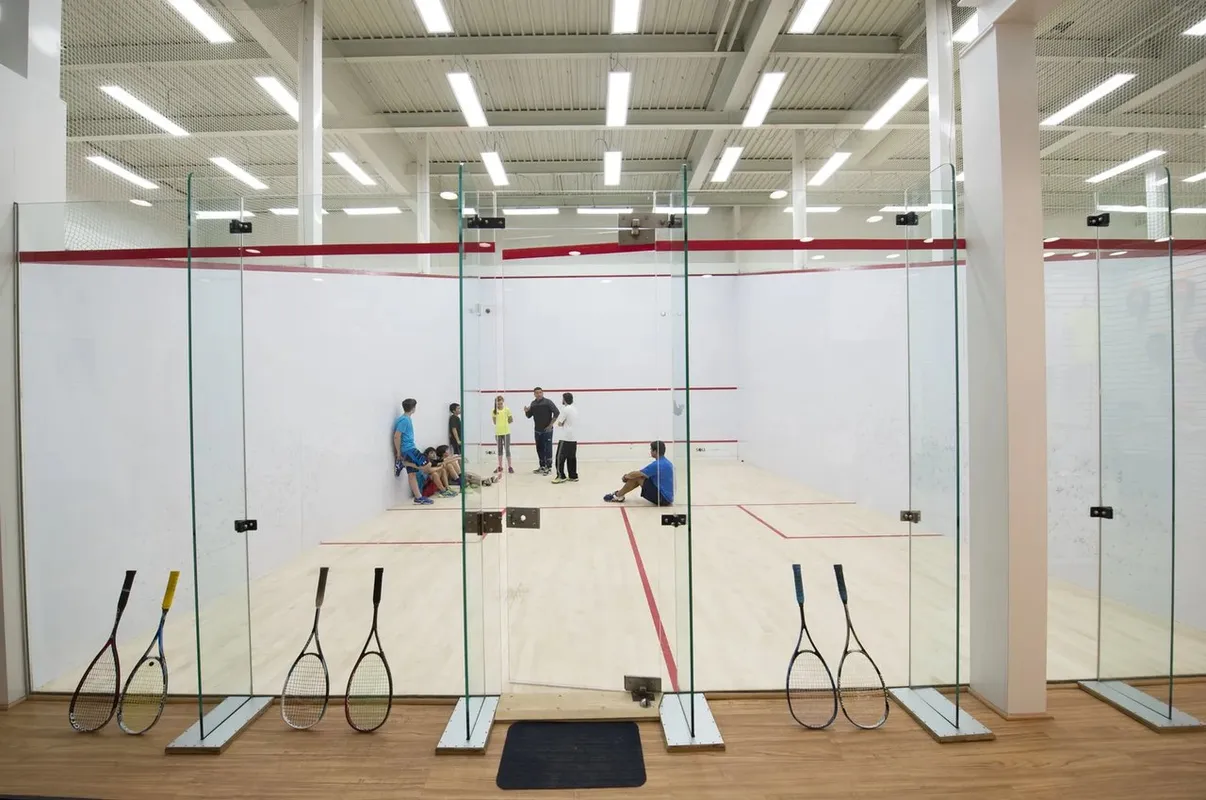
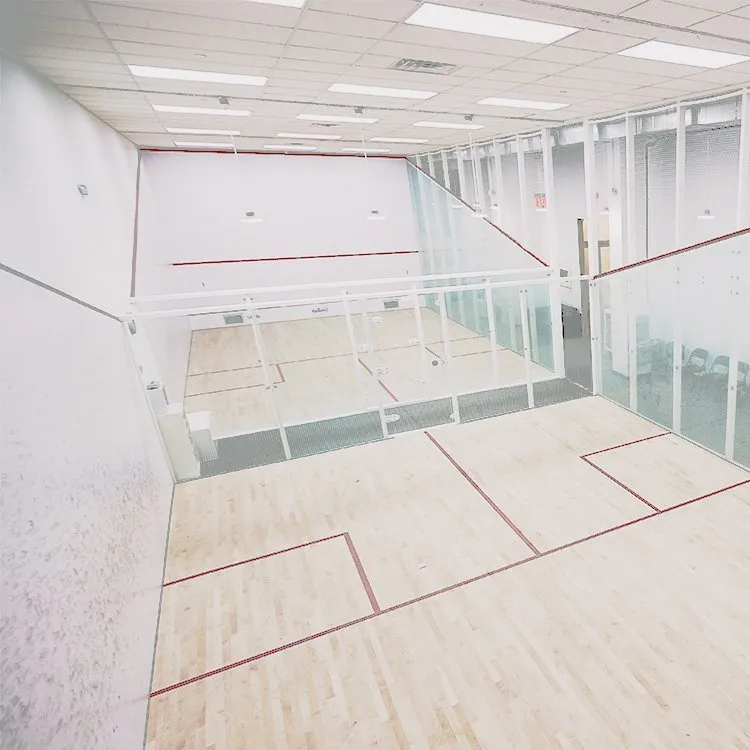
- Facilities and support: the quality and number of squash courts, coaching staff, and institutional funding.
- Competition level: strength of schedule (for example Ivy League and NESCAC versus other conference opponents) and institutional emphasis on athletics.
The leading programs combine historic dominance with current results. Harvard and Trinity in the US have won the majority of CSA national titles since the late 1990s, while the University of Birmingham in the UK has won 20 men's and 12 women's BUCS titles since 1949.
Below we examine the leading teams in the US and UK, with their national championships, elite alumni, and resources.
Leading US University Programs
Harvard University (USA)
Harvard's men's and women's teams each hold multiple national championships. In CSA competition, Harvard's recent men's Potter Cup titles came in 2014, 2019, 2020, 2022, and 2023, and the women's team won eight consecutive Howe Cups from 2016 through 2023 (no championship was held in 2021 because of COVID-19).
Harvard recruits players worldwide, and alumni include Ali Farag (Harvard class of 2014), a four-time World Champion and the first Harvard graduate to reach PSA world No. 1.
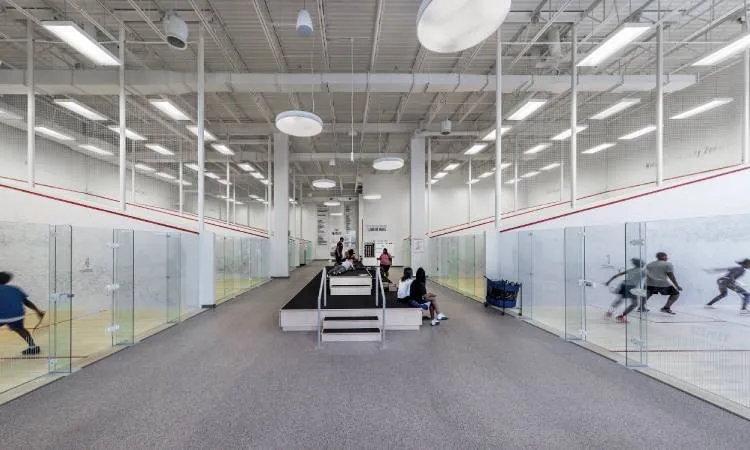
The program trains at the Murr Center in Cambridge, which houses 14 international-size squash courts, including a four-wall glass show court. The men's head coach is Mike Way, hired in 2010. Harvard plays a challenging schedule with annual meets against Yale, Princeton, and other Ivy opponents.
Trinity College (USA)
Trinity's men's program produced the longest winning streak in college sports history: 252 consecutive team wins from February 1998 to January 2012, when the run ended in a 5-4 loss to Yale. During that span Trinity won 13 straight Potter Cups (1999 through 2011), having become the first non-Ivy national champion in 1999.
Counting later titles in 2013, 2015, 2017, and 2018, Trinity has won 17 Potter Cups in all. The women's team has risen recently, winning the Howe Cup in 2024 and 2025.
Trinity competes at the George A. Kellner Squash Center, which has 10 international courts, including two with color-paneled glass walls, and amphitheater seating for up to 500 spectators. Trinity plays in the NESCAC conference but builds a tough non-conference schedule against other national contenders such as Harvard, Princeton, and Yale.
Princeton University (USA)
Princeton's teams have a long legacy. The women dominated the Howe Cup in the 1970s and 1980s and again from 2007 to 2009, with three consecutive titles. The men's team captured the Potter Cup in 2012, and Princeton remains a national top-five program on both sides.
Alumni include CSA individual champion Todd Harrity (class of 2013). The program competes at the Jaharis Family Center and has the resources of an Ivy League school, with a rigorous Ivy schedule and cross-region matches.
University of Pennsylvania (USA)
Penn's men's team has surged to the top of the CSA ranks, winning back-to-back Potter Cups in 2024 and 2025 and completing a perfect season in 2025. Before 2024, Penn had never won the Potter Cup. The women's team is competitive in the Ivy League, often finishing in the top four.
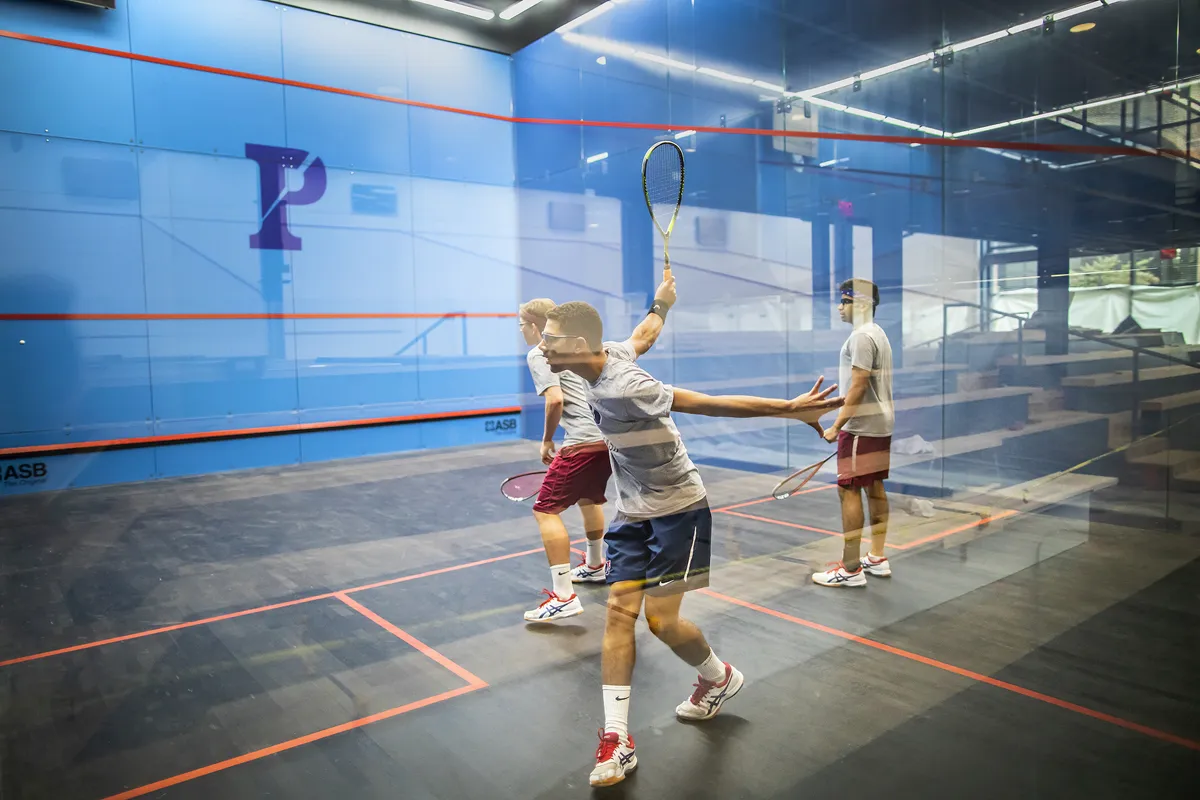
Penn plays at the Penn Squash Center (the renovated Ringe Squash Courts), with 12 courts including two glass exhibition courts. Sophomore Salman Khalil won the 2025 CSA individual national championship, the first Penn player to win the individual title since 1979, and was a First Team All-American.
Penn's rise shows how new facilities and recruiting can quickly elevate a program to national prominence.
Yale University (USA)
Yale fields competitive men's and women's squads. The women won three consecutive Howe Cups from 2004 to 2006, and the men captured the Potter Cup in 2016. In recent seasons both Yale teams rank near the national top 5 to 10 and regularly host CSA top-10 opponents.
Yale competes in the Payne Whitney Gymnasium. While not as dominant as Harvard, Yale's balanced success and deep alumni network keep it among the leading programs.
Other US programs
A few other universities combine strong men's and women's squash. Columbia University and Dartmouth College frequently place in the national top six, and Cornell University and Williams College have also finished in the top eight in recent years.
The University of Virginia, with varsity squash since 2017, made a notable leap: in 2024 the women won their conference and finished seventh nationally, and the men finished eighth. These programs benefit from strong conference schedules and growing support, but Harvard, Trinity, Penn, and Princeton remain the benchmarks in the US.
Leading UK and European Programs
University of Birmingham (UK)
Birmingham has been the benchmark of British university squash, with 20 men's and 12 women's BUCS national titles since 1949, by far the most of any UK school. In 2025 Birmingham's Men's 1st and Women's 1st teams both won their BUCS national titles.
The program is supported by strong facilities, including six glass-backed courts with three show courts seating around 200, and by institutional investment: Birmingham became the first British university to employ a full-time squash coach, in 2004. Birmingham continues to attract top British juniors through scholarships and recruitment, maintaining its edge in BUCS competition.
University of the West of England (UWE, UK)
UWE in Bristol recruited top talent from abroad and won the BUCS men's championship in 2012. Its strength came largely from scholarship-supported players including Mohamed and Marwan El-Shorbagy.
Marwan El-Shorbagy, a UWE alumnus, has remained in the PSA top 10 (career-high world No. 3), and Mohamed reached world No. 1. Because UWE's professional players often skip university matches for the PSA tour, the program has been inconsistent on the national stage.
UWE's facilities include courts at its Bristol sports centers, and the program actively recruits international students.
Other UK programs
The University of Nottingham has fielded strong teams and finished near the top of the overall BUCS standings but has yet to claim a squash title. Oxford University and Cambridge University maintain historic Varsity squads and periodically perform well in BUCS league play, though neither has challenged Birmingham in squash championships.
Leeds Metropolitan (now Leeds Beckett) won five consecutive women's BUCS titles in the 2000s after recruiting world-class players such as Vanessa Atkinson.
More broadly, UK programs allow players to compete professionally while at university, a model that produced careers like the El-Shorbagy brothers'. British teams generally emphasize scholarships and recruitment to build depth, unlike the Ivy League restriction on athletic scholarships.
Global Context and Conclusions
Worldwide, university squash is still led by programs in North America and Britain. The CSA and BUCS championships represent the highest level of collegiate squash.
Outside these regions, most countries have only informal or club-based college leagues, so few universities have both strong men's and women's varsity squads. There are exceptions: Stanford University fields a women's team that has finished as high as third nationally, and Georgetown University has moved its women's program from club to varsity status.
The best university squash programs combine deep championship traditions with modern resources. Harvard, Trinity, Penn, and Princeton in the US each support strong coaching and facilities, have won multiple national titles, and have produced PSA-ranked alumni such as Ali Farag of Harvard.
In the UK, Birmingham and UWE have used scholarships and high-performance coaching to lead BUCS and field players like the El-Shorbagy brothers. These programs also schedule strong opponents, from Ivy League meets to inter-conference play, so their teams are well tested.
Harvard and Trinity in the US and Birmingham in the UK stand out historically, but the gap is narrowing as programs like Penn in the US and UWE in the UK rise. The table below compares these top programs across the key criteria.
| Program | Men's titles | Women's titles | Notable alumni | Facilities |
|---|---|---|---|---|
| Harvard University (USA) | Potter Cups in 2014, 2019, 2020, 2022, 2023, among others | Eight straight Howe Cups, 2016 to 2023 | Ali Farag, four-time World Champion and former world No. 1 | Murr Center, 14 courts, with Ivy League funding |
| Trinity College (USA) | 17 Potter Cups, including 13 straight from 1999 to 2011 | Howe Cups in 2024 and 2025 | Multiple CSA All-Americans | Kellner Center, 10 courts with color-glass walls and seating for 500, NESCAC competition |
| University of Pennsylvania (USA) | 2 Potter Cups, 2024 and 2025 | Competitive in the Ivy League | Salman Khalil, 2025 CSA individual national champion | Penn Squash Center, 12 courts, with strong recruitment and training |
| Princeton University (USA) | Potter Cup in 2012 | Multiple Howe Cups, including 1970s and 1980s and 2007 to 2009 | Todd Harrity, CSA individual champion | Jaharis Family Center, with Ivy League support |
| Yale University (USA) | Potter Cup in 2016 | Three Howe Cups, 2004 to 2006 | Deep alumni network | Payne Whitney Gymnasium, with a competitive Ivy schedule |
| University of Birmingham (UK) | 20 BUCS titles | 12 BUCS titles | Top British juniors developed via scholarships | Six glass-backed courts with three show courts seating around 200, full-time coach since 2004 |
| University of the West of England (UK) | BUCS title in 2012 | Scholarship-built squads | Mohamed El-Shorbagy (former world No. 1) and Marwan El-Shorbagy (PSA top 10) | Courts at the Bristol campus, with heavy scholarship recruitment |
The programs here win national titles, send players onto the pro tour, and back it up with real facilities and coaching. If you are choosing where to play college squash, this is the top tier worldwide to measure the rest against.