Introduction
Squash is not as common in media as football or baseball, but the sport has found a niche in English-language pop culture. Film and television writers have used squash scenes to convey character traits, social status, and comic relief.
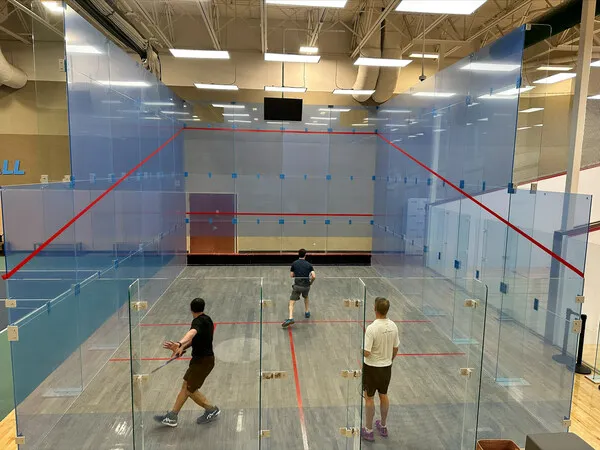
Shown on screen with players rallying in glass-walled courts, or referenced in dialogue as part of a character's lifestyle, squash often carries connotations of elite education, wealth, stress relief, and intense competition. Over the decades, portrayals have shifted, from club matches in older dramas to knowing references in modern series.
Below we look at notable appearances of squash across pop culture and how the depictions have changed.
Early Appearances in Film and TV (1970s-1980s)
One of the earliest prominent squash scenes on film is in the romantic drama Love Story (1970). Harvard student Oliver (Ryan O'Neal) plays squash with his college roommate on campus courts, and the games sit against the film's Ivy League backdrop, underlining Oliver's collegiate privilege.
In Erich Segal's original novel squash is only briefly mentioned, but the film includes two squash court scenes. Around the same period, television also used squash as a character detail: the American detective series Banacek (1972-1974) gave its Polish-American insurance investigator, Thomas Banacek (George Peppard), squash as one of his recreations, alongside touch football and sculling on the Charles River, signaling his fitness and sophistication.
By the end of the 1970s, filmmakers were using squash courts as stages for dialogue-driven scenes. Manhattan (1979), Woody Allen's New York romance, includes a scene where Allen's character and his friend talk through a squash game. The two trade lines while hitting the ball, the rally secondary to the conversation.
The play is depicted unrealistically: the characters talk continuously and the points are not true to the game. This reflects how early portrayals often treated squash as a convenient meeting setting for talk rather than as a contest to be shown accurately.
British cinema of the early 1980s used squash to mark upper-middle-class settings. In The Ploughman's Lunch (1983), a drama about journalists in Thatcher-era Britain, the ambitious reporter James Penfield (Jonathan Pryce) and his friend Jeremy play squash; a club coach interrupts them for smoking on the court. The court serves as a milieu for these educated, ambitious characters.
Power, Wealth, and Competition on the Squash Court
One of the best-known on-screen squash matches appears in Oliver Stone's Wall Street (1987). In the scene, corporate raider Gordon Gekko (Michael Douglas) challenges young stockbroker Bud Fox (Charlie Sheen) on the squash court.
Gekko dominates the game and berates Bud between breaths: "C'mon sport, you've got to try harder. Need some exercise, for Christ's sakes. Let's go, buddy. Push yourself. Finish out the game." The exertion and trash-talk mirror their financial power dynamic, with Gekko in control and Bud struggling to prove himself.
The scene has been called perhaps the most iconic squash scene in film. American viewers at the time might have assumed they were watching racquetball, which was more common in the U.S., but the symbolism was the same: an indoor racquet sport as an arena for one-upmanship among the wealthy.
Squash often became a visual shorthand for aggressive business culture in the late 20th century. The Game (1997), another film starring Michael Douglas, includes a squash scene in which Douglas's character, a lonely millionaire, hits balls alone on a court, filmed at an elite club, underscoring his obsessive, controlled nature.
In Headhunters (2011), a Norwegian thriller, a squash game is used as a meeting between a corporate headhunter, Roger, and the man he is sizing up, Clas; after the match Roger notices the scars on Clas's back that hint at his military past. The scene becomes a contest of egos as much as a game. In these examples a squash match is more than recreation; it is a proxy for power struggles and status.
Because squash has long had an image as a sport of the affluent and educated, many portrayals tie it to wealth or privilege. In the satire American Psycho (2000), set in 1980s Manhattan, investment banker Patrick Bateman's devotion to squash is part of his ultra-groomed yuppie lifestyle.
Bret Easton Ellis's novel notes that Bateman plays squash at the club as routinely as he gets facials and returns video tapes. The film adaptation does not show him on the court, but the reference helps flesh out the image of a status-obsessed Wall Streeter.
Stress Relief and Personal Battles
Another recurring context for squash is stress relief, with characters using the sport to blow off steam or cope with personal issues. A striking example appears in The Door in the Floor (2004), a drama based on a John Irving novel.
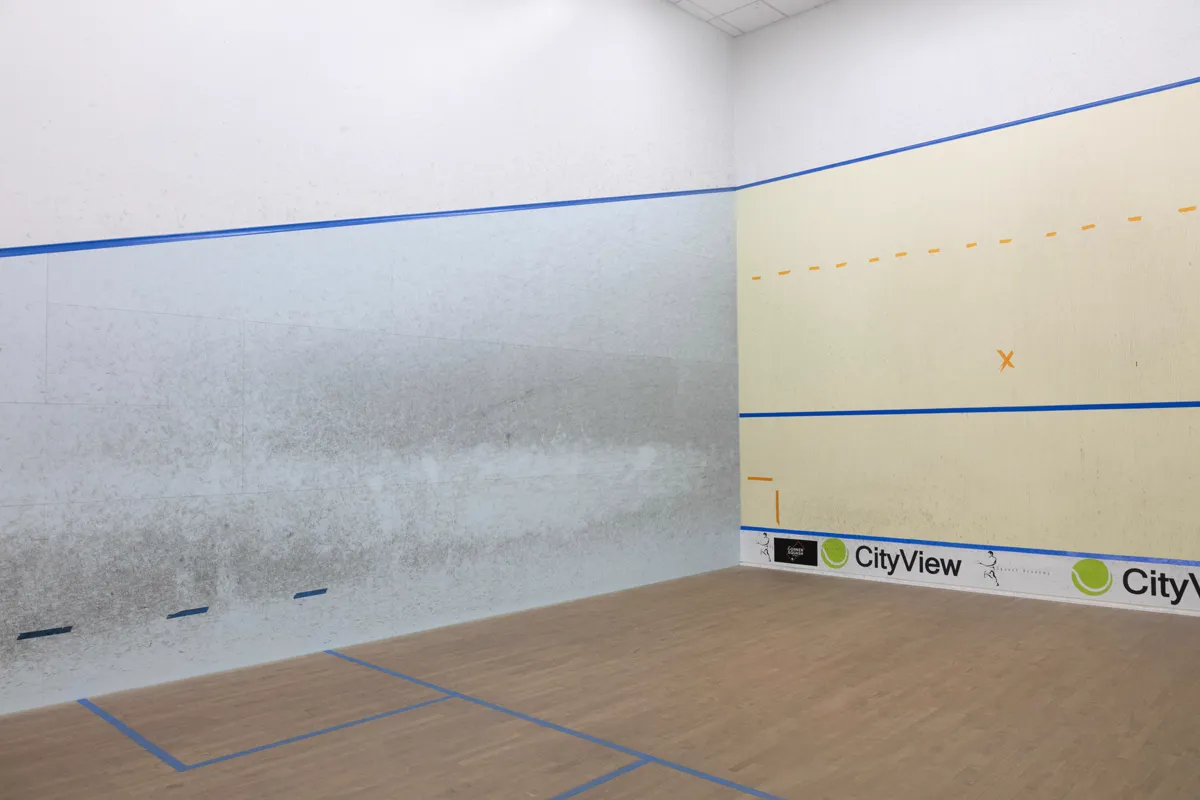
Jeff Bridges's character, a writer in the Hamptons, has built a private squash court in a barn next to his house. He is faltering in his marriage and life, so he invites locals for games and thrashes these less experienced players, seeming to seek victories he cannot find off the court. It is an intimate portrait of squash as a refuge and an ego boost for a man under strain. The court, with its trapdoor in the floor, gives the film its title.
In television, a lighter take on squash as stress relief comes from the finance drama Billions (2016). U.S. Attorney Chuck Rhoades (Paul Giamatti), who comes from old money, plays squash to unwind and to scheme.
In the episode "Boasts and Rails," named after squash shot techniques, Chuck brings his friend Ira to a club for a game. Ira mentions he has been working on his squash boasts and rails with a $300-an-hour pro, underscoring how seriously these professionals take the hobby.
Chuck uses the squash meetup to prod Ira for information, and the scene reinforces squash's role as Chuck's social outlet and pressure valve. Here squash is a form of both exercise and informal business talk, in line with its real-world reputation in white-collar circles.
As pop culture moved into the 21st century, depictions of squash became more self-aware. Writers now sometimes emphasize the strategy involved, elevating it beyond mere sweat. The same Billions episode likens squash to "turbo-charged chess," highlighting that skilled players must think several moves ahead. This nod to the intellectual side of the game reflects a shift: squash is still tied to the elite, but it is treated as a genuinely demanding contest of wits and skill.
Squash as a Comedic Device
Squash has also been played for laughs in sitcoms and comedies. Because of its country-club connotations, simply putting characters on a squash court can be ripe for comedy.
A classic example is Frasier, the 1990s sitcom about a pretentious radio psychiatrist in Seattle. Frasier Crane and his equally snooty brother Niles are squash club regulars, often dressed in all-white kits and serious about the game.
In the episode "Trophy Girlfriend" (2003), the brothers' sports club holds a squash tournament; Niles teams with someone else, so Frasier partners with a girls' gym teacher named Chelsea and the two win the mixed doubles. Frasier starts dating Chelsea, but comedic tension arises when he sees her aggressively coaching kids, which triggers his memory of an overzealous childhood coach.
The storyline plays on Frasier's physical ineptitude and highbrow airs: he achieves a rare athletic success in squash, then is intimidated by his partner's jock mentality on the job. The show uses squash to underscore the brothers' elite and somewhat ridiculous lifestyle.
The U.S. version of The Office filmed a squash scene for the Season 8 episode "Doomsday." Jim Halpert and his new boss Robert California play a game; Jim, who has barely played, struggles on the court as the eccentric CEO beats him soundly, a visual punchline about Jim being out of his element. It reflects a familiar trope: squash as a pursuit of the upper-management type that the everyman has rarely played.
Comedies have also used racquetball, squash's close cousin, to get laughs from characters in over their heads:
- In Along Came Polly (2004), the risk-averse Reuben (Ben Stiller) plays a chaotic racquetball game with a brash client, Leland Van Lew, who ends up bloodied and loses a tooth during the match. The intensity of the scene lampoons the machismo some attach to these sports.
- Decades earlier, the comedy Splash (1984) included a racquetball bit in which John Candy's character tries to make a point to Tom Hanks by serving the ball directly into his own forehead.
These examples are racquetball rather than squash, but their comedic beats are akin to how squash is sometimes portrayed: as a frenetic, slightly ludicrous pastime. They show that the image of an elite or technical racquet sport can be flipped for humor by dropping an unprepared character into the fray.
Evolving Portrayals and Modern Takes
As pop culture has progressed, the contexts in which squash appears have diversified, even as the core associations of wealth, intellect, and competition remain. The Netflix series The Queen's Gambit (2020), centered on chess, features a squash court in its final episode, "End Game."
The heroine Beth reconnects with her friend Jolene as they sit in an empty squash court, the quiet, echoing space serving as a private setting for a heartfelt conversation. By 2020 a squash setting could signal intimacy and reflection, not just rivalry.
Shows that do focus on rivalry, like Billions, have given squash relatively authentic treatment even while using it to signify privilege. In "Boasts and Rails," the dialogue name-drops real squash terms and the scene acknowledges professional coaches and proper technique.
This is a shift from older portrayals that played fast and loose with the rules for plot convenience; now writers assume some of the audience knows the sport. The episode title winks at viewers who get the reference while explaining, for those who do not, that squash is like turbo-charged chess.
There has also been a nod to squash in action films. Lionheart (1990), starring Jean-Claude Van Damme, stages a fight scene inside a squash court, with fighters crashing into the walls and one sent through the glass back wall, using the confined space for dramatic effect. The setting is co-opted for a creative set piece rather than a game.
The trope has even come full circle. In 2024 the Frasier revival aired an episode titled "The Squash Courtship of Freddy's Father," in which Freddy signs himself and Frasier up for a squash tournament while Frasier, back in his squash whites, would rather go to the opera. The title and plot show how ingrained the link between Frasier Crane and squash became, with the revival riffing on it decades after the original.
Conclusion
From Harvard courts to luxury clubs, from earnest dramas to comedies, squash has made many appearances in English-language pop culture. Writers have used squash's mix of qualities, intimate (two players in a box), intense, and carrying a sense of exclusivity, to support storytelling.
A squash scene often signaled that characters were wealthy, competitive, or in need of an outlet for stress. In the 1970s and 1980s this frequently meant upper-crust characters playing for a quick character sketch or backdrop. By the yuppie era of the late 1980s and 1990s, squash became a symbol of cutthroat capitalism and status, as in Wall Street and American Psycho.
In the 2000s and beyond, portrayals grew more nuanced and at times more accurate, depicting squash not just as a rich man's folly but as a genuinely challenging sport, though one still largely favored by driven personalities in these narratives.
Pop culture has also not forgotten that there is something inherently a bit funny about squash's odd setting and elite aura. Sitcoms and films have used that for humor, giving us hapless novices flattened by stronger players and characters treating a game as life-and-death.
The portrayals have shifted with the times, from caricature toward a degree of authenticity, but squash remains a handy storytelling device. Whether a scene needs to show that characters are old college friends or that a protagonist is fighting inner demons, a few shots of a squash rally can do the work. The continued presence of squash on screen reflects its dual reputation: a shorthand for privilege and a genuinely compelling contest, a private duel that can reveal character in a way few sports can.