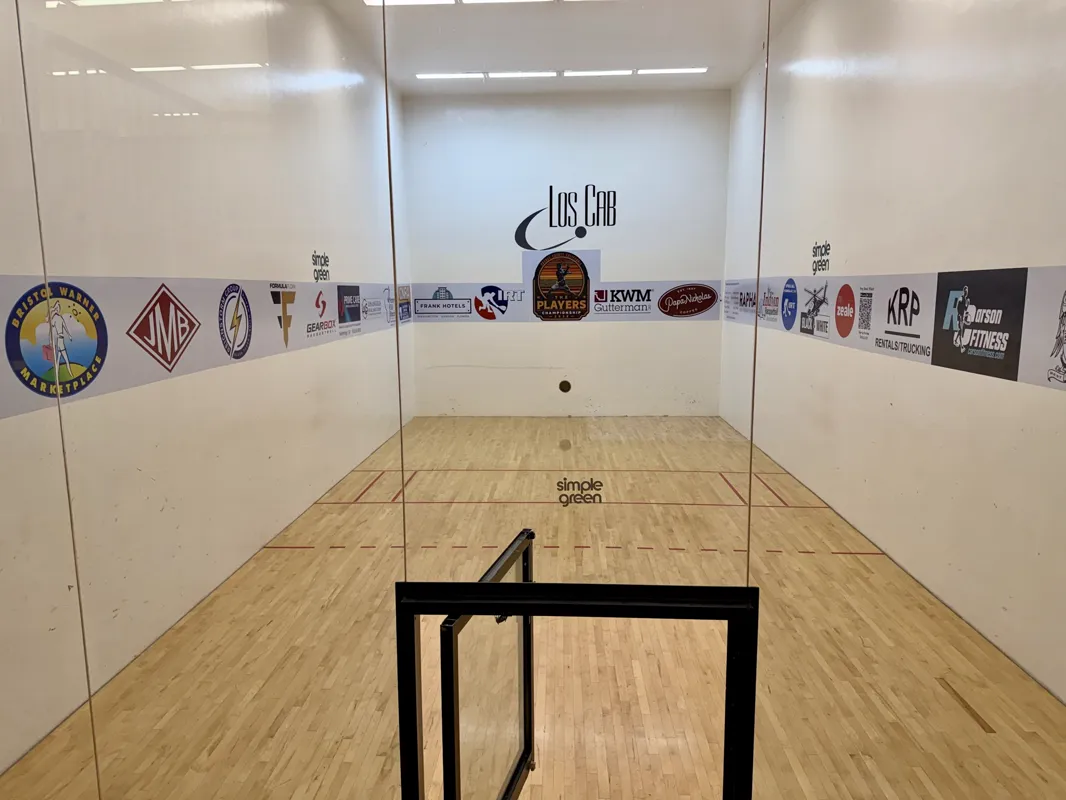

A game won in the mind
Two players with the same shots and the same fitness can still produce a one-sided match, and the difference is usually upstairs. As Hall of Fame coach Paul Assaiante puts it, the most underestimated part of squash is the mental game. For an amateur trying to break through, a steadier head can be worth more than a sharper backhand.
The good news is that the mind trains like everything else. Below is what the mental side of squash really involves, why it swings so many matches, and how to build the toughness to hold up when the score is tight.
On court, two equally skilled players can be separated by their mindset under pressure. The ability to stay focused, confident, and composed during a fierce rally or at match-ball can tip the balance between winning and losing.
Squash is played with racquets and a ball, but it can feel like a chess match of the mind, a constant contest of concentration, will, and tactics. By understanding the role of mindset and training your mental skills, you can compete with greater consistency and approach the game with a calmer, more determined attitude.
The Psychological Demands of Squash

Competitive squash places real psychological demands on players. It is a physically intense sport, and the mental endurance it requires is just as taxing. Unlike many sports, squash offers no time-outs or regular breaks to regroup, so you have to keep problem-solving and adapting in real time.
One sports-psychology piece described squash as a cognitive chess match of geometry and wit, where players think strategically while sprinting in a confined court under mounting fatigue. Mental fatigue can set in alongside physical fatigue and start to affect decision-making and focus.
Squash scoring and momentum swings also test emotional control. Matches often seesaw, with each rally carrying weight. A brief lapse in concentration or an uncontrolled burst of frustration can turn the tide.
Coaches note that staying calm under duress matters. Whether you are unhappy with a referee's call or your own mistakes, keeping composure is important. Every rally is played in close quarters with your opponent, which can heighten the intensity, since you sense each other's energy, body language, and confidence at every moment.
Many amateur players underestimate these mental aspects. They may focus mainly on improving their swing and fitness while neglecting mental training. Yet sports-psychology research and the experience of elite squash both suggest that mindset often separates winners from the rest.
The point applies to club players too, not only elite athletes: our minds influence our performance more than we tend to assume. At intermediate levels, matches are frequently won by the player who manages their nerves and sticks to the game plan when it counts. Developing a strong squash mindset is not only for professionals, it is a useful part of success for any competitive player.
Focus and Concentration: Staying Present Every Point
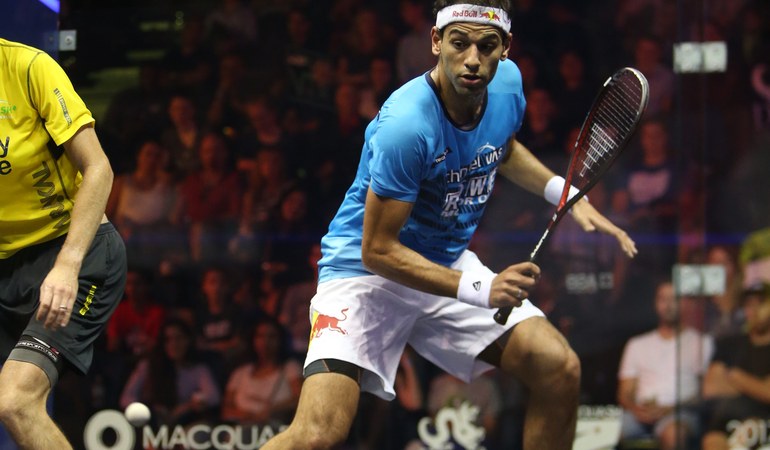
If there is one mental skill that squash rewards most, it is concentration. The game is so fast that your focus cannot wander during a point, since losing focus for a split-second can mean a lost rally. Concentration sits at the heart of mental toughness, and learning to stay focused before and during matches is central to reaching your potential. That means training yourself to be fully present for each point, one rally at a time.
Avoiding distractions is a learned skill. Coaches often emphasise a form of on-court mindfulness, the ability to shut out external factors such as the crowd, the previous rally, and the score, and give full attention to the next shot. When you step on court, your mind should be in the here and now, concentrated on tactics and watching the ball.
It can help to focus on specific cues rather than broad ones. For example, some coaches suggest a laser focus on a small target, such as a particular spot on the ball or front wall, instead of a diffuse awareness. This kind of narrowed focus may sharpen your concentration during rallies.
Refocusing between points is just as important. In squash, points come in quick succession and there is usually only a brief moment to collect yourself. Many players develop small between-point rituals to reset their concentration. You might see a player wiping their hand on the wall and taking a deep breath. This is not just habit but a deliberate mental reset.
The few seconds between rallies can act as a short break for the mind, a chance to let go of the previous point and prepare for the next. Rather than replaying a mistake or thinking too far ahead, use that pause to take a calming breath, loosen your grip, and remind yourself of your plan for the upcoming rally. Doing this consistently helps you hold focus from start to finish, instead of carrying frustration or distraction into the next point.
You can build concentration into regular practice. For instance, you can run drills that simulate match conditions and practise focusing despite fatigue or noise. Some coaches use pressure sessions, playing tiebreak scenarios in practice, to force players to concentrate as they would at the end of a real game.
The aim is to practise focusing under pressure so that in real matches your mind knows how to stay on task. By training your focus like a muscle, you prepare yourself to stay locked in during crucial rallies when others might crack. As mental coach Bill Cole puts it, you want to make your mind your strongest weapon on court, and that starts with steady concentration.
Building Confidence and Self-Belief

Confidence in squash can be fragile, and it matters a great deal to performing well. When you trust your training and your abilities, you tend to play more freely and decisively. When doubt creeps in, it can lead to tentative shots and second-guessing under pressure. Developing self-belief is a cornerstone of a strong mindset.
One effective way to build confidence is through positive self-talk. The way you talk to yourself on court has a direct effect on performance. Negative, self-critical thoughts, such as "I always mess up my backhand" or "I'm going to choke again," can undermine your game.
Try to replace them with encouraging, task-focused thoughts. Telling yourself "I'm prepared and ready," "stick to your game," or simple cues like "attack the ball early" can keep your mind confident and on task. Coaches note that positive self-talk can encourage a more optimistic outlook and may support overall mental resilience. In practice, you can rehearse this by responding to errors with a positive reframe, such as "it's okay, refocus on the next rally," rather than berating yourself.
Another confidence tool is visualisation. Mentally rehearsing success may help you achieve it in reality. Sports-psychology research suggests that guided imagery, picturing yourself handling tough scenarios and executing well, can improve athletes' self-confidence.
In squash, you might visualise playing a clean rally: seeing the ball early, moving fluidly, and hitting your targets under pressure. By imagining these situations in detail, including the feelings of confidence and poise, you help your brain treat them as familiar and manageable.
A study using motivational general-mastery imagery with youth squash players found improvements in self-efficacy for several of the athletes. Adding a few minutes of visualisation to your pre-match routine, picturing yourself executing your game plan and handling adversity, may translate to a more assured performance.
Confidence also comes from preparation and small successes. Setting and achieving incremental goals is a practical way to build belief. Rather than defining success only as winning a tournament, which may be months away, set daily or weekly training objectives, such as improving your length consistency or completing three quality ghosting sessions in a week.
Each time you hit a target, you reinforce a sense of progress and competence. The journey to becoming a successful player is paved with small, achievable goals. By breaking big aspirations into manageable steps, you keep your motivation up and build confidence from each step you complete. When you walk into a match knowing you have put in the work, you carry a quiet inner confidence that you are ready.
You can also learn from the pros, who tend to nurture their confidence over time. Former world champion Laura Massaro has said she suffered badly with nerves early in her career, often because of a fear of failure, but she learned to shift her focus from outcomes to execution.
By concentrating on a simple game plan rather than worrying about the opponent or the scoreboard, she found her anxiety eased and her results improved. Her insight was that focusing on playing well, rather than obsessing about winning or losing, can give you a better chance to win. Trust your process and your skills, and let the results follow. Carry yourself with the belief that you deserve to be competing at that level.
Handling Pressure and Nerves
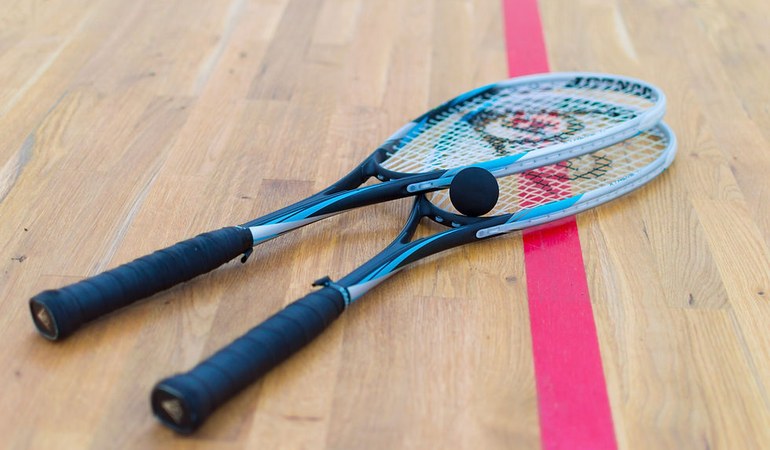
Every competitive squash player knows the flutter of nerves before a big match or the tension of a close fifth game. Pressure is part of sport, and it can sharpen you or unsettle you depending on your mindset.
The good news is that handling pressure is a skill you can develop. It involves managing anxiety, staying composed in critical moments, and using the adrenaline to your advantage rather than letting it overwhelm you.
First, it helps to treat pre-match nerves as normal. Feeling anxious usually means you care about your performance, and even professionals feel butterflies before stepping on court. What matters is what you do with that energy.
Many athletes use controlled breathing to settle nerves. When your heart is racing and your thoughts are spiralling, deliberate breathing can calm the physical symptoms of stress. For example, slow, deep breaths, inhaling through the nose for a count of about 4 and exhaling through the mouth for 6 to 8, can help activate the body's calming response and restore composure. You can fold a breathing routine into your between-points or between-games ritual, taking a few deep breaths while you towel down to release tension and centre your mind.
A consistent routine is another key part of handling pressure. Research on elite squash players suggests that pre-performance routines are among the more useful tools for steadying execution and reducing the chance of choking under pressure. A routine might include the same warm-up drills, a set order of stretching, visualisation, or a favourite pump-up song.
The content is personal, but the effect is to put you in a familiar mental state. By doing the same set of focused activities before every match, you signal to your brain that it is time to compete and you block out distractions. Routines may help with attentional control, keeping your mind on task-relevant thoughts, and with regulating competitive anxiety. You can extend the idea to in-match routines, such as always walking to the service box, spinning the racquet once, and taking a breath as a mini-reset between rallies.
Mental training off court can also raise your pressure tolerance. Sports psychologists use techniques such as stress inoculation training, gradually exposing athletes to pressure in practice so they build tolerance for it.
In a published case study, two squash players who struggled with match anxiety completed an eight-session mental-training programme in which they practised coping with stress. Both reported a considerable decrease in their self-reported anxiety before matches, and both felt their on-court performance improved. If pressure is a weakness for you, address it systematically: simulate high-pressure scenarios in training and learn relaxation or refocusing methods to use when the heat is on. Over time, what once felt overwhelming can start to feel more routine.
Perspective also helps with nerves. Paul Assaiante encourages players to expect a match to be tough and to embrace it. If you accept that a match will have tense moments and that you might feel stress, those feelings lose some of their power. Rather than fearing pressure, you can see it as the reason you play, the thrill of testing yourself.
One helpful reframe is to treat pressure as excitement, since the physical sensations are similar. Telling yourself "I'm excited" instead of "I'm scared" can channel that energy more positively. It can also help to remember that pressure means opportunity, and a close score or match ball is your chance to do something good.
Many players find that keeping things simple and not overthinking is the key in these moments. As Assaiante puts it, keep it simple: under pressure, rely on a basic strategy and your training rather than trying to reinvent your game plan mid-match. Trust your instincts and play one shot at a time.
It also helps to enjoy the contest. Many of the best athletes are intense and focused yet inwardly calm, even glad to be there. They have learned to love the challenge. If you can take some quiet satisfaction in being in a tough match, and see it as a fun test rather than life or death, the nerves tend to fade.
You may even perform better in tight situations than in easy ones, because a little pressure can sharpen concentration. Next time you face a big match or a tiebreak, take a deep breath, remind yourself this is what you have trained for, and play with confidence.
Resilience: Bouncing Back from Setbacks
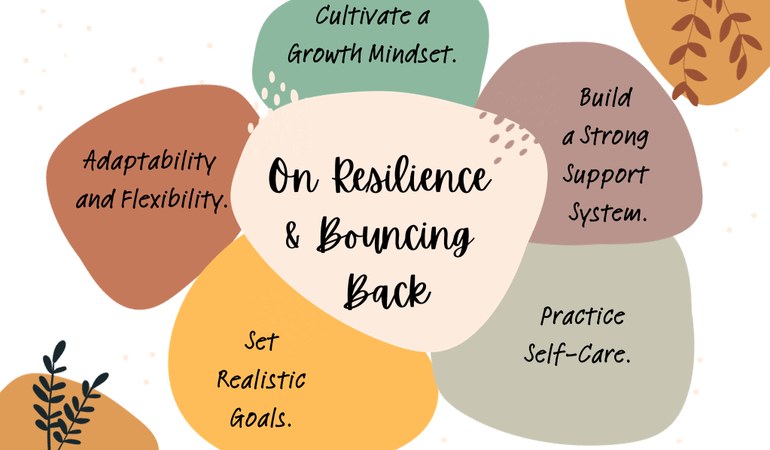
In squash, not everything goes your way. You will hit tins, you will lose close games, and you will face opponents who get on a hot streak. A strong squash mindset is not one that avoids setbacks, but one that responds to them constructively.
Mental toughness shows most clearly in how you handle adversity: do you unravel after mistakes, or fight on with determination? The goal is to build resilience, the ability to rebound quickly and keep a positive, competitive attitude throughout a match.
One important part of resilience is emotional control. Squash is an emotional game, and it is easy to let frustration or anger take over when things are not going well. As Assaiante warns, emotion, and anger in particular, can be among a player's biggest enemies on court.
When you get angry at a poor shot or a referee's decision, your focus shifts from the game to your own irritation. Your muscles tighten, your breathing shortens, and your tactics often unravel. Recognise these reactions as the real opponent.
The mentally tough player learns to notice the flash of anger or disappointment and let it pass without acting on it. That can be as simple as turning to the back wall for a couple of seconds, taking a breath, and mentally saying "reset" before returning to play. Develop a short memory for errors: the point is over and you cannot change it, but you can control the next one.
Body language also plays a part in resilience. Even if you feel discouraged inside, try to project confidence outwardly. Positive body language affects your own mindset and also sends a message to your opponent. As Assaiante notes, negative body language tells your opponent that you are in trouble.
So even if you have just lost five points in a row, avoid slumping your shoulders or hanging your head. Stand up straight and keep your head high. A confident posture can help nudge your own mind toward feeling more determined, and it avoids handing your opponent extra confidence. By keeping your composure and a fighting demeanour, you signal that you are not done, and that every rally is a new chance to turn things around.
Practical resilience also means planning how to handle rough patches. Some players choose a simple mantra or cue for when they are down, such as "one point at a time." Repeating a steadying phrase can help drown out negative thoughts during a slump. Others use between-games breaks to regroup, taking the time to breathe, drink water, and calmly plan a small tactical adjustment rather than stewing on a lost game.
A useful tip is to focus on the things you can control, such as effort, strategy, and attitude, rather than the scoreboard, which is an outcome. That keeps you solution-oriented. If you lost a game because your opponent's attacking volleys hurt you, focus on a tactical fix, such as lifting the ball higher to push them back. This proactive approach helps prevent a downward spiral and keeps you engaged in problem-solving, which is what you need to mount a comeback.
Another part of resilience is a refusal to give up. The best squash players are known for fighting on no matter the odds. As Babe Ruth said, it is hard to beat a person who never gives up, and the idea fits squash well. In practice it means fighting for the next point.
Even if you are down two games to none and facing match ball, play as though there is still a path to victory, because there often is. Squash history is full of comebacks by players who kept their belief alive and capitalised when the leader's nerves showed. By hanging tough, you also force your opponent to earn the win, and many players tighten up trying to close out a match against someone who will not go away.
Adopt the mindset that you will chase every ball and compete until the final stroke. That tenacity gives you a better chance in any single match, and over time it marks you as a mentally strong player.
Off court, building resilience also means learning from losses rather than dwelling on them. A growth mindset, viewing setbacks as learning opportunities, will make you tougher. Instead of thinking "I'll never win a tight match," analyse the match objectively: What caused the momentum shift? Did I lose focus or get too conservative? What can I do differently next time?
By drawing out lessons, you turn a painful loss into motivation to improve, which builds your confidence that you will handle it better next time. Many coaches encourage juniors to see mistakes and losses as opportunities for learning and improvement, and that outlook is common among resilient athletes in any sport.
Resilience in squash comes down to keeping your cool, fighting hard, and staying positive when things go wrong. If you can do that, you will often find that setbacks are temporary and momentum can swing back your way. The game rewards the player who can weather the storm mentally.
However bleak the situation might seem, when you are exhausted or the score is against you, try not to give in. By keeping your head in the game and your heart in the fight, you give good things a chance to happen, such as an epic comeback or the satisfaction of pushing your opponent to the limit. That is the power of a strong mindset.
Practical Strategies for Building Mental Toughness

Developing mental toughness is not abstract. It involves concrete practices and habits you can build into your training. Just as you train your body, you can train your mind. Here are some practical strategies, drawn from sports-psychology research and coaching experience, to help build and maintain a strong squash match mindset.
- Establish a pre-match routine. Consistency in your preparation can steady your nerves and support confidence. Build a routine that gets you mentally and physically ready: arrive early for a thorough warm-up, spend a few minutes visualising your game plan or recalling a past good performance, and listen to music that energises you. A set routine helps put you in the right frame of mind every time and reduces last-minute anxiety.
- Use visualisation and mental rehearsal. Spend time visualising success. Before matches, and in the days or hours leading up, close your eyes and imagine playing out difficult rallies or crucial points with calm, successful execution. See and feel yourself playing with confidence and intensity. This kind of mental practice builds familiarity and belief, so when the real moment comes your brain feels like it has been there before. Many top athletes credit visualisation as a key part of their mental training.
- Incorporate pressure drills in training. Do not let big matches be the first time you feel real pressure. In practice, replicate high-pressure situations: play games from 10-all, simulate tournament finals, or add small consequences to raise the stakes. Coaches often do this to help players get used to performing under stress. The more you face pressure in training, the less intimidating it tends to feel in competition.
- Develop a between-points ritual. Create a quick mental reset to use between rallies. It can be as simple as turning away from the front wall, wiping your face or hand as a physical cue to wipe away the previous point, taking a deep breath, and thinking of a key word such as "focus" or "attack." This short routine helps clear the previous point, whether it was a mistake or a great rally, and brings your attention back to the present. The idea is to let go of the last point so you can recover and be ready to play again. Train this habit until it is automatic.
- Practise positive body language. Even when you are not feeling confident, act confident. Make it a habit in practice matches to carry yourself with poise: no slouching, no moping after errors. Meet your opponent's eyes and project energy. If you hit the tin, resist the urge to smack the wall or hang your head, and instead nod to yourself and walk to the next point with purpose. By practising this, it will come more naturally in real matches. It helps keep you in a better mental state and can leave opponents wondering why you seem so unbothered.
- Set process goals for matches. Alongside the goal of winning, set a couple of process goals that depend on your effort rather than the outcome. For example, "I will play deep drives before going short" or "I will focus on my footwork and get to the T early after each shot." Process goals give your mind something constructive to focus on, which can reduce performance anxiety. If nerves strike, shift your attention to your process goal, such as good length on every shot in the next rally. This keeps you engaged in execution rather than worrying about the finish line.
- Debrief and learn. After tough matches, especially losses, take time once your emotions have cooled to analyse what happened mentally. Identify moments where you felt a lapse, whether it was loss of concentration, doubt, or anger, and what triggered it. Note what helped you recover, or what you could have done. It can help to keep a journal of these reflections. Many coaches and sport psychologists recommend honest self-analysis as a tool for improvement. By learning the lessons from each match, you come into the next one mentally stronger.
- Take care of physical basics. This may sound unrelated to mindset, but being physically well prepared, rested, hydrated, and properly fuelled, has a large impact on mental performance. Fatigue and dehydration can impair decision-making and focus. So part of a strong mindset is the discipline to get enough sleep, warm up properly, and maintain nutrition during competition. Knowing you have attended to these factors also gives you peace of mind that you are ready.
Each of these strategies reinforces the others. By training your mind systematically, you can start to see the same confidence and consistency in your mental game that you aim for in your technique. Mental toughness is not an on-off switch but a set of habits and attitudes built over time. Start with one or two of these strategies, practise them diligently, and gradually add more tools to your mental kit.
Conclusion: Mindset as Your Competitive Edge
In the heat of a squash battle, when two players are neck and neck, it is often the stronger mindset that breaks the tie. A strong match mindset can turn a solid player into a real competitor, someone who does not just play the game but competes with heart and clarity.
By giving your psychological skills as much attention as your physical ones, you give yourself a genuine edge. Mental toughness in squash means holding focus in a chaotic rally, staying confident even when the scoreline is against you, and refusing to let setbacks break your spirit. It means being the player who thrives in a fifth game rather than wilting.
The encouraging part is that these mental qualities can be developed by anyone willing to put in the work. Sports-psychology research and many real-world examples suggest that mindset is malleable: you can train concentration, build confidence, and learn to manage pressure much as you train a backhand. It may feel uncomfortable at first, just as new physical training does, but over time your mind tends to strengthen. You may notice yourself staying calmer and more focused in matches, and enjoying competition more because you feel more in control of your mental state.
In a sport that demands quick thinking and even quicker recovery from mistakes, these psychological strategies can pay off. Building a strong mindset is an ongoing process, and even top pros keep working on their mental game. Approach it with the same dedication you would give to your fitness or a new shot, and be patient and persistent.
None of this is fixed talent. Focus and composure respond to training the same way a backhand does, and even top pros keep working at them. Put in that work and you will feel it where it counts most: the tight fifth game, the bad call, the lead you used to let slip.