
Introduction
Squash long aspired to join the Olympic Games, and its global community campaigned for inclusion for decades through repeated setbacks. In 2023 the International Olympic Committee (IOC) approved squash for the 2028 Summer Olympics in Los Angeles, a historic milestone. This report traces the key milestones, why earlier attempts failed, the organizations and individuals behind the campaign, the current status, and future prospects.
Historical Overview of Squash's Olympic Bids
Squash's pursuit of Olympic inclusion dates back decades. The first known push came as early as 1947, lobbying unsuccessfully for the 1952 Helsinki Games. Formal efforts gained momentum after 1986, when the IOC officially recognized squash, enabling it to bid. From the 1992 Barcelona Olympics to Paris 2024, squash failed in nine consecutive Olympic bid cycles.
| Games | Outcome | Details |
|---|---|---|
| 1992 (Barcelona) | Not included | An early formal bid as squash debuted modern glass courts in the 1980s. The effort was in its infancy and did not make the program. |
| 2000 (Sydney) | Not included | Squash sought a demonstration slot for Sydney 2000, but the attempt was not approved. |
| 2004 (Athens) | Not included | Renewed lobbying with updated bid materials, but no success. |
| 2008 (Beijing) | Not included | A continued campaign with a formal bid for inclusion in Beijing 2008, ultimately not selected. |
| 2012 (London) | Near miss, excluded | Squash was a leading candidate to fill vacant spots after baseball and softball were dropped, appearing poised for inclusion. However, an IOC voting rule change increased the required majority, resulting in no new sports being added and leaving squash just short of the threshold. |
| 2016 (Rio de Janeiro) | Shortlisted, excluded | Squash made the IOC shortlist for Rio 2016 but lost out. In October 2009, at the 121st IOC Session in Copenhagen, the IOC chose to add golf and rugby sevens instead, a decision shaped partly by the financial climate of the time and the perceived commercial and media boost those sports would bring. |
| 2020 (Tokyo) | Shortlisted, excluded | Squash was again a finalist. The IOC had briefly removed wrestling to open a spot, but then reinstated it at the 2013 IOC Session in Buenos Aires, where wrestling beat baseball/softball and squash in the vote. Tokyo's organizers prioritized baseball/softball and karate, while the IOC added youth-oriented sports such as surfing, skateboarding, and sport climbing. Squash was left out in the final decision. |
| 2028 (Los Angeles) | Included (approved as a new sport) | LA28 organizers recommended squash as one of five new sports, and the IOC officially approved its inclusion during the 141st IOC Session in October 2023. Squash will make its Olympic debut in Los Angeles, realizing a goal pursued for decades. |
The campaign was not fought in isolation; squash integrated into other multi-sport events as stepping stones. It became a regular medal sport at the Pan American Games (from 1995) and at both the Commonwealth Games and Asian Games (from 1998), has featured in every World Games (the championship for non-Olympic sports) since 1997, and was a demonstration sport at the 2018 Youth Olympic Games in Buenos Aires. These appearances raised squash's profile and showed it could deliver exciting competition in a multi-sport setting.
Reasons for Squash's Exclusion from the Olympics
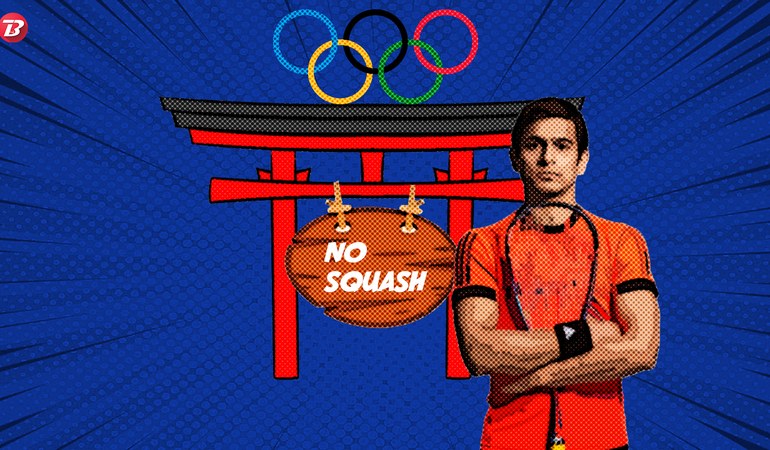
Several factors repeatedly worked against squash's inclusion:
- Spectator and broadcast challenges: the fast-moving small ball can be hard to follow on television, with the action enclosed in a glass court. The squash community responded by improving court and broadcast technology, HD glass walls, better lighting, and ball tracking.
- Limited global popularity (perceived): though squash is played in more than 150 countries, its popularity was concentrated in Europe, South Asia, and parts of the Commonwealth, and the IOC felt its footprint was not mainstream enough. Governance was also once fragmented, with separate men's and women's tours, since merged under the Professional Squash Association and aligned worldwide by the World Squash Federation.
- Infrastructure and cost concerns: squash needs specialized glass-court venues, though portable glass courts later proved they could be erected in iconic locations, and the self-contained format does not require large stadiums.
- Stiff competition from other sports: for 2016, golf and rugby sevens were chosen over squash; for Tokyo 2020 and Paris 2024, the IOC prioritized youth or street sports such as surfing, skateboarding, sport climbing, and breaking. As an established racket sport, squash offered less novelty. In 2013, wrestling's temporary removal created an opening, but it was reinstated after lobbying, edging out squash.
Squash's exclusion was not about athletic merit but a mix of media visibility, perceptions of global reach, IOC priorities, and timing. Each disappointment prompted advocates to invest in youth programs, improve broadcasts, and emphasize inclusivity and low cost, lessons that paid off in the LA 2028 bid.
Key Organizations and Individuals Leading the Campaign
Olympic inclusion was a global team effort. The main drivers:
World Squash Federation (WSF)
The international governing body led the Olympic campaign, forming an Olympic Games Committee and coordinating every bid cycle, including bid books, IOC engagement, and member federations. N. Ramachandran, WSF President in the 2010s, led the 2020 bid presentations and the "Back The Bid" campaigns, drawing support including from tennis great Roger Federer. Zena Wooldridge, WSF President from 2020, guided the successful LA28 campaign, working with the Los Angeles organizers and IOC. This sustained, unified push, evolving from modest early-1990s bids to professional 2010s campaigns, kept the effort alive.
Professional Squash Association (PSA) and Players
The PSA, which runs the elite men's and women's tours, brought players' voices and marketing experience, led by CEO Alex Gough. Gough noted earlier bids were last-minute and uncoordinated, but PSA-WSF collaboration grew strong by the 2024 and 2028 cycles. Top athletes became ambassadors:
- Jahangir Khan, the former world champion from Pakistan and WSF President in the 2000s.
- Nicol David of Malaysia, an eight-time World Open champion, a prominent advocate on social media and in interviews.
- Nick Matthew, England's former world number one, and French champion Thierry Lincou, in promotional videos and events.
Players used the hashtag #Vote4Squash to show the community's passion and global diversity, giving the campaigns a human face through exhibition matches for IOC delegates and athlete testimonials.
National and Regional Federation Initiatives
National and regional federations expanded squash's footprint to strengthen the case. In the Americas, U.S. administrators helped form a Pan American Squash Federation and won squash's inclusion in the Pan American Games in the 1990s, boosting visibility in the US, Canada, and Latin America. Asia, Europe, and Africa pushed squash into their regional games (the Asian Games from 1998, the All-Africa Games, and others), each success adding weight to the global-presence argument. National bodies also mobilized support and funding: England Squash and Squash Canada ran publicity campaigns, and US Squash launched a "Drive to LA28" initiative after 2028 inclusion was confirmed, raising funds to build courts, expand junior programs, and support elite training. "The 2028 Olympic Games in Los Angeles is the most exciting opportunity we've ever had to develop the sport," said Ned Edwards, Executive Director of the U.S. Squash Foundation.
Current Status within the Olympic Movement

At the IOC's 141st Session in Mumbai in October 2023, squash was officially approved for the 2028 Summer Olympics in Los Angeles, after the LA28 Organizing Committee recommended it as one of five additional sports. Alongside cricket, baseball/softball, flag football, and lacrosse, squash will debut as a new medal sport, ending an absence through nine previous Olympic cycles.
The inclusion is specific to LA28 (these sports were proposed by the host city under current IOC rules) but confers full Olympic medal status for 2028, with men's and women's singles events. Squash had long been IOC-recognized without being on the program, and now joins the Olympic sports at least for this edition. The PSA called it a historic milestone. The Guardian described the choice of squash and lacrosse as a "double surprise," reflecting the host city's openness and an IOC shift toward a more flexible program. Squash's global appeal had also grown, with champions emerging from Egypt, Malaysia, New Zealand, Colombia, and elsewhere, and stronger youth participation and gender parity.
Planning is underway: a state-of-the-art all-glass show court is likely to be installed in a prominent Los Angeles venue, with the WSF and PSA working with the LA28 sports department on the qualification system and promotion. Funding and training support are expected to increase now that athletes can compete for Olympic medals in squash.
Future Prospects and Strategies for Olympic Inclusion
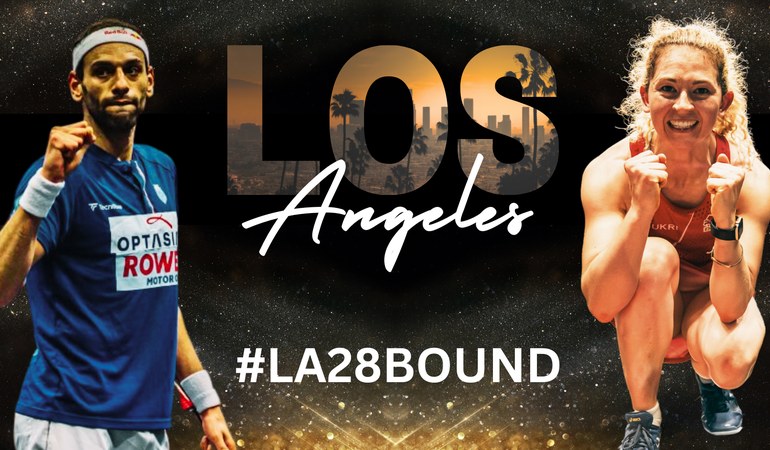
Inclusion in Los Angeles is a breakthrough but not a guarantee for later Games such as Brisbane 2032, so squash must prove itself on the Olympic stage.
Making a strong debut in 2028
The immediate goal is a captivating Los Angeles competition with strong presentation, multiple camera angles, ball-tracking technology, and interactive glass court walls, to retire the "hard to watch" criticism. Organizers may choose a striking location for the glass court, drawing on past showcases at Grand Central Terminal in New York and in front of the Pyramids of Giza. LA28 will put squash before the largest audience in its history.
Sustained global development
IOC officials will watch participation, youth engagement, and geographic spread after 2028. The WSF and national federations are using the decision to expand programs, including:
- Building more public courts where access was limited.
- Introducing squash in school and university programs.
- Developing talent in countries yet to produce top players.
Targeted development in China, the Americas, and Africa could turn inclusion into a global boom. As squash writer James Zug has observed, new nations are likely to join the elite by 2028, and historically strong nations such as Australia and Pakistan might reinvest. The Olympic platform is expected to bring more government and sponsor funding.
Youth appeal and innovation
Squash has modernized its scoring and event format to be faster and more exciting, and aims to enhance the fan experience on-site and digitally through social media and possibly virtual reality. Its 2018 Youth Olympics appearance could grow into a full medal event at future Youth Games, cultivating Olympic-minded juniors.
Political engagement and alliance-building
Alex Gough has said staying in should be easier than getting in, but nothing is taken for granted. Squash must show strong ratings and ticket sales in 2028 plus alignment with Olympic ideals like universality and gender equality; it already has equal men's and women's events and prize money. The 2028 qualification system includes continental qualifiers to guarantee broad representation, giving more National Olympic Committees a stake. Aligning with priorities like sustainability helps, since portable courts can be reused and need little space.
Long-term vision beyond LA28
The aim is to make squash a permanent fixture. Brisbane 2032 will run its own sport-selection process; Australia's rich squash heritage brings optimism that it may retain squash, especially if the 2028 event succeeds. By proving itself in 2028, squash can counter remaining doubts and potentially become a regular Olympic sport, ending the pattern of repeated bids.
Conclusion
Squash's Olympic journey is a story of perseverance and adaptation. From its first bids in the early 1990s to inclusion in LA28, the sport weathered numerous disappointments while strengthening its case, with federation officials and star players uniting worldwide. On the cusp of its Olympic debut, squash will showcase a blend of speed, skill, and strategy from athletes around the world. If it wins over Olympic audiences and organizers, it may secure a permanent home in the Olympic family, making 2028 the start of a new chapter rather than the end of the journey.