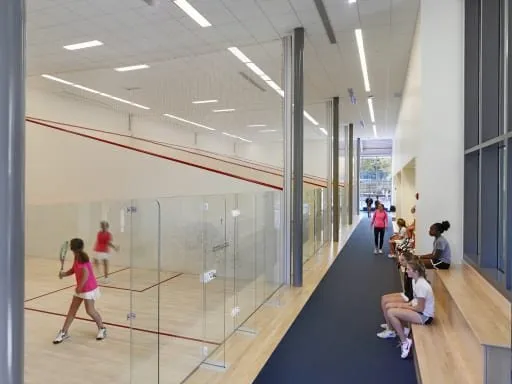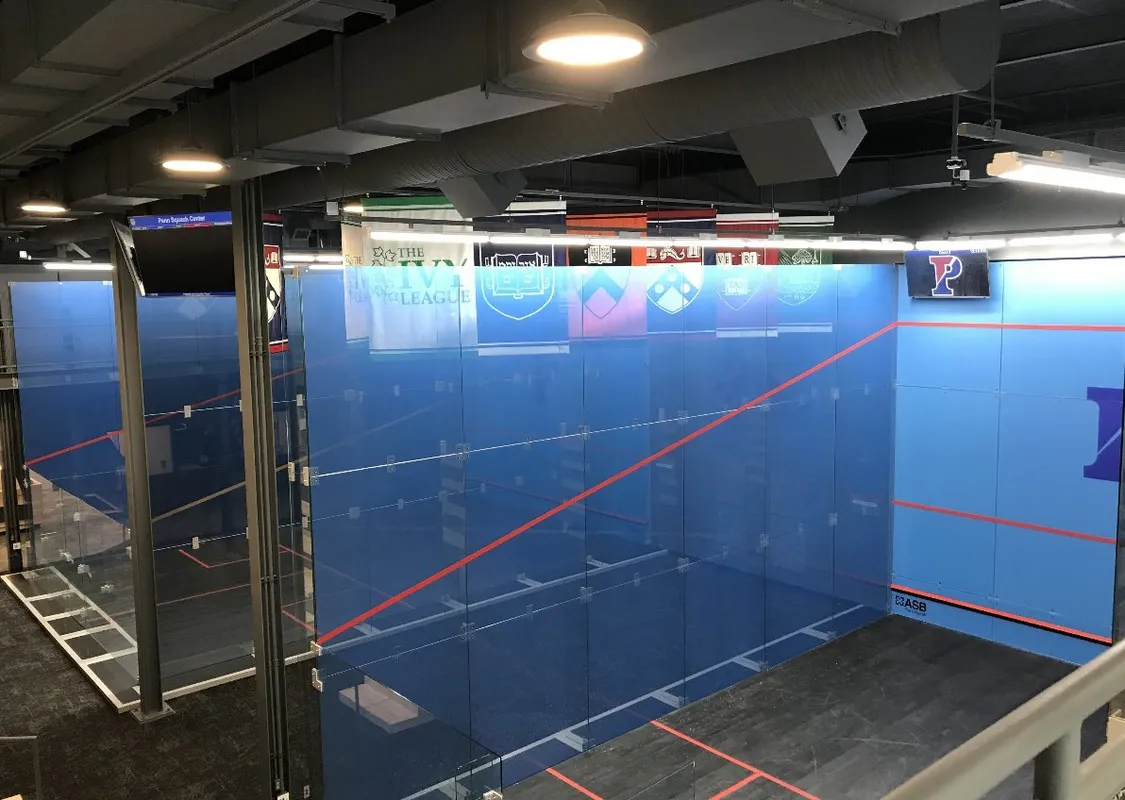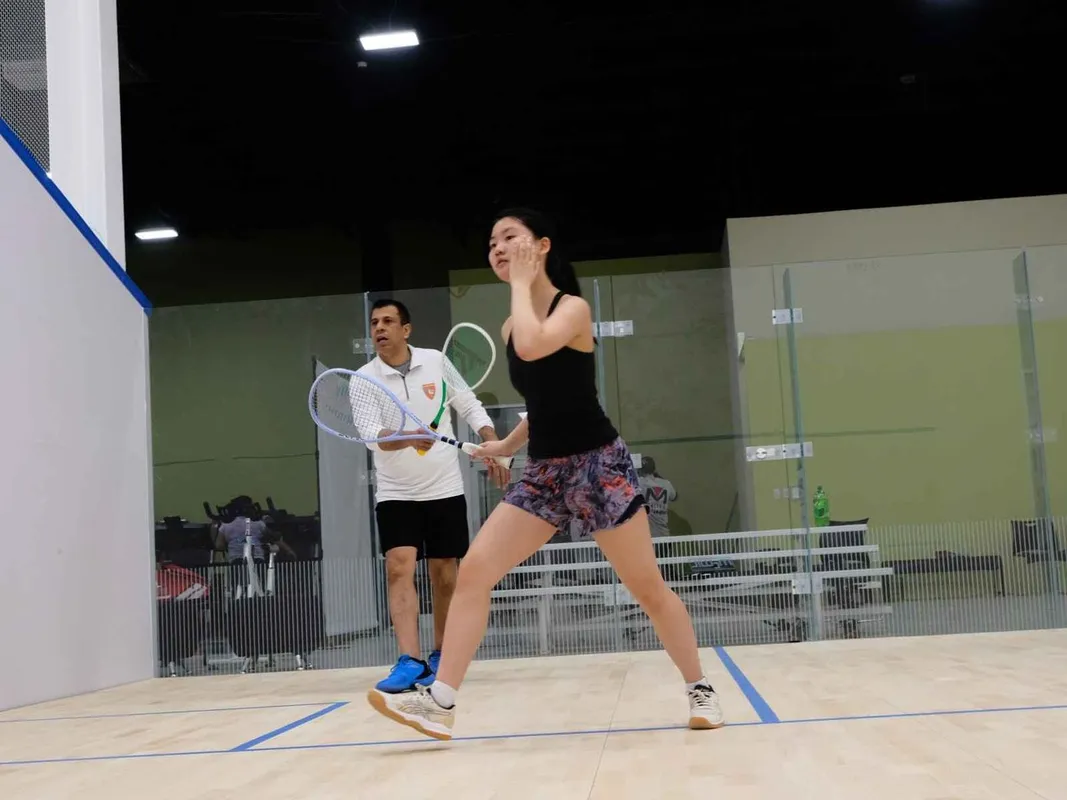

Squash camps work best with a mix of skill-building and play, varied for all ages and levels and alternating on-court skill sessions with off-court games. The sections below cover on-court drills, on-court games, off-court team-building and fitness activities, and sample schedules for day, weekend, and week-long camps.
On-Court Drills and Games
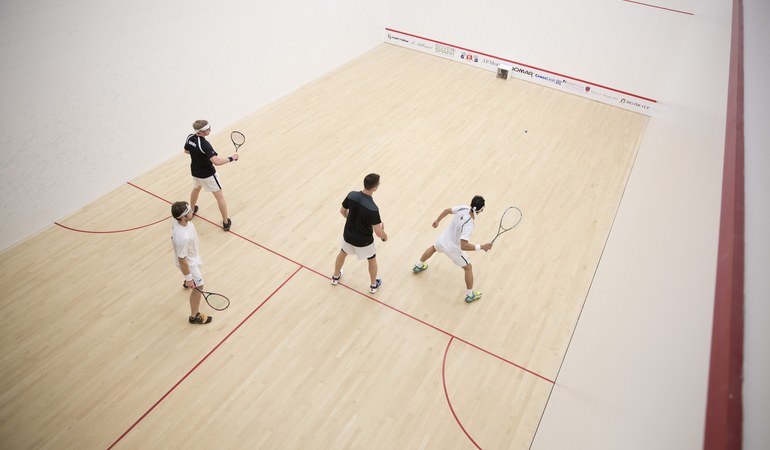
Coaches guide campers through drills and mini-games on court, where skill drills build consistency and games add competition:
- Front-Wall Rally (length drill): players take turns hitting straight drives to the front wall, starting near the back wall and moving forward each hit, to build consistency and stamina.
- Target Practice: place a cone or marker on the floor or wall and hit the ball to strike it, training placement and precision.
- Accuracy and consistency drills: solo or partner exercises hitting repeatedly to a fixed spot on the floor to develop hand-eye coordination, then rallying off the floor between shots.
- Volley and kill drills: feed each other balls in the front court without letting the ball bounce, alternating forehand and backhand volleys, to sharpen reflexes and footwork near the tin.
- Ghosting: movement without the ball, starting at the T, moving to each corner as if retrieving a shot and returning, for footwork, court coverage, and conditioning.
- Mini matches and King of the Court: short scoring games, for example 2-vs-2 doubles to 3 points with quick team switches, or King of the Court where the winner stays on and the loser rotates out.
- Conditioned games: modify the rules to target a skill, for example only allowing shots to the back two-thirds of the court, or only counting points won with a volley.
- Interactive wall games: if the facility has an interactive squash wall such as interactiveSQUASH, games like Tic Tac Squash (light up three areas in a row) and a paint-splatter mode give instant visual feedback for all ages.
Scale each drill up or down: soft balls or shorter courts for young beginners, more pace and complexity for teens and adults, while developing shots (drive, volley, boast, drop) and keeping the atmosphere fun and inclusive.
Off-Court Team-Building Activities
Off-court team games build cooperation, communication, and team spirit:
- Capture the Flag: two teams try to grab the other's flag (or a bandana) and return it without being tagged.
- Obstacle Course Challenge: a relay course of cones, ropes, and hula hoops with tasks like carrying a bucket of water without spilling or crab-walking under an obstacle, tailored to age.
- Human Knot: campers grab hands with two people across a circle, then untangle without letting go, a good first-day icebreaker.
- Scavenger Hunt: find hidden items or squash-themed clues (for example "a red squash ball under a chair") within a time limit.
- Tug of War: two balanced teams pull a rope; the first to drag the others across the centre line wins.
- Balloon Tower: teams build the tallest freestanding balloon-and-tape tower in a set time.
Run these outdoors, in a gym, or in a lobby between squash sessions, with the emphasis on teamwork.
Off-Court Fitness Activities
Fitness drills keep energy high and work on strength, agility, and endurance:
- Fitness circuit and task stations: four to six stations (push-ups, jumping jacks, lunges, planks, shuttle runs) that campers rotate through; draw a card suit to pick the next station and a number to set the reps for variety.
- Tag games: Partner Tag, Blob Tag (tagged players link arms into a growing chain), Frozen Tag, and team-versus-team tag improve speed, reaction, and bonding.
- Mirror warm-ups: in pairs, one camper leads exercises (lunges, high knees, jumping jacks) for 20 to 30 seconds while the other mirrors, then switch.
- Find-the-cone relay: run to any unclaimed cone, hold a position over it (for example a straddle hold for 10 seconds), then return and tag the next player; adjust the hold time or cone count for difficulty.
- Balloon and ball juggling: keep a balloon, hacky sack, or squash ball off the ground between partners or around a circle, counting consecutive hits, or keep a squash ball up with a racket.
- Relay races: sprint or shuttle relays, or balancing a squash ball on a racket to a line and back, mixing fitness with racket control.
These fit into warm-ups, cool-downs, or breaks between lessons; small-sided handball or mini-volley games in a hallway work too.
Sample Camp Formats
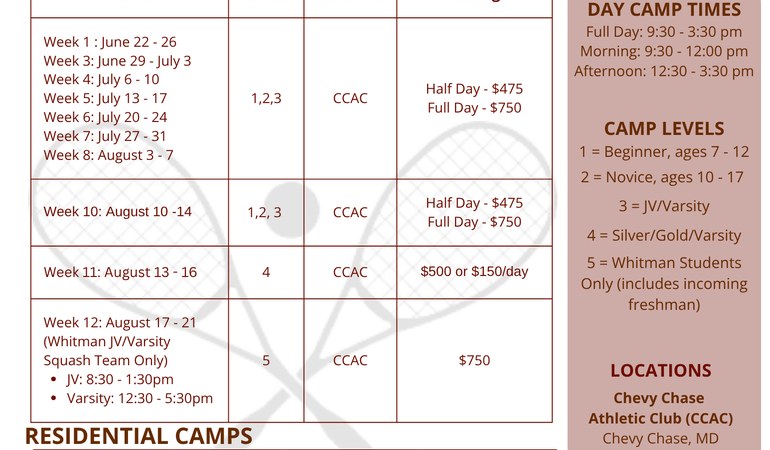
Day camps (1 day): over 4 to 6 hours, open with a dynamic warm-up (mirror-partner exercises or a tag game), run two or three short skill sessions (straight drives, serve-return, target practice), then after lunch hold brief matchplay (round-robin doubles to 3 points) and a team game such as a small Capture the Flag, and finish with cool-down stretches or a team cheer. Rotate activities every 30 to 45 minutes to keep kids engaged.
Weekend camps (2 to 3 days)
Give each day a theme or progression:
- Day 1: fundamentals (forehand and backhand drives, court positioning) in morning drills, games such as King of the Court, then volley drills and shorter scrimmages in the afternoon, and an evening team-building activity like a scavenger hunt.
- Day 2: a fitness challenge to wake up, then drills on serves, boasts, and drop shots, ending with a mini-tournament or round-robin (doubles to 5 points, rotating partners) with small prizes; include at least one off-court activity (human knot, balloon tower) each day, and a final friendly all-star match or relay.
Week-long camps (5 days)
A full week builds day by day:
| Day | Theme | Focus and Activities |
|---|---|---|
| 1 | Introduction and Basics | Warm up with games (mirror partner, tag) and teach basic strokes (forehand and backhand drive). End with light gameplay, a skill challenge or mini-match. |
| 2 | Movement and Volleys | Emphasise footwork drills and volley shots. Play volley-based games such as front-wall net play. |
| 3 | Serves and Returns | Practice different serves and returns. Use target games for serves. The evening can include an obstacle or fitness challenge. |
| 4 | Strategy and Matches | Combine skills into tactics. Organise round-robin matches using standard 11-point scoring to give match-play experience. Introduce doubles squash for a change of pace. |
| 5 | Tournament and Celebration | Hold a closing tournament or team competition (mixed doubles or a team game). After matches, hand out certificates or prizes. Add side events such as a squash trivia quiz or a group photo. |
Each day mixes on- and off-court elements: mornings for on-court drills and games, afternoons starting with an off-court fitness circuit or team challenge, then match play. By midweek campers often form teams for squad challenges, and coaches can give personalised feedback. In all formats, keep sessions age-appropriate, with shorter activities and simpler instructions for young children and longer matches and technical drills for teens and adults.