Playing squash solo might sound less exciting than a competitive match, but it is one of the best ways to hone your skills. When you practice alone, you can focus completely on your technique and consistency without the pressure of an opponent.
Solo sessions let you groove your shots, improve your footwork, and build up a serious sweat on your own terms. Many squash coaches and pros consider solo drills an underused route to improvement, a chance to work on your game at your own pace. Here is how to train by yourself effectively, from equipment and court setup to specific drills for accuracy, footwork, and fitness.
Why Practice Squash Solo?
Solo practice offers several benefits that are hard to get during a regular game. First, it lets you focus on technique. You can work on your swing mechanics and ball control without worrying about winning points.
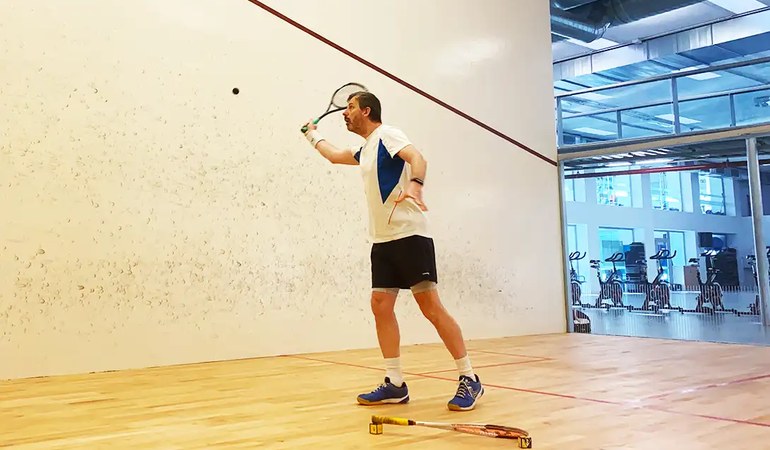
In squash, hitting the ball against a wall is how the game is played, so the court itself becomes your training partner, no machine needed. You can repeat a shot dozens of times, which is good for building muscle memory and accuracy.
Just be mindful to practice with good form, since solo time can ingrain habits, good or bad. If possible, get some coaching on proper technique and then use solo sessions to groove those correct habits.
Another advantage is improving concentration and consistency. With no opponent, it is just you and the ball, so you have to keep yourself focused. Many players find solo hitting almost meditative; the rhythm of ball strikes can help you stay in the moment.
If you notice your mind wandering, refocus on the ball. Some players even try to watch the little yellow dots on the squash ball as it spins, to steady their gaze and stay present.
Solo practice can also boost your fitness and footwork. You will not have a partner to chase you around, but you can create your own movement drills. For example, mixing in footwork exercises like ghosting (explained below) with hitting drills is a good way to build court speed and endurance.
When you practice alone, you can alternate periods of hitting with bursts of court sprints or ghosting to simulate the stop-start nature of real rallies. That work pays off in matches when you find yourself faster to the ball and less winded between points.
Finally, solo sessions are convenient. You do not need to coordinate schedules. Whenever you have court access and some free time, you can train. Even a short 30-minute solo hit, done regularly, can lead to noticeable improvements in your game.
As one coach has put it, solo hitting is one of the best things you can do to improve your skill and concentration. Now, let us get you geared up and ready to hit the court alone.
Essential Gear for Solo Squash Practice
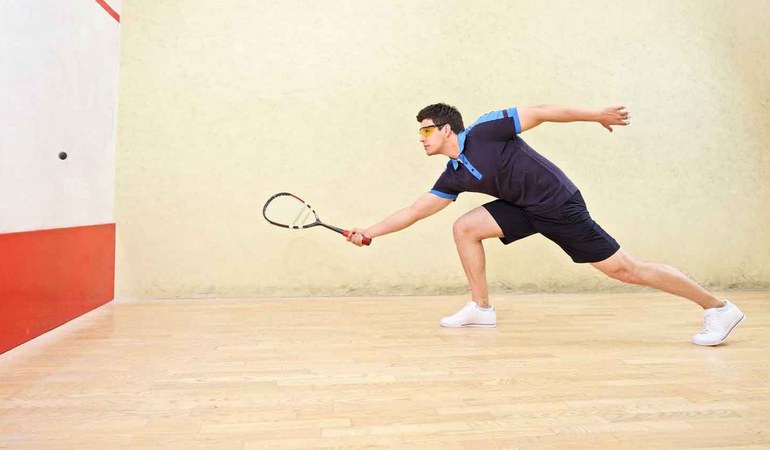
One good thing about solo squash practice is that you do not need much beyond your usual squash gear. Still, here are some equipment tips to make your solo sessions more effective.
- Squash ball (choose the right type): Using the appropriate squash ball matters. If you are an intermediate or advanced player, you might normally use a double-yellow dot ball, but solo practice can make it hard to keep a ball hot, or bouncy, on your own. Do not be afraid to use a bouncier ball, such as a single yellow dot, red dot, or even blue dot for beginners, for solo drills. The goal is to have rallies that last and give you good practice, not to struggle with a cold ball that will not bounce. It is a common misconception that you must always train with a double-yellow just because the pros play with it. Use the ball that helps you improve, and switch to a less bouncy ball as your skills and power grow. Also consider keeping a second ball in your pocket or hand to swap in if the first one cools down; some solo routines suggest holding the spare ball in your non-racquet hand during ghosting to keep it warm.
- Racquet and grips: Use the same squash racquet you play matches with so that you are practicing with a familiar feel. There is no special solo practice racquet, just make sure your strings and grip are in good shape. Solo time is good for getting comfortable with a new racquet or string tension since you can hit a lot of balls. If you have an older racquet as a backup, bring it along in case you have a string break, which is rare during solo drills but can happen if you are hitting the ball hard.
- Safety gear: Even when you are alone, safety matters. Wear your eye protection. A squash ball can ricochet unpredictably and you do not want to find out the hard way why goggles matter. With no one else on court, also make sure to have good non-marking court shoes for proper grip; you will be doing a lot of moving and lunging, and good shoes help prevent slips.
- Targets and markers: To make your practice purposeful, get creative with targets. A simple sheet of paper taped to the front wall is an ideal target for drives, since the paper is light enough that the ball still bounces normally if you hit it. You can also use a strip of painter's tape to mark a target area on the wall, for instance a rectangle in the back corner or a line a few inches above the tin to aim your drops. For target practice on the floor, where your second bounce should land, a piece of paper or a coaster works. Anything flat that will not trip you up is fine. As your accuracy improves, use smaller targets or move them closer to the nick to challenge yourself.
- Cones or floor markers: If you plan on doing footwork drills (ghosting), it helps to have a few small cones or markers. Place these in the court's corners or along the side walls to represent where you would drop into a lunge for a shot. For example, you might put a cone near the front corner to mark an ideal drop shot position, or on the side wall about halfway back to mark where to intercept volleys. These give you visual cues for your movement and swing positioning during ghosting.
- Timer or phone: A stopwatch or interval timer app on your phone is useful. Many solo drills are more effective if done for a set time or in intervals rather than just hitting until bored. For instance, you might do a drill for 2 minutes on, then rest 30 seconds. A timer keeps you honest and adds structure to your session. You can also use it to count how many shots in a row or how many targets you hit in a minute. Tracking these numbers over time is a good way to see your improvement and stay motivated.
- Optional rebound or training tools: The squash court itself is the best training tool, since the walls return the ball to you. You do not need gadgets, but if you are curious or have access, there are aids out there. Some clubs have ball machines for squash that can feed you shots, useful if you want to practice a specific hard drive over and over without setting it up yourself. These can add variety, but they are not common and can be expensive. There are also reaction trainers, such as interactive lights you slap on the wall that flash targets to hit, or apps that randomize your drills. Those can be fun if you like tech, but they are not required for a good workout.
In short, a squash racquet, a good ball, and some creativity with targets are all you need to get started.
Setting Up Your Solo Session: Warm-Up and Court Tips
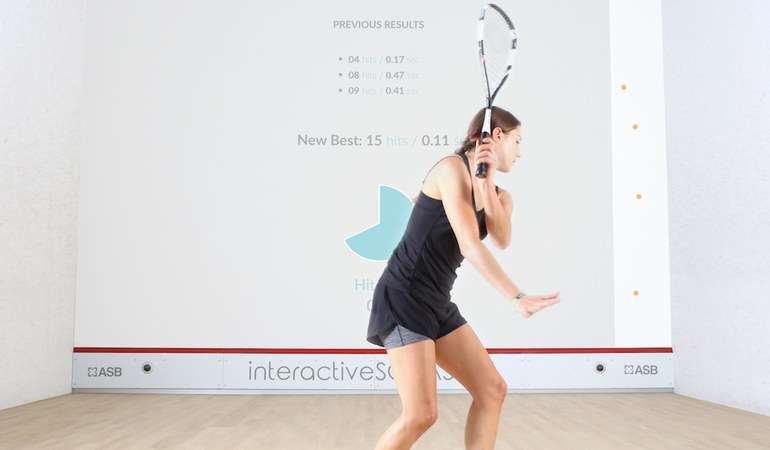
Before you launch into drills, warm up properly, both your body and the ball. Treat a solo practice like a real session or match in terms of warm-up: do a few minutes of dynamic stretching and light movement to get your blood flowing. For example, do some leg swings, arm circles, lunges with torso twists, and gentle jogs around the court.
Follow that with a brief hitting warm-up to get your eye in and the ball bouncy. Hit a bit of everything to all areas of the court: some high lobs, some volleys, a few hard drives, both forehand and backhand. Solo players often overlook warming the ball, but a cold ball will not cooperate even if your muscles are ready. Spend a minute or two getting the ball to a lively bounce by rallying yourself off the front wall at medium pace.
When training alone, court setup is about making the environment work for you. Set up your targets: put down your paper targets on the floor or tape them on the wall as needed for the drills you plan. This gives you a clear goal to aim for on each shot, for instance a target a foot above the tin for drives, or a target near the back of the service box for length.
A visual target keeps you honest and focused; without one, it is easy to hit without purpose. A common mistake in solo practice is to mindlessly smack the ball around with no plan, which does not help your game and can reinforce bad habits. So from the start, practice with purpose: know what you are aiming for on each drill. Quality beats quantity here. Five minutes of mindful, target-oriented hitting is better than twenty minutes of whacking around while your mind wanders.
Another tip for using the court effectively is to simulate real rally scenarios. For instance, after you play a shot, try to recover back toward the T (center) just as you would in a game. When you feed yourself a ball to start a drill, do it from a realistic position.
If you are practicing straight drives from the back court, stand near the back and feed the ball off the front wall to yourself; if you are practicing drops, feed the ball from the T or deeper so you have to move up to the front to hit the drop. Always moving and resetting your position makes your solo hits closer to a real match pattern. It is tempting to hit a shot and then casually go pick up the ball from the corner; instead, turn that retrieval into part of your footwork drill, since lunging to pick up a ball and hustling back to center can itself be a fitness exercise.
Remember to pace yourself and include breaks. Solo training can be surprisingly mentally taxing because you are constantly self-monitoring your technique and effort without external feedback. Plan to pause for a drink or a breather every so often, especially between different drills.
Also, limit how long you grind one drill in a row, since spending too long on the same exercise can lead to diminishing returns once fatigue sets in. A good guideline is about 5 minutes, up to 10 at most, on one drill or shot, then switch focus. This prevents burnout and keeps your quality high throughout the session. You might only have the court for 45-60 minutes, which is not long if you have a structured plan, so use your time wisely by rotating through a few key drills rather than trying to do everything at once.
Do not sacrifice accuracy for power or quantity. It is easy when alone to start hitting harder and harder, chasing that satisfying crack of the ball, and next thing you know your shots are spraying all over and your arm is tired after 20 minutes. Instead, start slowly and focus on hitting your target areas. If you feel your form slipping, pause, reset, and resume with controlled swings.
As one coach emphasizes, a slow and measured approach aiming for targets will do more for your game than smashing a hundred wild shots that tire you out with little improvement.
Finally, treat the solo session as a chance to think about the small details. Since you are not in a heated match, you can pay attention to things like your grip pressure, your swing follow-through, or your foot placement. Use the glass back wall as a mirror, if your court has one, to check your swing or stance.
This kind of mindful practice is where you can really polish your technique. In short: warm up well, set up targets, emphasize quality, and keep yourself mentally engaged. Now, on to the drills themselves.
Drills to Sharpen Your Shot Accuracy and Control
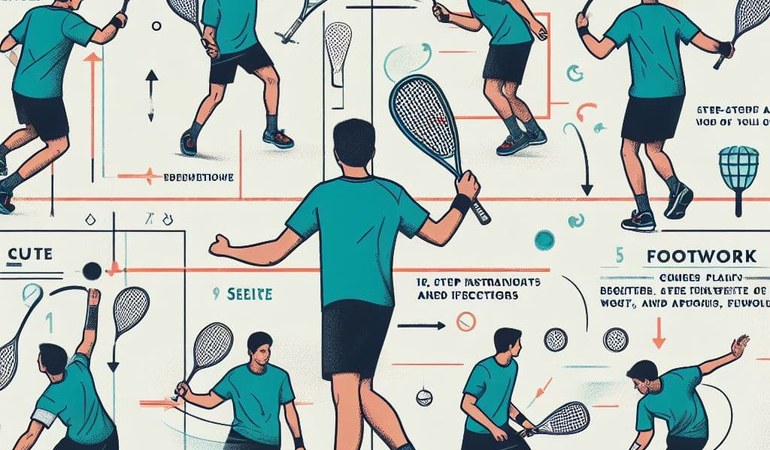
One of the main goals of solo practice is to improve your shot accuracy, being able to place the ball where you want consistently. Below are some effective solo drills that develop accuracy, touch, and control. These drills target different shots (drives, volleys, drops) and can be adjusted to your level. Always aim for a target or specific spot, and challenge yourself to improve your consistency over time.
Straight drive to a target
The straight drive is a fundamental squash shot, and practicing it alone pays off in matches. Stand in the back quarter of the court and rally the ball straight to yourself along one wall. Place a target on the front wall as your aiming point, for example a sheet of paper a few inches above the service line, about a ball's width from the side wall. Try to hit the ball so it returns deep and bounces near the back of the service box on each shot.
Focus on a smooth, grooved swing and consistent contact. Vary the height and pace: hit some drives higher on the front wall with a slower swing to work on height and depth, and others lower and harder for a faster, tighter shot. This teaches you to control length with both touch and power. As you improve, move your target lower or further forward to make the length tighter.
A useful challenge is to count how many drives in a row you can hit without error, or how many times you can hit the paper target in two minutes, then try to beat your record next session. Also keep your eyes on the ball through each hit (some players try to read the logo or watch the dots on the ball as it comes off the wall) to ensure you are watching it onto your racquet. Do this drill on both forehand and backhand sides. It is simple but highly effective for accuracy and consistency.
Stepping back volleys (the volley ladder)
Volleying is about quick reflexes and precise control, and you can practice it solo by progressively moving back from the front wall. Start a few steps away from the front wall and hit short volleys straight to yourself. Once you are in a good rhythm of soft, controlled volleys, take a step back and continue volleying. Every 4-5 hits, step another step back.
The farther from the front wall, the harder it becomes to keep the ball up, so your goal is to maintain control all the way back. If the ball drops and bounces, or you mishit and have to stop, the rule is you start over from the beginning, up at the front wall. This adds a bit of pressure on yourself to perform, similar to a video game where a mistake sends you back to the start.
Keep the volleys straight and try not to let them stray off the side wall. Advanced players can make it all the way to volleying from the back wall; if you manage that, you can ladder your way forward again by stepping up after each set of volleys. This drill improves your racquet control, hand-eye coordination, and shoulder endurance, and it is good cardio as you move and react.
To get the most out of it, enforce some discipline: every volley should be shoulder-high and parallel to the side wall. If you start spraying the ball, reset and focus. Intermediate players should include this drill, while newer players might start with a simpler version. If you are a beginner and find this too hard, try standing about one step in from a side wall and see how many gentle volleys you can tap up against that side wall without letting it drop. That simpler exercise builds the same tracking skills in a more controlled way, and over time you will graduate to the full stepping volley drill.
One foot in the box volley challenge
Here is another volley exercise that also forces a good positioning habit. Stand with one foot inside the service box, keeping one foot touching inside that box area on the floor, and try to volley straight to yourself as long as possible. The catch is you cannot move that foot. It anchors you, so you will need to reach and adjust your torso for wide balls. See how many volleys you can get in a row before you lose control.
Keeping one foot in the box simulates having to volley while maintaining position near the T, and it trains you to lean and use your wrist and reach. If it is too easy, challenge yourself by hitting some volleys higher or lower to vary the difficulty, or by increasing the speed of your volleys to test your reactions. This drill is good for building stability and improving your volley accuracy under a constraint.
As always, do it on both forehand and backhand sides. If you do the volley ladder drill above and this one foot drill, you are not only improving control but also getting a shoulder workout, which helps you volley better when you go back to match play.
Solo drop shot practice
The drop shot demands touch and accuracy, and solo practice is good for dialing it in. A simple way to practice drops alone is with a feed-and-drop routine. Start at the T (center). Gently feed or toss the ball up to hit it so that it bounces off the front wall and lands somewhere around the service line or just in front of you. Then move quickly forward, as if approaching a short ball, and hit a drop shot aiming for one of the front corners.
Try to simulate a real in-game drop: get low, bend your front knee into a lunge, and lightly guide the ball to the front wall so that it dies near the floor. Put a target on the floor in the front corner, for instance a sheet of paper against the side wall a couple of feet from the front wall, and see how often your drop lands on or near it. Since drop shots are slower and softer than drives, you might find you can hit that target fairly often, which is good for confidence.
Do this repeatedly: hit the feed, move in and drop, then grab the ball and reset. It is a bit stop-start, but it ingrains good habits, since you are practicing the movement in and out of the front as well as the shot execution. Focus on proper form: step into the drop, racket up early, and a soft touch on the ball. Count how many good drop shots you can hit out of ten attempts, then try to improve that percentage next time.
For variations, feed from different positions so you practice drops from the middle of the court and the back as well, since in games you will sometimes drop from deeper if you get a high loose ball. You can also practice crosscourt drops solo: stand on the backhand side, throw up a high ball, and volley drop it to the opposite front corner. It is a less common shot but useful, and you can practice it alone.
One more combo is drive-drive-drop: hit two deep drives to yourself, then on the third shot take a bit of pace off and go for a soft drop, then retrieve the ball and repeat. This mimics pushing an opponent deep with a couple of lengths and then attempting a drop shot winner, and it is good for switching between power and touch on command.
Figure eight volley (advanced angles drill)
The figure eight is a classic solo drill that challenges even advanced players. It is called figure eight because of the path the ball takes: you volley alternately to the left and right front corners so that the ball travels in a looping figure-eight pattern around you.
To do it, position yourself around the center of the court, near the T. Hit a volley to the front right corner so that the ball strikes the front wall, then the right side wall, and comes back toward the middle. Then take that ball on your backhand side and volley it to the front left corner, so it hits the front wall then the left side wall. Repeat this alternating sequence continuously. If done correctly, you will be hitting forehand, backhand, forehand, backhand, with the ball tracing an eight around you.
Start by letting the ball bounce once between shots if needed, since the extra bounce gives you a moment to adjust your position. As you get the hang of it, try to do it as pure volleys with no bounce. Focus on controlling the angle and height: too high and the ball will fly out of reach, too low and you will tin it.
This drill is good for practicing angles and crosscourt volley control. It also forces quick footwork adjustment and reading the ball off the side wall, a skill that pays off in retrieving tricky shots in matches. Be warned: figure eights are tiring and can strain your wrist due to the rapid volleying and directional changes. Do them for 30 seconds to a minute at a time. It is a real test of focus, and even top players find it hard to sustain a long figure eight.
If you work on it regularly, you will develop good racket skill and confidence with volleying at odd angles. When it starts feeling easy, add progressions: for example, try hitting two volleys in a row into the same corner before switching to the other side, or include the back corners for a full-court figure eight routine. Those are demanding, but they show how much you can expand a simple solo drill as you improve.
Side-to-side boast-drive drill
This drill is less well-known than the others but is good for mixing straight and angle shots. Hit the ball into one side wall at an angle so that it bounces off the opposite side wall, essentially a three-wall boast that comes toward the middle of the court. Then hit it back into the other side wall so it returns to where you started, and keep this going in a continuous rally. In effect, you are hitting a wide figure eight that uses the full width of the court: forehand into the right wall, then backhand into the left wall, repeat.
This drill improves your ability to react to and create angles, and it forces you to move your feet for each shot. Start by aiming to have the ball's rebound stay around the service box area. As you get better, try to make all your side-wall shots land within the width of the service box, tighter to the side walls, and for an extra challenge see if you can hit the service line on the front wall with each shot as a target. That is tough, but it will sharpen your accuracy.
This side-to-side drill is the solo equivalent of practicing alternating straight drives and boasts, useful for developing deception, since the swing setup can be similar, and comfort with balls coming off side walls.
These are just a few key drills for accuracy and control. There are many variations you can explore, but always keep the core principle: have a target, and hit with intent. Whether it is a length, volley, or drop, solo practice should be about precision. As your aim improves, you can make your targets smaller or set stricter goals, like nailing a nick target on the drop shot. Over time, shots that used to be lucky in matches become routine, because you have hit that front-corner target a thousand times when training alone.
Footwork and Fitness: Solo Drills for Movement and Stamina
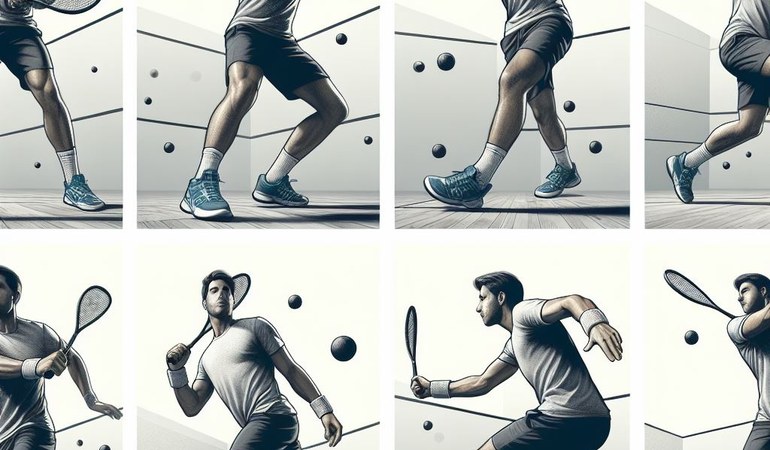
Hitting the ball well is only half the battle; you also need to reach the ball in time. That is where footwork drills in solo practice come in. The core of squash footwork training is something called ghosting. Ghosting means moving around the court to various positions without a ball, as if you are playing an imaginary rally. It can look a bit odd, hence the name, since you are chasing a ghost ball, but it is an effective way to improve your speed, agility, and court coverage.
When you ghost, you typically start at the T, then sprint or shuffle to a corner, perform a swing or touch the floor to mimic a shot, and return to the T, then immediately go to another corner, and so on. You are recreating the movements from the T to each of the court's corners and back that you would do in a match, just without the ball. This drills your split-step, your lunges, and the habit of recovering to center after each shot. Solo practice is a good time to work on footwork because you can nail the details without the distraction of the ball.
Here are some ways to incorporate footwork and fitness into your solo sessions.
High-intensity ghosting (speed and stamina)
One approach is to use ghosting to build explosiveness and endurance. After you have done some hitting drills, challenge yourself to a burst of fast ghosting. For example, set a timer for 60 seconds and see how many ghosts (round trips from T to a corner and back) you can do in that time. Or pick a number, say 20 ghosts, and time how long it takes you to complete them, then try to beat that time next session.
When doing speed ghosting, make it random. Do not always go front-right, then front-left in a predictable pattern. You want to mimic a real rally where you have no idea which corner the next ball is going to. One trick is to mentally assign numbers to six positions (front right, front left, back right, back left, plus mid-right wall and mid-left wall to simulate volley interceptions) and either have a friend call numbers or use an app that calls random corners.
That forces you to react and push off in all directions unpredictably, which is how squash works. Include those mid-court side movements, stepping out to volley positions, as additional corners, so you are ghosting to six points around you, not just four. These lateral ghosts replicate moving to cut off a ball on the volley.
Keep your intensity high during these drills; they should get you winded. If you do 3 or 4 sets of 1-minute all-out ghosting with a minute of rest in between, you will get a squash-specific cardio workout that your legs will feel. Just be cautious not to overdo it, since speed ghosting is tough and doing too much in one go can lead to bad form or injury.
Start with shorter bursts, such as 30 seconds fast ghosting and 30 seconds rest for a few rounds, and build up as your fitness improves. Over time, this training makes you quicker on court and improves your recovery between rallies.
Slow-paced ghosting (technique and efficiency)
Footwork training is not only about raw speed; it is also about moving smoothly and efficiently. For this, try some slow, deliberate ghosting drills. Instead of sprinting, move at maybe 50 percent effort in a controlled manner from corner to corner. Focus on form: stay low, keep your steps light, and execute a swing at each ghosted shot with balance.
Use those cones or markers to indicate where you would ideally hit the ball, and step right to that spot each time. For instance, place a marker where the ball would bounce in a back corner and practice getting all the way back and down to that spot, racquet prep early, then ghost a swing and come back to the T.
This slow ghosting is good for ingraining proper movement fundamentals. You can think about your split-step timing (do a small hop on the T just as you imagine your opponent hitting, then move into the corner), or whether you are taking the optimal number of steps to reach a ball, or which leg you are lunging with on certain shots. By slowing down, you give yourself time to analyze and adjust your footwork patterns. It is like a dancer practicing choreography in slow motion before speeding it up.
You might find that you can take one less step to the back corner by lengthening your lunge, or that you need to push off harder to return to the T faster. Do slow ghosting for a minute or two at a time, then pause and reflect: what felt efficient, what felt awkward. This kind of mindful practice can pay off, and since it is not as tiring you can do several sets. The goal here is not to raise your heart rate, unlike fast ghosting, but to polish your movement economy. Over time, gradually speed it up while trying to maintain that same efficiency. You will become both faster and lighter on your feet.
Combine ghosting with hitting
Doing all your hitting drills first and then footwork can get monotonous, so feel free to mix them up. One good approach is to alternate a hitting drill with a short ghosting drill, and repeat. For example, hit drives for 3 minutes, then do 1 minute of ghosting, then practice volleys for 3 minutes, then another minute of ghosting, and so on.
This keeps your session dynamic and also simulates real play, where you hit a few shots, then scramble and move quickly, then hit again. It also has a practical benefit: the ghosting bursts raise your heart rate and make the next hitting drill more challenging, training you to hit accurately even when winded.
One popular variant is the ghost and swing drill: hit one shot, for example a straight drive, then immediately ghost to a different part of the court and back, then hit the next shot, ghost again, and so on. This forces you to move your feet between shots rather than admiring your handiwork. A simple one to try is: hit a straight drive, then ghost to the front, touch the nick, back to the T, hit another drive, ghost to the other front corner, back to the T, and repeat.
You can invent all sorts of combos. The key is that you are not standing static and admiring your shot; you are training yourself to hit and move continuously, which is exactly what you should do in matches. When alternating drills like this, you can use the rest periods smartly: hold the ball in your hand during ghosting to keep it warm, or ghost with your racquet in hand to simulate how your movement feels in a rally. This blend of exercises makes solo sessions go quickly and boosts both skill and fitness together.
A note on form during footwork drills
Always try to return to a good ready position at the T after each ghost or shot. In ghosting exercises, come back to the T with a split-step or at least a balanced stop before going to the next corner. In hitting drills, after you strike the ball, recover back toward center as the ball is traveling.
It is easy to loaf a bit when solo, since you know where the ball is coming, but disciplined movement will set you apart. For example, if you are practicing drives, hit your straight drive and immediately shuffle a step or two back to the middle, then move back to take the next drive, and so on. This builds muscle memory so that in a real game, returning to the T is automatic.
Listen to your body during movement training. Solo practice means no one is watching, so it can be tempting to push to exhaustion. But if your form collapses due to fatigue, you are not doing yourself any favors. Take a breather when needed and emphasize doing the movements correctly.
Over time, your capacity improves and you can ghost longer or faster without losing technique. Consistency is key: a couple of ghosting sessions per week, even short ones, will noticeably improve your court coverage after a month or two. And when you pair that foot speed with the accuracy from the earlier drills, you become a much more formidable player.
Structuring a Solo Practice Session
Now that we have covered a range of drills, how do you put it all together? It helps to give your solo practice some structure, so you work on a mix of skills without overdoing it. A well-organized session keeps you engaged and makes the most of your court time. Here is an example structure for a 45-60 minute solo session.
- Warm-up (5-10 minutes): Begin with 2-3 minutes of dynamic stretching and mobility work off-court or in a corner of the court (leg swings, lunges, arm rotations), then hit the court for a physical warm-up. Do a light ghosting jog: move to each corner at a gentle pace just to get your legs warmed, no need to be intense yet. Also hit the ball lightly on both sides to get your eye in and warm the ball up thoroughly. Aim to be breaking a light sweat by the end of the warm-up. This phase prevents injury and ensures you are ready for quality hitting.
- Accuracy drills (10-15 minutes): While you are fresh, work on your shot accuracy and consistency. For example, spend about 5 minutes hitting straight drives on your forehand side, targeting a good length with the second bounce near the back wall. Then switch and do 5 minutes on the backhand side. Use your targets and focus on technique over power. You could also work in a few minutes of drop shot practice here, since it is also an accuracy and touch exercise: maybe 3 minutes of feeding and hitting drops on the forehand, and 3 minutes on the backhand. Keep each segment short, around 5 minutes per drill, to maintain concentration and quality. It is more effective to do a concentrated five-minute drill with full focus than fifteen minutes of flailing as you tire.
- Volley drills (5-10 minutes): Next, dedicate time to volleying while your hand-eye coordination is still fresh but you are warmed up. You might do the stepping back volley drill for a few minutes, or the one foot in box challenge, or simply volley continuously and see how long you can go. Work on both sides, perhaps 2 minutes of forehand volleys and 2 minutes of backhand. If you are advanced, throw in 1 minute of the figure-eight volley drill as a finisher for this segment. Volleys naturally raise your heart rate, so you will also get some fitness benefit here. Keep your targets in mind, for example volleying to yourself without hitting side walls. As always, if the ball drops, pick it up and continue.
- Footwork and fitness drills (5-10 minutes): Now that you have hit a bunch of balls, switch to a movement focus to round out the session. Do a couple of ghosting intervals at high intensity, for example ghost hard for 1 minute, rest 1 minute, then ghost another minute. Or do 3 sets of 30-second all-out ghosting with 30 seconds of rest. This pushes your cardio and trains those legs when they are a bit tired, like in a real match's later stages. Alternatively, set a number of ghosts, like 20, and time yourself. If ghosting is not your thing every session, you can substitute a different fitness element here, like court sprints (run to the front wall and back five times in a row) or star drills (touch all four corners quickly). The idea is to finish with a physical challenge so you build stamina. Quality still matters: stop if your form collapses. It is better to do 5 perfect fast ghosts and then rest than 10 sloppy ones in a row where you are barely bending your knees.
- Cooldown (3-5 minutes): Do not neglect a brief cooldown. After intense exercise, walk or lightly ghost around the court to let your heart rate come down gradually. Then do some static stretching of key muscle groups: calves, quads, hamstrings, glutes, shoulders, and back. This helps reduce soreness and improve flexibility over time. Use the court lines or walls for assistance, for example putting your foot up on the wall to stretch your hamstring, or using the door frame for a shoulder stretch. Cooling down is also a good time to reflect on how the session went and what you want to work on next time.
This is just one example structure. You can adjust based on your priorities. Maybe one day you focus more on drives and drops, another day more on volleys and fitness. The key is to plan it out, even loosely, before you step on court, so you are not spending half your time deciding what to do. As one coach notes, walking onto court without a plan is a common issue, and having a set routine or list of drills can remove that uncertainty and make your training more efficient.
A few additional structuring tips:
- Alternate intensity: Try to alternate between drills that are high-intensity and ones that are more technical or slow. For example, follow a tiring ghosting burst with a slower drop shot drill to catch your breath while still practicing, then ramp up again with another fast drill. This keeps the session balanced, and it also keeps the ball warm if you are using one ball for both, since you go back to hitting before it cools off.
- Limit total focus areas: Do not attempt to practice everything in one session. Pick two or three main areas to work on each time. Maybe today is length, volley, and movement; next time is serves, drops, and ghosting. By narrowing your focus, you will improve those things faster than if you give a cursory 5 minutes to eight different skills, and you will not feel overwhelmed. If you only have 30 minutes, maybe just pick two areas, such as drives and ghosting.
- Track your progress: Solo practice is good for measurable challenges. Keep a journal or a note on your phone of your personal bests, like longest volley rally, most targets hit out of 20 shots, or fastest time to do 10 ghosts. This kind of record-keeping can be motivating. Next session, you have something to aim for, and you can clearly see improvements over weeks. It also adds a game-like element, since you are competing with your past self.
- Stay engaged: Solo sessions can be mentally tough since you have to push yourself. To keep it enjoyable, play some music on low volume in your pocket if your club allows, or set little mini-goals throughout the session, such as hitting 10 good drop shots in a row before you move on. Variety also helps: mix up the order of drills or try a new drill you have read about to stave off boredom. If something really is not working that day, switch gears and do a different drill to avoid frustration.
With a clear structure and these drills, your solo practice will be productive. It is a satisfying feeling to walk off the court knowing you have polished your skills on your own. Consistency is key: even one solo session a week, added to your regular games, can make a real difference in your development.
Making the Most of Solo Practice
Training alone in squash is like having a personal laboratory for your game. It might lack the adrenaline of a live opponent, but it comes with the advantage of freedom to focus on your weaknesses at your own pace of improvement. By using a mix of solo drills, some for accuracy, some for footwork, some for fitness, you address all aspects of your game.
Over time, you will notice that your straight drives keep dying in the back corner, your volleys find their mark more often, and you arrive to the ball quicker and with better balance than before.
A few final tips:
- Be patient and consistent: Improvement in squash takes time. The first few solo sessions might feel clunky or tiring in a way you are not used to. Stick with it. Over weeks, the exercises that were hard become easier, so you can set new challenges. Consistency beats the occasional marathon session. It is better to do 2-3 short focused solo hits a week than one very long one where you are exhausted and not sharp by the end.
- Mindset, quality over quantity: Remember that perfect practice makes perfect. Ten well-executed shots with full concentration beat fifty half-hearted ones. If you catch yourself just whacking the ball or going through the motions, pause, refocus on a target or technique cue, or take a water break and come back with intention. You are your own coach in solo practice, so keep yourself honest about the quality of your hits and movement.
- Mix solo and match play: Solo training is useful, but it complements rather than replaces playing games or drills with a partner. Use solo time to sharpen tools so that when you play matches, you can put those improved skills to use. You might find it useful to end a solo session by visualizing a real rally, for example ghosting and imagining playing a point against a rival using the shots you just practiced. It is a form of mental rehearsal that can help transition practice into match play.
- Enjoy the process: Solo sessions can be rewarding. There is something almost zen about hearing only your own breathing and the thwack of the ball echoing in an empty court. It is you versus yourself, which can be a good stress relief and confidence builder. Note the small wins, like finally hitting that target 5 times in a row, or lasting an extra 10 seconds in your figure-eight volley drill. Those are clear signs of progress.
Squash is one of the few sports where you can practice by yourself and still cover nearly every aspect of the game, so take advantage of that. Whether you are a beginner trying to nail down the basics or an intermediate player looking to take the next step, solo practice is a strong tool.
Solo drills are underused, and even world champions have attested to their value. So grab a ball, hit the court, and spend some quality time with the wall, a reliable training partner. Keep it focused, and watch your skills grow.