Squash is one of the most intense racket sports, demanding agility, speed, strength, and endurance. A solid fitness foundation can often be the difference between winning and losing a match.

This guide is aimed at beginner to intermediate squash players looking to improve their on-court performance and reduce injury risk through targeted fitness training.

We will cover why fitness matters, specific on-court drills for movement and agility, strength and flexibility workouts for injury prevention, tips to sharpen your swing, basic nutrition for energy and recovery, and recovery practices. A sample weekly training schedule is also included to help you plan your training.

Why Fitness Matters in Squash

Image coming soon

Squash is fast-paced, and fitness is a key factor in performance. The ball rebounds at high speed, so players need quick footwork and fast reflexes. If you lack conditioning, you may find yourself losing rallies due to fatigue rather than skill.

Good fitness brings several benefits:

  • Endurance for longer rallies: Squash rallies can be long and grueling. Stamina lets you maintain a high level of play without tiring. Many newcomers struggle not because of poor technique, but because they lack the stamina to keep up with the game's relentless pace.
  • Speed and agility: You need to move explosively in a small court, chasing balls into the corners. Being agile and light on your feet means you can reach shots earlier and position yourself better. Quick footwork also helps you recover to the T (center) between shots.
  • Strength and power: Hitting powerful shots, like hard drives or volleys, requires strength in your legs, core, and upper body. Strong legs help you push off explosively and lunge low, while a strong core and upper body translate into harder swings. Strength is important for powerful returns and for absorbing the impact of sudden movements.
  • Injury prevention: A fit body is more resilient. Strengthened muscles and joints can better withstand the stresses of squash, reducing the risk of strains. Good flexibility improves your range of motion, so you are less likely to pull a muscle reaching for a ball. We cover specific injury prevention tips later, but in short, being fit helps you stay in the game.
  • Mental confidence: Knowing you have the fitness to outlast your opponent is a mental edge. If you are not worrying about getting winded, you can focus on strategy and shot-making.

In short, improving your fitness can significantly improve your game. Next, we look at on-court exercises that build the specific skills and conditioning squash demands.

On-Court Drills for Footwork, Agility, Speed, and Endurance
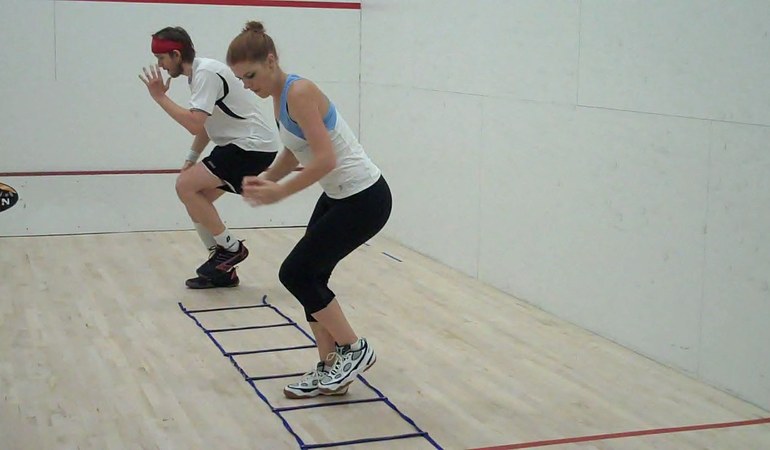
Image coming soon

Squash-specific on-court exercises are designed to simulate game movements and build the physical qualities you need during play. These drills typically involve moving around the court at high intensity to develop fast feet, quick reactions, and cardiovascular endurance.

Below are key areas to work on, along with examples of drills.

Footwork Drills

Efficient footwork is the backbone of squash movement. Practicing footwork drills will improve your court coverage and positioning.

One classic exercise is ghosting, spending time on court moving from the T to various corners without a ball. Ghosting drills train you to move into position for shots with correct steps and lunges.

  • Ghosting (star drill): Start at the T (center). Move to the front-right corner, return to T, front-left, return, back-right, T, back-left, T, hitting all six major court hot spots. Do this sequence at a good pace. Focus on proper movement: sidestep and turn your hips toward each corner, and get low on the final step as if you are hitting a shot. After running the sequence, try random ghosting: have a coach or partner call out corners in random order so you react and move accordingly. Ghosting builds quick footwork, conditions you physically and mentally, and helps develop a sense of flow and rhythm in your movement.
  • Explosive ghosting: An advanced variation where a coach points to a random corner and you sprint to that spot, then back to T, repeatedly for a set time (for example, 1 minute). This trains explosive acceleration off the T and rapid recovery. Keep your racket up as you move and simulate a swing or touch the wall at each corner. Take short rests between sets as needed.
  • Shuttle sprints (line runs): Mark two points on court (for example, the front service line and the back wall). From the T, sprint to the front line, touch it, sprint back to the back wall, touch it, and return to T. Repeat this back and forth. These sprints build speed and change-of-direction ability as well as endurance. Time yourself or count how many lengths you can do in, say, 30 seconds, and try to improve over time.

When doing footwork drills, emulate real shots. For instance, lunge low and pretend to swing when you reach a corner, since in matches you often lunge deeply for low balls.

Devoting even 10-15 minutes once or twice a week to ghosting can yield noticeable improvements in your movement and reduce feeling rusty on court.

Agility and Speed Exercises

Building agility means you can start, stop, and change direction quickly, which is essential for retrieving tricky shots. Speed drills improve your top running speed and foot speed.

Here are some effective on-court agility exercises:

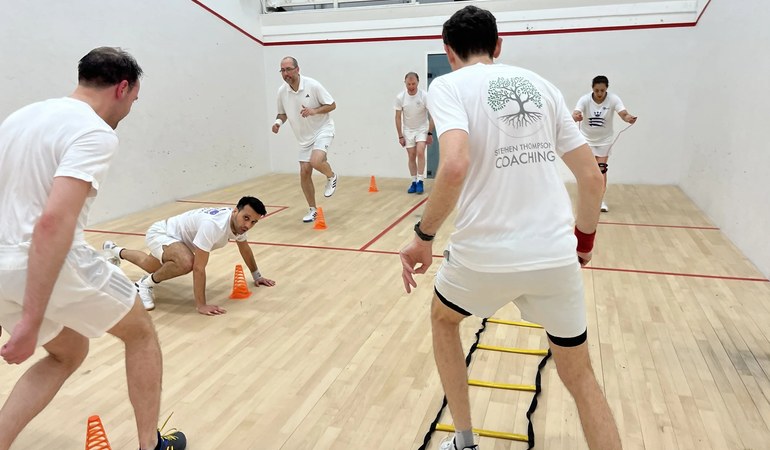
  • Agility ladder drills: Using an agility ladder (a rope ladder laid out on the floor) is a popular way to develop quick feet. Ladder drills improve agility, quickness, balance, and coordination, and can serve as a cardio warm-up. For example, do the two-in, two-out drill: step two feet into the first rung, then two feet out to the side, then into the next rung, and so on, moving laterally down the ladder. You can also do high-knee runs through the ladder or lateral shuffles. Start slowly with proper form and gradually increase speed. Ladder drills teach you to move your feet quickly and precisely, which carries over to faster adjustments on the squash court. They work best as a supplement alongside strength and sport-specific movement, not as a standalone fix for speed.
  • Cone or box drills: Set up cones in a square or T shape and practice sprinting to one cone and side-shuffling or backpedaling to another. For example, a box drill might have you sprint forward to the front cone, shuffle right to the side cone, backpedal to the back cone, and shuffle left to start, then reverse direction. This emphasizes rapid direction changes and footwork coordination. You can do these drills with or without a ball; adding a ball (hitting a shot at each cone) increases complexity and realism.
  • T-drill: Place one cone at the front center (near where a short drop shot would bounce) and two cones in the back corners. Start at the T, sprint to the front cone (as if retrieving a drop), run back to the T, then turn and sprint to a back corner, back to T, then the other back corner, and back to T. This mimics the movement of covering a drop shot and a deep shot in succession, training both speed and endurance. Try to maintain a steady pace and minimize time turning at the T.
  • Plyometric jumps: Plyometrics are explosive movements that develop power and speed. The evidence is strong that plyometric training improves lower-body explosive power and jump height, which helps you spring off quickly for a shot. A simple drill is jumping lunges or squat jumps on court: squat and jump as high as possible, or perform a lunge and then jump to switch legs. Another exercise is multi-directional jumps: stand in the middle of the court and do quick jumps forward, backward, left, and right (as if jumping to each wall) repeatedly. A few short sessions of plyometric jumps each week can boost your on-court explosiveness. Always focus on soft, balanced landings to reduce injury risk.

These agility and speed drills will make you feel lighter on your feet. You will be able to reach tough shots faster and recover more quickly.

Try to incorporate an agility circuit into your practice. For instance, you might do a set of ladder drills, then a set of cone sprints, then a set of jumps, with short rest intervals. Challenge yourself to increase your speed or reps over time.

Reaction Time Improvement

Quick reactions are vital in squash, since the ball can come at you fast, especially if your opponent volleys or hits it early. Improving your reaction time will help you volley more, pick up surprise shots, and feel less rushed.

Here are some ways to train your reflexes and court awareness:

  • Multifeed volley drill: A highly effective reaction drill is the volley feeding exercise. You will need a partner or coach. Position yourself at the T or even a step in front of it. Have your partner stand behind you (near the back of the court) and feed the ball toward you with moderate pace, aiming around shoulder height. The feeds should alternate between straight drives and cross-courts to either side. Your job is to react instantly and volley the ball back to your partner before it bounces. Because you are so far up, you have almost no time to adjust, which forces you to watch the ball closely and commit to your first instinct. If you guess wrong (expecting a straight feed but getting a cross-court), you will not reach it in time. Keep your racket up and ready at all times and use a short punchy swing to volley the ball back. Do this drill in bursts of a minute or two, then switch with your partner. It is physically demanding, but it works well for reaction speed and sharpens your volley skills under pressure. After training this way, normal match play (where you stand a bit further back) will feel easier in comparison.
  • Quick hands volley game: Stand with a partner near the mid-court and try to volley to each other as fast as you can, keeping the ball in play. Use half swings to maintain control. The goal is to react and hit the ball before it passes you. Start at a comfortable speed and then increase the pace. This drill improves hand-eye coordination and reflexes for volley exchanges. If you do not have a partner, you can hit the ball straight up against the front wall and try to volley the rebound repeatedly at increasing speed (a solo reflex drill).
  • Ball drop and catch drill: A simple off-court reflex drill. Have a partner hold a ball at shoulder height and drop it without warning, while you stand ready a few feet away. Try to sprint and catch the ball after one bounce. This trains your reaction to a visual cue and quick first-step speed. If you are alone, you can practice with a bouncy reaction ball (an uneven ball that bounces in unpredictable directions).
  • Anticipation practice: While not a physical drill, an important aspect of reaction is anticipation. During routine hitting or matches, train yourself to watch your opponent's racket and the ball closely. Good players keep their racket up and eyes on the ball, which prepares them to react sooner. You can even do ghosting with a focus on visualization: imagine an opponent hitting different shots and practice moving to where the ball would go. Over time, your body will respond faster to real shots.

Volleying in general is great for reaction training. By volleying, you take the ball early and reduce the time you have to react, which naturally forces faster reflexes. Hitting volleys consistently requires quick decision-making and fast reactions.

So incorporate volley drills into your practice. Not only will you gain a tactical advantage, you will also train your nervous system to react quickly.

Tip: If you find yourself reacting slowly in games, check your ready position. Keeping your knees bent, weight on the balls of your feet, and racket up will prime you to move faster. Also try to read cues from your opponent (their swing angle, body position) without guessing too much. The best reaction time comes from a combination of staying alert, watching the ball, and having conditioned reflexes through practice.

Endurance and Cardiovascular Conditioning

Squash matches tax your heart and lungs heavily. You often have repeated high-intensity rallies with short rests in between, and studies show players spend much of a match at 77 to 92 percent of their maximum heart rate.

To avoid gasping for air by the third game, you need to develop both aerobic endurance (to sustain effort over a match) and anaerobic capacity (to handle intense rallies). Here is how to build your squash endurance:

  • Ghosting endurance sessions: Turn ghosting into a cardio workout. For example, ghost at a steady pace for one minute, covering all corners, then rest 1 minute, and repeat for several sets. That gives you an intense session (with breaks between sets) that mimics the stop-start nature of squash rallies. Over time, increase the work interval or reduce the rest. Jonah Barrington, a six-time British Open champion famous for his fitness, was known for marathon ghosting sessions to push his physical limits. You do not need to ghost for hours, but gradually extending your ghosting duration, say from 5 minutes total to 15 or 20, will improve your match endurance. Ghosting trains you to move continuously and conditions your legs and lungs for prolonged play.
  • Court sprint intervals: Use the court lines for interval training. One routine is court suicides: starting at the back wall, sprint to the service line and back, then to the middle of the court (halfway to the front wall) and back, then to the front wall and back, which is one set. Rest 30 seconds and repeat for several sets. These short sprints with minimal rest simulate rally bursts. Aim to do each set at near-maximum effort to push your heart rate up, then practice recovering quickly during the short rests. Record how many sets you can do or how long it takes, and try to improve gradually. This kind of high-intensity interval training suits squash's demands well.
  • Aerobic base training: In addition to on-court drills, doing some steady-state cardio off court will build your aerobic base. Activities like jogging, cycling, or rowing can increase your overall stamina. For example, go for a 20-30 minute easy run or bike ride on a non-squash day. A general approach for squash players is to maintain fitness with aerobic exercises (like jogging) and anaerobic bursts (like sprinting) outside of just playing games. A good aerobic capacity means you recover faster between rallies and can last through a long match without a drop in performance.
  • Circuit training: Circuit training mixes strength and cardio and can be tailored to squash. You might do a circuit of bodyweight exercises (burpees, mountain climbers, jump rope, and so on) that keep your heart rate up. For instance, 1 minute of jump rope, 1 minute of burpees, 1 minute of fast footwork in place, 1 minute rest, repeated 3 to 5 times. This builds endurance and mimics the high-intensity intervals of squash. Always include movements that engage the legs and core, since squash is leg-heavy.

Pace yourself in training. To improve endurance you want to push your limits, but not to the point of overtraining. A good sign of improving squash fitness is when you can play an entire match at a steady pace and still feel you have energy left for extra games.

Combine on-court drills with some off-court cardio for best results. As your endurance builds, periodically test yourself: play an extra game after your usual session, or see how many ghosting movements you can do in 5 minutes. Tracking these will show how your fitness is progressing.

Strength and Flexibility Training for Squash Players
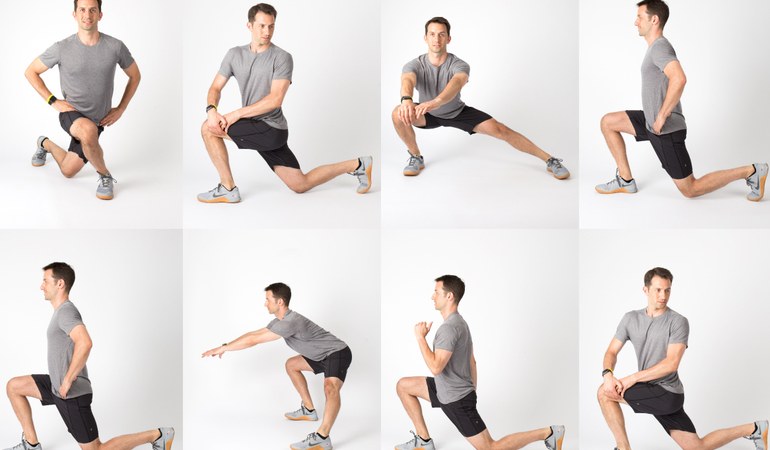
Image coming soon

Off-court training, specifically strength and flexibility exercises, is just as important as on-court practice. Building strength gives you more power in your game and helps protect against injuries, while improving flexibility enhances your reach and fluidity and prevents muscle strains.

This section covers key exercises tailored for squash players.

Strength Exercises for Squash

Why strength matters: Squash might look like an all-cardio sport, but strength is a foundation for efficient movement and powerful shots. Strong muscles also withstand repeated movements without breaking down, meaning you can recover faster and reduce injury risk.

Strength training makes muscles stronger, joints more resilient, and reinforces proper movement patterns, all of which help you decelerate and lunge safely during play. In short, a stronger player is a more powerful and durable player.

Here are the key areas to focus on and some example exercises:

  • Legs (quadriceps, glutes, hamstrings): Strong legs help you lunge low and push off explosively. Lunges are a top squash strength exercise because they mimic the movement of reaching for a low ball. Practice deep lunges with bodyweight first: from a standing position, take a big step forward and bend your front knee to about 90 degrees (keep the knee over the ankle), dropping your back knee toward the floor. Drive through the front heel to stand back up. This builds leg strength in the same range of motion used on court. Start with 2-3 sets of 10-15 lunges per leg. As you get stronger, add resistance (hold dumbbells or a kettlebell) to increase the load. Squats (including single-leg squats or split squats) are also excellent for general leg and glute strength. Strong quads and glutes protect your knees during repeated lunges. Tip: Emphasize good form (steady balance, full range) over speed. Quality reps will translate to better movement on court.
  • Core (abdominals and lower back): A stable core is essential for balance and for generating power in your swings. It helps you control your body when twisting and reaching. Include planks and bridge exercises in your routine. For example, the stability ball back bridge is a good core exercise for squash: rest your upper back and shoulders on a physio ball with your feet on the ground, lifting your hips so your body forms a tabletop. Hold that position, engaging your glutes and abs. If it is easy, try lifting one foot off the ground at a time to challenge your balance. Planks (hold a push-up position or forearm plank for 30-60 seconds) build endurance in your core muscles. Also try dynamic core moves like medicine ball rotations or Russian twists to develop the rotational strength used in swinging.
  • Ankles and calves: The stabilizer muscles in your lower legs (calves, small ankle muscles) are often overlooked but are important for squash. Every lunge and quick change of direction tests your ankle stability. Exercises like standing on one leg (balance training) or using a Bosu ball can strengthen these areas. For example, stand on a Bosu (the half stability ball) with both feet, then try lifting one foot and balancing on the other for 30 seconds. This engages your ankle stabilizers. Strong ankles and calves help you avoid sprains and allow faster push-offs for sprints. Even simple calf raises (standing on your toes) will build calf strength for better bounce on court.
  • Upper body (shoulders, back, arms): While squash is legs-dominant, the upper body still plays a big role in swing power and racket control. Focus on shoulder strength and stability, which can help prevent shoulder injuries from all those swings. Incorporate exercises like push-ups, dumbbell presses, or resistance band rows to strengthen the shoulders, chest, and upper back. Also include some rotator cuff exercises (using light weights or bands for internal and external shoulder rotations) to protect your shoulder joints. For the arms and forearms, doing some forearm exercises or simply squeezing a squash ball can improve your grip strength. A stronger grip means better racket control and less risk of tennis elbow. Pull-ups or chin-ups (assisted if needed) are also good for the upper body and core.
  • Full-body functional strength: Compound movements that involve multiple joints are great for squash fitness. Think of moves like burpees, kettlebell swings, or thrusters, which build strength and cardio together. A sample full-body routine might include a knee-dominant exercise (squats or split squats), a hinge (deadlifts or kettlebell swings for the posterior chain), an upper-body push (push-ups or dumbbell press), an upper-body pull (rows or pull-ups), and a couple of core exercises. This covers all the major muscle groups in one session.

Aim for two strength training sessions per week, covering all major muscle groups. You do not need to lift like a bodybuilder; focus on functional strength and correct form.

Consistency is key, since regular year-round strength training yields better results than sporadic heavy sessions. Also adjust volume depending on your playing schedule (reduce weight training during a tournament week, emphasize it in the off-season or lighter match weeks).

Flexibility and Mobility Exercises

Flexibility is the ability of your muscles and joints to move through their full range of motion. In squash, good flexibility allows you to stretch further for wide shots, take deeper lunges without strain, and rotate your torso for backhand and forehand swings. It also helps prevent common injuries like muscle pulls.

Flexibility training should include both a proper warm-up before playing and dedicated stretching sessions after play or on off days.

Key areas to target: Squash players often experience tightness in the hips, hamstrings, calves, shoulders, and ankles because of the nature of the movements. Focusing on these areas will give you the most benefit.

  • Dynamic warm-up: Always warm up before you play or do intense training. A dynamic warm-up means you perform movements that gently take your muscles and joints through the motions they will use on court. This increases blood flow and loosens you up. Include exercises like leg swings (swing each leg back and forth and side to side), walking lunges with a twist (step forward into a lunge and twist your torso toward the front leg to warm up the hips and core), high knees, butt kicks, arm circles, and light jogging. Spend 5-10 minutes on this. Dynamic stretching mimics the functional range of motion needed in squash and prepares your body better than static holds before activity. For example, a few walking lunges and controlled squats as part of your warm-up will dynamically stretch your hip flexors and quads in a way that is directly useful on court. Warm muscles respond better and are less injury-prone.
  • Static stretching (cool-down): After playing, or as a separate flexibility session, do static stretches (holding a stretch for about 20-30 seconds). Key stretches for squash include calf stretches (lunging with one leg back and pressing that heel down), hamstring stretches (touch your toes or prop your foot on a chair and reach for it), quad stretches (pull your foot to your butt to stretch the front of the thigh), hip flexor stretch (kneel on one knee and push the hips forward gently), glute stretch (lie on your back and pull one knee toward the opposite shoulder), lower back twist (lie on your back, drop knees to one side), and shoulder and arm stretches (pull one arm across your chest, do a triceps stretch overhead, and so on). Stretch all major muscle groups after playing, as this helps improve flexibility and aids recovery. For example, take time to stretch your ankles and Achilles tendons: a common stretch is to lean forward against a wall with one leg back (calf stretch), which also helps the Achilles.
  • Yoga or mobility exercises: Many squash players incorporate yoga or dedicated mobility workouts to stay limber. Yoga flows can open up your hips and shoulders and also improve your balance and core strength. Even a short yoga routine once or twice a week (focusing on poses like lunges, downward dog, and pigeon pose for the hips) can be beneficial. Another idea is using a foam roller for myofascial release on tight spots (quads, IT bands, calves). Foam rolling after a session can reduce muscle stiffness and improve blood circulation for recovery.
  • Maintain range of motion: As you gain strength, continue to work on flexibility so you do not become muscle-bound. Dynamic flexibility drills that mirror squash movements are effective, such as deep squats, side lunges, and reaching movements that keep you supple while strengthening. One example is a lateral lunge: step sideways into a deep lunge to stretch the inner thigh and then come back up. This opens the groin, which gets a lot of strain in lateral movements. Doing these in a slow, controlled manner as part of a warm-up or cool-down maintains your range of motion.
  • Injury prevention through flexibility: Tight muscles are more prone to injury, so keeping them flexible is a safeguard. For instance, tight hamstrings or calves can contribute to strains if you suddenly lunge without sufficient range. A good stretching routine can minimize muscle imbalances, help prevent injury, and improve squash performance. Always stretch gently (never bounce into a stretch) and listen to your body: mild discomfort is okay, sharp pain is not. Over time, you will notice improved mobility, deeper lunges, and easier reaching overhead for lobs.

Remember that flexibility can vary day to day. It is okay if you feel stiffer after a hard match, so just be diligent in your stretching and it will pay off.

Consistency is key, just like with strength training. Try to end every squash session with at least a few minutes of stretching while your muscles are warm, and consider a longer stretching or yoga session weekly.

Improving Swing Mechanics and Shot Consistency
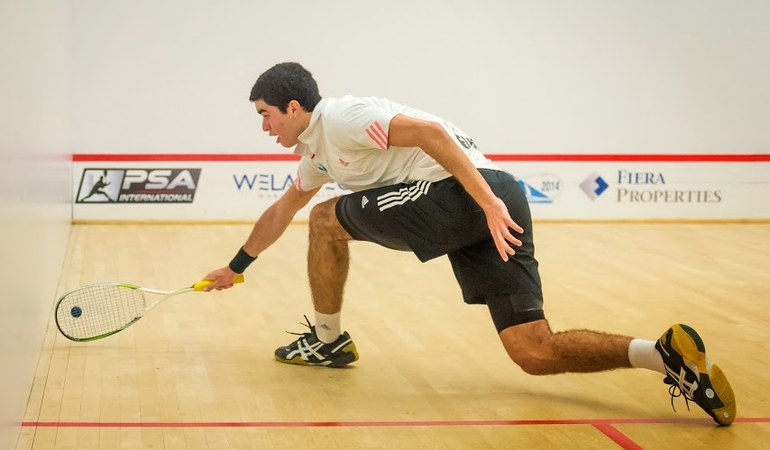
Image coming soon

Even with great fitness, you want your squash technique to be sound so you can hit accurate, consistent shots. This section focuses on swing mechanics and drills to improve shot consistency and accuracy.

For beginner and intermediate players, honing these skills will make you a better player and make your game more efficient, since good technique can reduce strain on your body.

Swing Fundamentals and Mechanics

A proper squash swing is a coordinated motion involving your whole body, not just an arm swing. Here are key mechanics to keep in mind for both forehand and backhand swings:

  • Early preparation: Begin your swing by getting your racket up early. As you move to the ball, turn your shoulders and bring the racket back (backswing) before the ball arrives. Early racket prep gives you more time to execute a controlled shot and adjust for ball position. Players with late preparation often rush and mishit the ball. A good mantra is: racket up early, then go to the ball.
  • Footwork and stance: Good swing mechanics start from the ground. Position yourself so you can step into the shot. For example, on a forehand many players use a slightly open stance, and on a backhand a more closed stance with the racquet-side foot forward. The key is to be balanced: plant your feet firmly (often one foot in front of the other in a lunge) and transfer your weight into the shot. Shift weight from your back leg to your front leg as you swing; this weight transfer puts maximum energy into the shot. If you are off-balance or reaching, your accuracy suffers.
  • Swing path and follow-through: Aim for a smooth, controlled swing. Bring the racket forward in a straight line toward your target (for drives down the line, that means toward the front wall target spot). Avoid excessive swiping across the body. After hitting the ball, follow through with your racket, since a good follow-through helps with both power and accuracy and ensures you have hit through the ball. A common mistake is to cut the follow-through short or pull away, which can send the ball off target. Let the racquet follow the ball's trajectory for accuracy, then recover quickly for the next shot.
  • Grip and wrist: Use a proper squash grip (typically a firm handshake grip with an open face). Keep your grip firm but not tight, since a relaxed grip allows your wrist to be fluid, improving control and power. Gripping too tightly causes tension in your arm and can ruin touch shots and consistency. Think of holding the racquet like you are shaking someone's hand, not choking it. The wrist should be stable through impact but can act as a hinge to allow a natural flick and follow-through. On contact, avoid flicking too much, especially if you are inconsistent, and focus on a clean strike.
  • Use the whole body: Do not swing only with your arm. Power in squash comes from a combination of legs (pushing into the shot), core rotation, and arm swing. If you rely only on arm strength, you will tire out faster and lose potential power. Try to feel the shot starting from your legs and torso. On a forehand, for instance, your hip and shoulder rotation play a big role in accelerating the racquet. This increases shot power and also distributes the effort to larger muscle groups, which helps prevent injuries like tennis elbow.

Common swing errors to watch out for include improper footwork (hitting off the wrong foot or off-balance), swinging too hard (sacrificing control), a choppy or short swing that does not allow a follow-through, and an inconsistent contact point.

If you suspect your technique is holding you back, consider asking a coach or a more experienced player to observe you. Even filming yourself hitting some balls can be eye-opening, since it lets you identify excess movements or loss of control in your swing.

Drills for Shot Consistency and Accuracy

Practice is what ingrains good swing mechanics into muscle memory. Regular drilling, especially solo practice, can dramatically improve your consistency.

Here are some drills and tips to sharpen your shots:

  • Solo straight drive drill: One of the simplest yet most effective solo drills is hitting straight drives (rail shots) to yourself. Stand a couple of feet away from a side wall and hit the ball so it travels parallel to the side wall, bouncing near the back wall and coming back to you for the next shot. Aim to keep the ball hugging the side wall. Place a target (a piece of tape or a glove) on the floor about a foot from the back wall, where you want the second bounce to land. Try to hit 10-15 drives in a row without losing control. This drill forces consistency and precision, since any mishit will cause the ball to come off the wall. It also refines your swing: you will learn to control your power and angle to keep the ball straight. Focus on a smooth swing and solid contact on each shot. Straight length hitting is a great way to practice swing mechanics and accuracy in a low-pressure setting.
  • Target practice: Visualizing and aiming for targets can improve accuracy. On court, you can set up physical targets: for instance, put a small piece of paper or a shoe at a spot in the front corner nick and practice hitting soft drop shots to land on that target. Or put a target near the back corner for your drives. During drills, always have a target in mind. If you are hitting cross-court drives, aim for a spot low on the opposite side wall where the ball would ideally hit. If you have training aids, some players place a cone or target on the front wall to aim their shots. Having a clear target focuses your mind and aligns your body to execute the shot, making practice more purposeful. Even in solo drills, tell yourself what you are aiming to do (for example, hit this drive to bounce in that back corner) on each shot. This habit will carry into matches, where you will think in terms of targets instead of just hitting the ball.
  • Grooving routines with a partner: If you have a practice partner, do cooperative drills that emphasize consistency. For example, the length game, where both players stand on one half of the court and hit straight drives to each other, trying to keep the ball going as long as possible. Or try a boast-drive drill: one player hits only boast shots (ball off the side wall to the front) and the other hits straight drives, rallying continuously. This gives both players practice on specific shots and moving to cover them. Another good drill is volley practice: stand a bit closer to the T and have your partner feed or hit shots you must volley. Aim to volley to a target area (like straight down the wall). This helps your reactions and also your control and confidence in volleying.
  • Shadow swings: Practice your swing without the ball (perhaps in front of a mirror or recorded on video). Take an imaginary forehand and backhand, focusing on each element: shoulder turn, racket up, step, swing through, follow-through. Shadow swinging is like ghosting for your swing technique, building muscle memory. You can combine this with ghosting footwork, ghosting to a corner and performing a shadow swing as if hitting the ball. Even top pros use visualization and shadow practice to refine their form.
  • Controlled hitting for form: Occasionally, slow things down. Instead of hitting every ball hard, practice hitting medium-pace shots with perfect form. A drill for this is to see how many continuous drives you can hit if you take some pace off and really groove the swing. This trains you to hit slow, deliberate shots to refine your mechanics, then gradually increase pace while maintaining accuracy. It is much better to be accurate at medium pace than wild at full power. Over time, as your mechanics improve, you will be able to add more power without losing control.

Consistency comes from repetition. The more balls you hit in practice, the more confident you will be in matches. Make drills fun by challenging yourself (for example, 50 straight drives in a row, or 10 drop shots in a target in a row).

Also use feedback: if possible, record yourself or have a coach give pointers. Video analysis is a valuable tool, since recording your swing lets you catch issues like a too-short follow-through or poor weight transfer. A coach can provide personalized tips and drills to address your specific weaknesses.

Do not neglect the mental side, since staying calm and focused is part of consistency. If you practice with targets and purpose, you train your mind to concentrate during rallies. In matches, try to visualize your shots (picture the ball hitting your target on the front wall) as you swing, which often improves execution. With time, a well-grooved swing and plenty of practice will make accurate shots second nature.

For further technique help, resources like coaching videos from professional players can be very useful. Many top squash coaches share drill ideas online, including volleying tutorials by three-time world champion Nick Matthew and footwork and swing breakdowns by national squash federations. Looking up these videos is a good way to see proper form in action.

Nutrition for Energy, Endurance, and Recovery
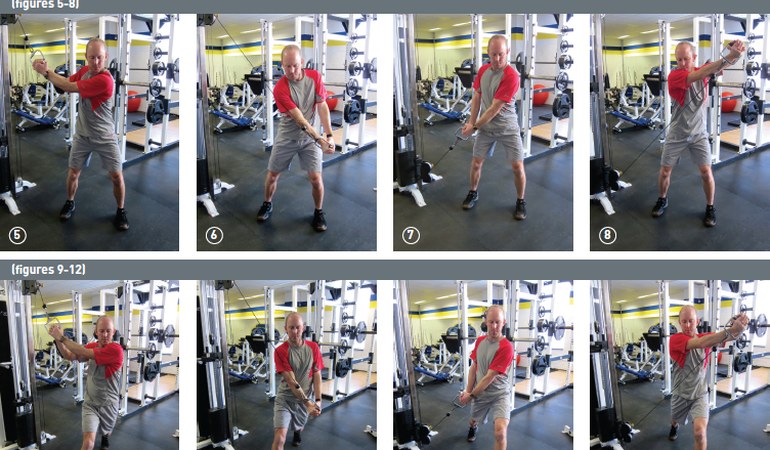
Image coming soon

Fueling your body correctly is important for maximizing performance on court and aiding recovery after tough sessions. Squash is a high-intensity sport that burns a lot of energy, so you need to eat and drink in a way that supports that level of activity.

This section covers the basics of squash nutrition: what to eat and drink to maintain energy during play, how to promote recovery, and general healthy diet tips for squash players.

Hydration: First and foremost, stay hydrated. Even moderate dehydration can lead to fatigue, loss of focus, and muscle cramps, all of which hurt performance.

Start hydrating well before you step on court (drink water throughout the day). During play, sip water or a sports drink between games. For matches or intense training over 30-60 minutes, consider an electrolyte drink to replace salts lost in sweat. Squash can make you sweat a lot in a short time, so electrolytes (sodium, potassium, and others) help prevent cramps and keep your muscles firing.

A simple homemade electrolyte drink is water with a pinch of salt and a bit of sugar or fruit juice, or coconut water. Key point: do not wait until you are thirsty, because by then you are already a bit dehydrated. Keep a water bottle by the court and take small gulps whenever you get a chance. After playing, rehydrate to help your body recover.

Carbohydrates as fuel for squash: Carbs are your primary energy source for a fast-paced sport like squash. Your muscles store carbohydrates as glycogen, and intense play steadily depletes those stores.

To ensure you have plenty of energy:

  • Before playing: Consume some complex carbohydrates a couple of hours beforehand. Good options include whole grains (oatmeal, whole-wheat bread, brown rice), starchy vegetables (sweet potato), or fruit. For example, if you have an evening match, lunch might be whole-grain pasta with some vegetables and lean protein. In the hour before playing, you might have a light snack for quick energy, such as a banana, a small energy bar, or a slice of toast with honey. Avoid very heavy meals right before squash, since they can sit in your stomach and make you sluggish.
  • During play: If you are in a long match or a tournament with multiple matches in a day, you may need to refuel between games or matches. Easily digestible carbs are best here. Some players use sports gels or chews for convenience, but natural options work too: a few sips of a sports drink, a bite of a banana, or a handful of raisins can help maintain blood sugar. The key is quick carbs that do not upset your stomach. Keep it light, since you just want enough to keep going; too much and you might feel nauseous while running hard.
  • After playing: It is important to replenish the carbs you burned, especially if you will be active again the next day. The 30-60 minutes after exercise is the most effective window for rapid glycogen replenishment, so try to eat a meal or snack with substantial carbohydrates within about an hour after playing. This could be a sandwich, rice or pasta with some protein, or a recovery shake with carbohydrate content. For serious players after exhaustive play, a common guideline is to take in roughly 1 gram of carbohydrate per kilogram of body weight per hour for the first few hours. For most people, simply getting a good carb portion in your next meal is enough.

When choosing carbohydrates, favor nutrient-dense carbs over sugary junk. You will perform better with an apple and a handful of nuts as a pre-game snack than with a donut or candy. The nutrients in fruits, vegetables, and whole grains (vitamins, minerals, antioxidants) support your overall health and energy production.

Whole, natural foods such as fruits, vegetables, whole grains, and legumes are better options than processed snacks or sweets. That said, during intense exercise like a tournament, an energy bar or sports drink can be convenient and helpful; just do not make those your daily staple.

Protein for recovery and muscle repair: Intense squash play causes strain and tiny micro-tears in your muscles, especially with lots of lunges and swings. Protein is essential for repairing and rebuilding those muscles, making you stronger and aiding recovery.

Make sure you are getting enough protein daily, especially after playing:

  • Good sources: Lean meats (chicken, turkey), fish, eggs, dairy (Greek yogurt, milk), legumes (beans, lentils), and nuts and seeds. For example, a post-match meal might be chicken with rice and vegetables, a tuna sandwich, or a protein shake with fruit.
  • Post-match window: Aim to consume some protein within 30-60 minutes after playing to kickstart muscle repair. This could be as simple as a milk-based drink or a protein bar right after a match, followed by a proper meal a bit later. Even 15-20 grams of protein (a cup of yogurt, or a small handful of nuts and a glass of milk) can help in that window.
  • Daily intake: In general, include protein in all your meals. If you are training hard, you might need slightly more protein to support muscle maintenance. You do not need bodybuilder levels, though; just make sure you are not protein-deficient. For most active people, 1.2 to 1.6 grams of protein per kilogram of body weight per day is plenty for this kind of activity.

Healthy fats: Do not neglect fats, since they are important for long-lasting energy, hormone production, and joint health. While carbs fuel the high bursts in squash, fat fuels your longer-term energy needs and recovery.

Include sources of healthy fats like avocados, olive oil, nuts, and fatty fish in your diet. They provide essential fatty acids. Just be mindful that high-fat foods take longer to digest, so keep pre-match fat intake moderate (for example, do not eat a greasy burger right before playing).

Vitamins and minerals: Micronutrients support functions like muscle contraction and recovery. For instance, magnesium and potassium help muscle function (bananas, leafy greens, and nuts are good sources), and vitamin C aids tissue repair (citrus fruits, berries). Iron (in red meat, beans, spinach) is important for oxygen transport in the blood, and low iron can cause fatigue.

The best way to get these nutrients is through a varied diet rich in fruit and vegetables. Eat a colorful array of produce, since each color often indicates different nutrients. Fermented foods (yogurt, kefir, kimchi) can support gut health, which in turn can help nutrient absorption. While you likely do not need to obsess over each vitamin, a balanced diet with whole foods will cover your bases. If you have specific deficiencies or dietary restrictions, consider consulting a nutritionist or doctor.

Game-day nutrition and routine: As a summary, here is a sample approach for a match day:

  1. 2-3 hours before: Eat a balanced meal with carbohydrates, a bit of protein, and not too much fat. For example, oatmeal with fruit and nuts in the morning, or a chicken-and-rice meal a few hours pre-match.
  2. 0.5-1 hour before: Have a light, easy-to-digest snack if you need one (banana, half an energy bar) and make sure you are hydrated (drink water, maybe with a pinch of salt and a squeeze of lemon).
  3. During match breaks: Sip water. If the match is very long or you feel your energy dropping, take a few sips of a sports drink or a bite of a banana for quick fuel. In tournaments, eat small snacks between matches (fruit, yogurt, a sandwich) to refuel without an overfull stomach.
  4. After the match: Rehydrate (water plus an electrolyte drink if you lost a lot of sweat). Within about 30 minutes, consume some protein and carbs. This could be a recovery shake (carb-protein mix) or chocolate milk, which contains both carbs and protein and is well supported as a recovery drink. Then eat a normal meal as soon as you feel able, focusing on plenty of carbs to restore energy and protein to rebuild muscle.

Listen to your body. Everyone's nutritional needs and tolerances differ. During training, experiment with the food timing that works best for you (some people can eat an hour before playing, others need more time).

The goal is to never feel starving (low blood sugar can make you weak) and not feel stuffed during play. With proper nutrition, you will have steadier energy on court, better concentration, and faster recovery for your next session.

Recovery and Injury Prevention Strategies
Image coming soon

Rest and recovery are as important as active training for improving fitness and preventing injuries. Squash is tough on the body, so you need to take care of your muscles and joints to keep playing and progressing.

In this section, we discuss how to structure rest, post-exercise recovery practices, and tips to avoid common injuries.

Post-Session Recovery Practices

After intense exercise like a squash match or training session, your body needs to cool down and start repairing. Here is how to optimize that process:

  • Cool-down: Instead of stopping abruptly, do a brief cool-down right after playing. This can be a few minutes of gentle jogging or walking to gradually lower your heart rate, followed by stretching. The cool-down helps your body transition out of high effort and start recovery, and it shifts you toward a calmer, rest-and-recover state. Incorporate deep breathing as you cool down to help you relax. Stretching is an important part of your cool-down. Target the muscle groups you used: stretch your legs, hips, shoulders, and back (as described in the flexibility section). This can reduce post-exercise stiffness and help maintain flexibility. Even 5-10 minutes of cool-down stretching can make a difference.
  • Rehydrate and refuel: Begin replacing fluids and energy soon after finishing. As covered in the nutrition section, drink plenty of water and have a snack or meal with carbs and protein. This sets the stage for muscle repair and glycogen restoration overnight.
  • Foam rolling and massage: Light soft-tissue work can help sore muscles recover. Using a foam roller to gently massage your quads, hamstrings, calves, and upper back can reduce muscle tightness. It is a bit uncomfortable, but it increases blood flow to the muscles. Similarly, using a massage gun or getting an occasional sports massage can ease tension and aid recovery. Even self-massage (kneading your calves, or using a tennis ball under your feet) can help.
  • Ice or heat: If you have specific aches, such as a tender knee or sore elbow, using ice packs for 10-15 minutes can reduce inflammation in the acute phase right after exercise. Warm baths or a heat pack later can soothe tight muscles. Some players use contrast bathing (alternating hot and cold). Listen to your body: ice is generally good for sharp pain or swelling, heat for stiffness.
  • Relaxation and rest: After a tough session, give yourself some downtime. Quality sleep is when much of your recovery happens, so aim for 7-9 hours per night, especially during heavy training periods. During sleep, your body releases growth hormone to repair muscle. Also try to avoid heavy physical activity later on the same day as a very intense squash session, and let your body recuperate.

Rest Days and Training Balance

It can be tempting to play squash every day when you are motivated, but rest is when you get stronger. Without enough rest, you risk overuse injuries and burnout.

Here are some guidelines:

  • At least one rest day per week: Plan at least one full day with no intense exercise each week. Use this day to relax, do light activities, or focus on other hobbies. Your body needs this time to repair tissue and for muscles to adapt to the training you have done. If you are older or find you need more recovery, take two rest days per week, or one rest day and one active recovery day.
  • Active recovery: On a day following a very hard workout, you might opt for active recovery instead of complete rest. This means a low-intensity activity to get blood flowing without stress, such as a relaxed bike ride, a gentle swim, or a solo hit where you just hit drives and a few easy shots (no strenuous movement), combined with some mobility exercises. Active recovery can help reduce muscle soreness and keep you limber without hindering recovery. Many athletes find they feel better the next day after a very light workout rather than just sitting still, as long as it is truly light.
  • Avoid overtraining: Be mindful not to do high-intensity squash too many days in a row. Do not play hard matches or train intensely for, say, 5 to 7 days straight without rest, since that invites injury or fatigue. Even pros schedule recovery days. A good approach is to vary the intensity: if you played a league match on Tuesday (very intense), make Wednesday a light day (stretching or an easy gym session) before you ramp up again on Thursday. Manage your training load by scheduling rest days and not playing hard every single session. If you feel very sore or notice your performance dipping, that is a sign you might need an extra rest or lighter day.
  • Listen to your body: This is fundamental for injury prevention. There is a difference between normal muscle soreness and pain that signals an injury. If you feel persistent pain in a joint or muscle (a sharp pain in your knee or Achilles), do not push through it. Take rest and, if needed, get it checked by a professional. Many squash injuries (tendonitis, sprains) start as minor niggles that get worse when ignored. Also do not keep playing when you are extremely fatigued to the point of compromising your form. Fatigue leads to sloppy technique, which leads to injuries like muscle pulls or a twisted ankle. It is okay to stop a training session a bit early if exhaustion is hitting, since it is better to come back fresh the next day.
  • Cross-training: Incorporating other activities can give your squash-specific muscles a break while maintaining fitness. For example, a cycling class or swimming can maintain your cardio without the impact on your joints that squash has. Some players do Pilates or yoga on off days to build core strength and flexibility (great for injury prevention). Balanced training helps avoid overuse of the same muscles and keeps your overall fitness well-rounded.

Injury Prevention Tips

Despite your best efforts, injuries can happen. But many squash injuries are preventable with the right habits.

Here are some tips to stay injury-free:

  • Always warm up properly: We mentioned this in the flexibility section, but it is worth repeating. A thorough warm-up of 5-15 minutes of light cardio and dynamic stretches before playing prepares your muscles and joints for intense movement. This reduces the risk of strains, since cold muscles are more likely to tear. Include movements that replicate squash actions (lunges, arm swings) in your warm-up. Never jump on court completely cold and start lunging at full speed.
  • Use the right gear: Equip yourself with good shoes and protective gear. Squash involves a lot of quick direction changes, so wear indoor court shoes with good grip and support. Well-fitting shoes can prevent ankle rolls and knee stress, so make sure they are not worn out and replace them when the cushioning or tread is diminished. Many injuries occur due to worn or improper footwear. Also wear eye protection (goggles) to prevent the rare but serious eye injury from a ball or racket. If you have past injuries, consider braces or support (for example, an ankle brace if you are prone to sprains, or knee support).
  • Focus on technique: Improving your playing technique can prevent injuries. For example, learning correct lunge form (knee aligned, not twisting awkwardly) and proper swing mechanics (not muscling with just your arm) distributes forces properly and reduces undue strain. Bad technique, like off-balance hitting or uncontrolled dives, often leads to tweaks and injuries. Take coaching to iron out any major technical issues, both for performance and safety. As you get tired in a session, be conscious of maintaining form; if you cannot, it might be time to stop.
  • Strengthen common injury areas: The most frequent squash injuries include ankle sprains, knee injuries (tendonitis or ligament strains), hamstring or groin pulls, and tennis elbow (forearm tendonitis). Specific exercises to strengthen these areas can help. We already covered ankle and leg strengthening (Bosu balance, lunges) which help the ankles and knees. To avoid tennis elbow, make sure your racket grip size is correct and consider some forearm exercises (squeezing a ball, or light wrist curls) to build endurance in those tendons. Strong muscles around a joint act like armor: for instance, strong quads and hamstrings stabilize the knee and can help prevent ligament injuries.
  • Cool down and stretch: As covered in recovery, cooling down with stretches helps prevent your muscles from tightening up too much and reduces injury risk next time. Flexibility training, especially for the hips, hamstrings, and ankles, can help prevent strains by increasing your safe range of motion.
  • Do not ignore pain or niggles: If you feel a minor ache, address it early. Ice it, rest it, and do gentle rehab exercises. Pushing through pain can turn a one-week minor injury into a six-week major layoff. For example, a bit of Achilles soreness means you should ice, stretch your calves, and maybe avoid explosive movements for a few days. If an injury does occur, stop playing immediately to prevent further damage and follow the RICE protocol (Rest, Ice, Compression, Elevation) as needed in the first day or two.
  • Maintain overall fitness: Being in good general shape means you handle the stresses of squash better. Players who only play squash and do nothing else are at higher risk once fatigue sets in. Complement your squash with some strength and cardio training, which not only improves performance but also raises your resilience to injury.
  • Court awareness: One often-overlooked aspect is avoiding collisions and falls. Always be aware of your positioning relative to your opponent to prevent running into each other. If you are about to crash, or your opponent is in your swing path, hold the shot and call a let, since no point is worth an injury. Also be cautious of the walls; develop good movement that lets you approach them under control. Many ankle injuries happen when a player awkwardly steps near the wall and floor junction, so practicing movement patterns and using small adjusting steps can reduce that risk.

By following these strategies, warming up, using rest intelligently, strengthening and stretching, and listening to your body, you will greatly reduce the chances of injury. Squash is physically demanding, but with proper care you can enjoy it for many years without significant downtime.

Now that we have covered the components of squash fitness (on-court drills, off-court training, nutrition, and recovery), here is how to put it all together into a practical weekly training schedule.

Sample Weekly Training Schedule

Image coming soon

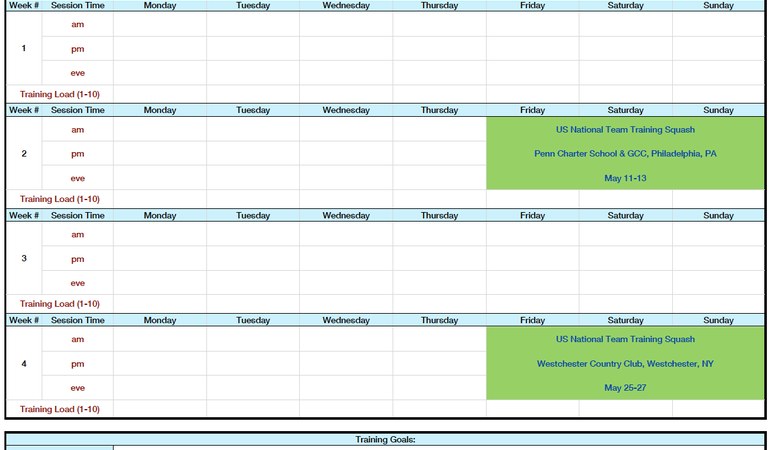
Below is a sample week-long training schedule incorporating all the elements we discussed. It is geared toward a beginner-to-intermediate player who plays 1-2 competitive matches or training sessions a week and wants to improve fitness and skills.

You can adjust the days to fit your personal schedule, but aim to balance on-court practice, off-court workouts, and rest. Remember to listen to your body and tweak the intensity as needed.

DayFocusSetting
MondayFootwork and agilityOn-court (60 min)
TuesdayStrength and conditioningOff-court (45-60 min)
WednesdayOn-court skills and lighter playOn-court (90 min)
ThursdayRecovery or light cross-trainingActive recovery (30-45 min)
FridaySpeed and reaction trainingOn-court (60 min)
SaturdayStrength and endurance comboOff-court or on-court (60 min)
SundayRest and recoveryFull rest

Monday, footwork and agility focus (on-court): 60 minutes on court. Start with a dynamic warm-up (jogging, dynamic stretches). Then do footwork drills, for example 3 sets of ghosting to all corners (1-2 minutes per set, with 1 minute rest), practicing quick movement and proper lunges. Next, work on agility drills: set up an agility ladder on court and do 4-5 different ladder exercises (about 5 minutes total) to fire up your foot speed. Follow that with 5 minutes of cone drills or court sprints (shuttle runs). After the movement drills, spend the remaining time on a solo hitting drill to reinforce your swing, for example 15 minutes of straight-drive practice on both forehand and backhand. End with a cool-down stretch. Focus: improving movement efficiency and consistency when not tired. Intensity: moderate, with repeated efforts and short rests. This workout sets the tone for the week without overdoing it.

Tuesday, strength and conditioning (off-court): 45-60 minutes off court. Begin with a 5-10 minute general warm-up (light jog or cycle plus dynamic stretches). Then do a full-body strength workout. For example:

  • Squats or lunges: 3 sets of 10 (each leg for lunges) to build leg strength.
  • Dumbbell or TRX rows: 3 sets of 10 to work the upper back (important for racket control).
  • Plank hold: 3 sets of 30-60 seconds to build core stability.
  • Push-ups or dumbbell shoulder press: 3 sets of 10 for upper-body pushing strength.
  • Swiss ball hamstring curls: 3 sets of 10 to strengthen the hamstrings (helps with lunging and knee support).

Between sets, you can add 30-second cardio bursts (jump rope or step-ups) to keep it squash-specific (optional). After strength work, do 10 minutes of interval cardio, for example 30 seconds fast jump rope or sprint, 30 seconds rest, repeated 10 times, to maintain high-intensity endurance. Cool down with stretching, focusing on any tight spots. Focus: building strength in key muscle groups plus some aerobic and anaerobic conditioning. This session should be challenging but manageable. Strength training works best when done consistently, about twice a week.

Wednesday, on-court skills and lighter play: 90 minutes on court (could be a club night or practice games). Warm up well (include some ghosting and swing shadowing). Emphasize swing mechanics and shot practice today. Spend 20-30 minutes on drills with a partner if possible: hit straight drives to each other, aiming for consistency, then a boast-drive drill (one boasts, the other drives) for 5-10 minutes, then practice some volleys (one player feeds mid-court and the other volleys to length, alternating after a few minutes). If you do not have a partner, do more solo drills: practice drives, volleys, and drops on your own. After drills, play a couple of practice games (or conditioned games, like one player can only volley). Because this is mid-week, keep the games relatively light-hearted and focus on implementing what you practiced (good footwork, proper swing, aiming for targets) rather than just winning. This is somewhat lower intensity than a tournament match, but you are still moving and applying skills. Finish with a short cool-down. Focus: skill development and moderate cardio. This kind of day helps solidify technique under less pressure and gives you some steady-state exercise.

Thursday, recovery or light cross-training: A lighter day to allow recovery. You could take a full rest day if you are feeling fatigued or have a match coming up. Otherwise, do an active recovery session of about 30-45 minutes. For example, go for a relaxed 20-minute swim or bike ride at an easy pace. Alternatively, do a yoga class or a stretching session at home, focusing on mobility and deep breathing. You might also include some foam rolling or self-massage for any sore muscles. If you skipped Wednesday's on-court session, you could do a very light solo hit today, but keep it low intensity (focusing on feel, maybe practicing some trickle boasts or serves, nothing strenuous). Focus: letting the body recover while staying loose. This downtime matters; schedule rest days and do not play too many days in a row without rest. Use this day to rejuvenate so you come back stronger on Friday.

Friday, speed and reaction training (on-court): 60 minutes on court. This session is about sharpening your speed and reactions at the end of the week. Warm up thoroughly (by Friday your body might be a bit stiff, so do a good 10-minute warm-up). Begin with some short ghosting sprints to get moving (for example, 5 quick ghosts to random corners, twice). Then do the reaction volley drill: 5-10 minutes of the multifeed volley exercise with a partner or coach, as described earlier (feed drives, you volley from an aggressive T position). Do it in intervals (1 minute on, 1 minute off) because it is intense. Next, set up 4 cones on court and do a fast footwork drill: one at each corner of the service box to simulate quick bursts around the T. Have a partner call a sequence or random directions, or use your own pattern, and sprint to touch each cone and return to center as fast as possible. Do 3-4 sets of 30 seconds. Then, if time permits, play a few points or a game focusing on taking the ball early (try to volley everything you realistically can). The idea is to apply that quick reaction into actual rally scenarios. By now you should be quite tired, so finish with an extended cool-down to relax your muscles. Focus: high-intensity work for agility and reflexes under some fatigue, which conditions you to handle late-match situations.

Saturday, strength and endurance combo (off-court or on-court): About 60 minutes, split into a short run and some strength maintenance, or vice versa. For instance, start with a 20-minute run outside at a steady moderate pace (or 20 minutes on a stationary bike or elliptical). This builds your aerobic base and endurance. Include a few faster pickups in the run if you feel good. After the cardio, do a maintenance strength circuit focusing on areas not hit on Tuesday or that need extra work, for example 2 sets of single-leg squats or lunges (to keep legs strong), 2 sets of shoulder exercises (band pull-aparts or light dumbbell raises for rotator cuff health), and 2 sets of core (plank variations or side planks). Keep it lighter than Tuesday's session, since the aim is to activate muscles and maintain strength without overloading after a hard week. Alternatively, if you prefer on-court, you could play a friendly match or two on Saturday instead, depending on how fresh you feel. Just make sure you are not skipping too much strength training. After the workout, do a long stretch session. Focus: endurance building and keeping up strength work. This also acts as a second strength day, which is recommended for consistent improvement.

Sunday, rest and recovery: Rest day. No formal workout. You might take a leisurely walk or do some gentle stretching, but largely let your body rest completely. Use the day to mentally recharge as well, since a break can rekindle your motivation for the next week. Eat well to refuel (this is a good day to focus on quality nutrition and meal prep for the week ahead). Any soreness should be much better by the end of the day with the rest. Keep up your hydration and get to bed on time to start the next week fresh.

This schedule hits all the key components: 3 on-court sessions (Monday, Wednesday, Friday) focusing on different aspects (movement, skills, speed), 2 strength sessions (Tuesday full, Saturday light) which is within the recommended range for squash players, and 2 recovery days (Thursday active recovery, Sunday full rest) to avoid overtraining. Feel free to shuffle days around (for example, if you have club night on Thursday instead of Wednesday, adjust accordingly and use Wednesday or Friday as lighter days).

Always pay attention to your energy levels and any signs of fatigue or injury. The plan above is a guide, and individual needs vary. As you get fitter, you might increase the intensity or volume; if you are feeling overwhelmed, scale back. The goal is a sustainable routine that gradually improves your squash fitness while keeping you healthy and motivated.

Conclusion

Fitness for squash is multi-faceted: you need quick feet and agility to retrieve shots, endurance to last tough matches, strength to hit hard and stay injury-free, flexibility to move fluidly, and sound technique and nutrition to tie it all together. The exercises and tips in this guide provide a roadmap for improvement.

To recap some key takeaways:

  • Make fitness training a regular part of your routine, since even dedicating 20 minutes to squash drills a few times a week can make a real difference.
  • Prioritize a good warm-up and cool-down every session.
  • Work on your movement through ghosting and agility drills, and your swing through solo practice and targeted drills.
  • Build strength with a couple of gym or bodyweight sessions weekly, and keep yourself flexible and resilient with stretching and rest.
  • Fuel your body with water, carbs, and protein at the right times to perform and recover well.
  • Listen to your body, avoiding overtraining and addressing any injury niggles early.

Squash is a demanding sport, but that is what makes the pursuit of fitness for it rewarding. As you implement these exercises and habits, you will likely notice improvements on court: a step quicker to the ball, less winded in the fifth game, or more accurate shots even when tired. Those gains translate into better results and more enjoyment of the game. Stay consistent and patient with your training, since fitness improvements come with time, much like refining a squash stroke.

Do not hesitate to seek guidance from qualified coaches or trainers. They can provide personalized feedback and ensure you are doing exercises correctly. Many resources are available, both online and offline, from squash-specific fitness videos to group training sessions at clubs. Learning proper form, whether in weightlifting or ghosting, will maximize benefits and help prevent injuries.

To get started, take it step by step: add one extra fitness session to your week, or focus on one aspect (like improving your footwork) for a few weeks. Track your progress, perhaps with a training log, and note your improvements. With dedication, you will become a faster, stronger, and more enduring squash player.