
Introduction
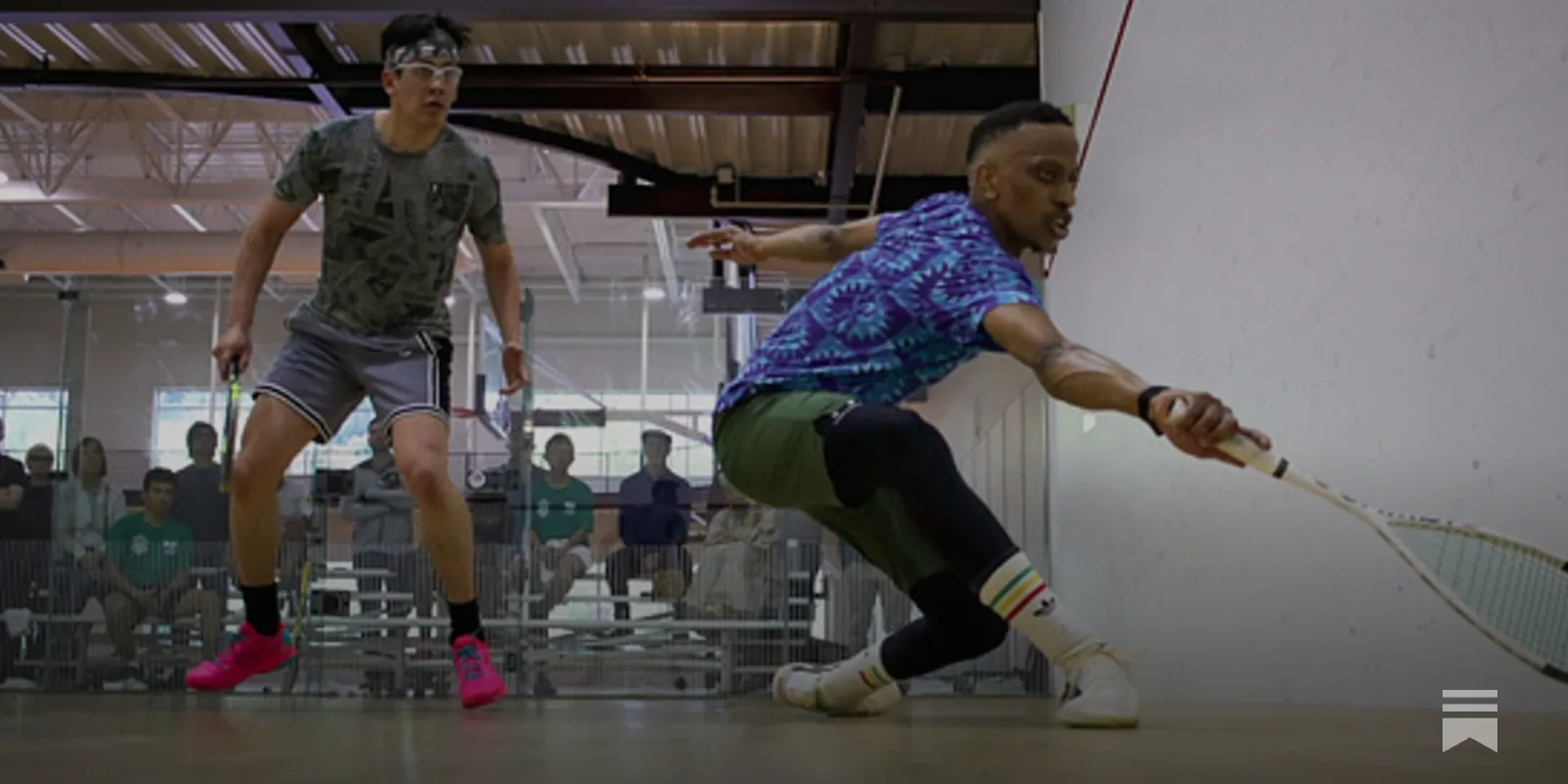
Coaching squash to 10-13-year-old beginners means building fundamentals while keeping sessions enjoyable. A good program balances technique, fitness, tactics, and fun, taught in an active, playful environment. Each lesson follows a consistent structure: warm-up, skill drills, games, and a cool-down.
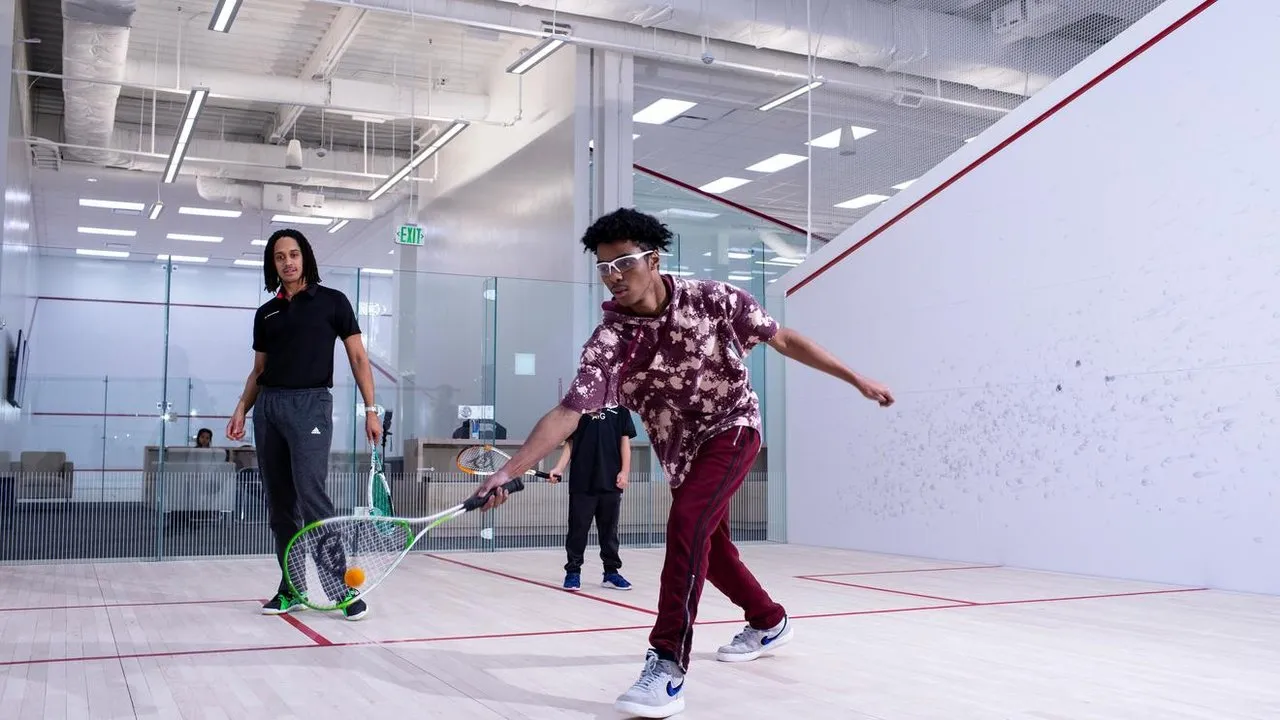
Safety: all players should wear protective eyewear, which is mandatory for juniors in competition and recommended at all times.
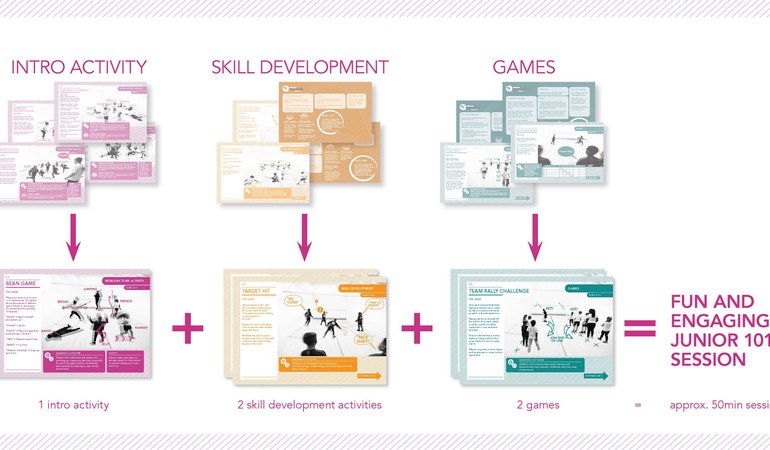
The plans below are a 10-week curriculum for juniors (ages 10-13) with little or no experience, suitable for one-on-one or group coaching. Each session is about 60 minutes:
- Warm-Up (5-10 min): games or dynamic exercises that raise the heart rate and build coordination.
- Skill/Drill Work (30-40 min): technical skills (grips, swings, footwork) and simple tactics, often with modified equipment (bouncier balls, targets).
- Game/Play (10-15 min): a game or modified match that applies the session's skills.
- Cool-Down and Debrief (5 min): light stretches and a recap.
Emphasize proper technique even when rallies are short, and good habits like returning to the T after each shot. Keep a positive tone with frequent feedback. For one-on-one, the coach plays the partner role; in groups, use pairs or teams to maximize participation.
Program Overview
Duration: 10 weeks (one session per week, about 1 hour each), adaptable to longer or shorter programs.
Goals: by the end, juniors can execute fundamental shots (forehand, backhand, serve, volley, basic drop), move with proper footwork, understand simple tactics (hit to corners, recover to the T), and enjoy playing.
| Week | Focus theme |
|---|---|
| Week 1 | Introduction to squash, grip and forehand basics, ball-handling skills. |
| Week 2 | Backhand fundamentals and continued forehand practice. |
| Week 3 | Movement and footwork (ready position, returning to center). |
| Week 4 | Serve and return basics (starting a rally safely). |
| Week 5 | Volley skills and hand-eye coordination. |
| Week 6 | Introduction to front-court play (drop shots) and fitness agility. |
| Week 7 | Basic tactics, controlling the court (length vs. short, hitting away from opponent). |
| Week 8 | Playing points, rules and scoring, etiquette, simple gameplay. |
| Week 9 | Practice matches and round-robin (applying all skills in actual games). |
| Week 10 | Tournament and review (team games, challenges, celebration of progress). |
Each session builds on the last: technique is layered week by week, fitness elements like agility drills and ghosting (footwork without the ball) are interwoven, and tactics are introduced once the basic strokes are in place.
Session 1: Grip and Forehand Fundamentals
Main focus: the "shake-hands" grip, forehand swing basics, and making contact.
Warm-Up (10 minutes)
Racquet and Ball Balance. Each player balances a ball on the racquet face and walks, then jogs, around the court, progressing to gentle bouncing on the strings. Builds hand-eye coordination and racquet familiarity.
Wall Bounce Game. In pairs, one throws a ball underhand against the front wall and the other catches it after one bounce, then they swap. With a group, count consecutive catches. Develops judgment of the rebound.
Skill Drills (30 minutes)
Grip and Forehand Demo. Show the grip: hold the racquet as if shaking hands, with the V of thumb and index finger up the handle toward the head. Demonstrate the forehand: racquet back, swing low-to-high, follow through to the target, contacting the ball just after the bounce. Players mimic the swing without a ball.
Forehand Drop Hit (one ball each, a bouncier blue or orange dot). Each player stands a few meters from the front wall, drops the ball, and hits a forehand so it hits the wall and bounces once back to them. Focus on the low-to-high swing, a slightly open face, and watching the ball; form over power.
Partner Forehand Rally (cooperative) (one ball per pair). One player feeds the ball off the front wall, the other returns a forehand off the bounce; the feeder catches and repeats, then they switch. Progress to a sustained rally. Even 2-3 shots in a row is a success. In one-on-one, the coach feeds.
Game/Play (10 minutes)
Hit the Target Challenge (cones or a wall target, one ball each). Players hit forehands at a target on the front wall (above the tin) or a floor target, scoring for hits or near-misses; in groups, make it a team contest. Emphasize accuracy over power; use a larger target at first.
Cool-Down (5 minutes)
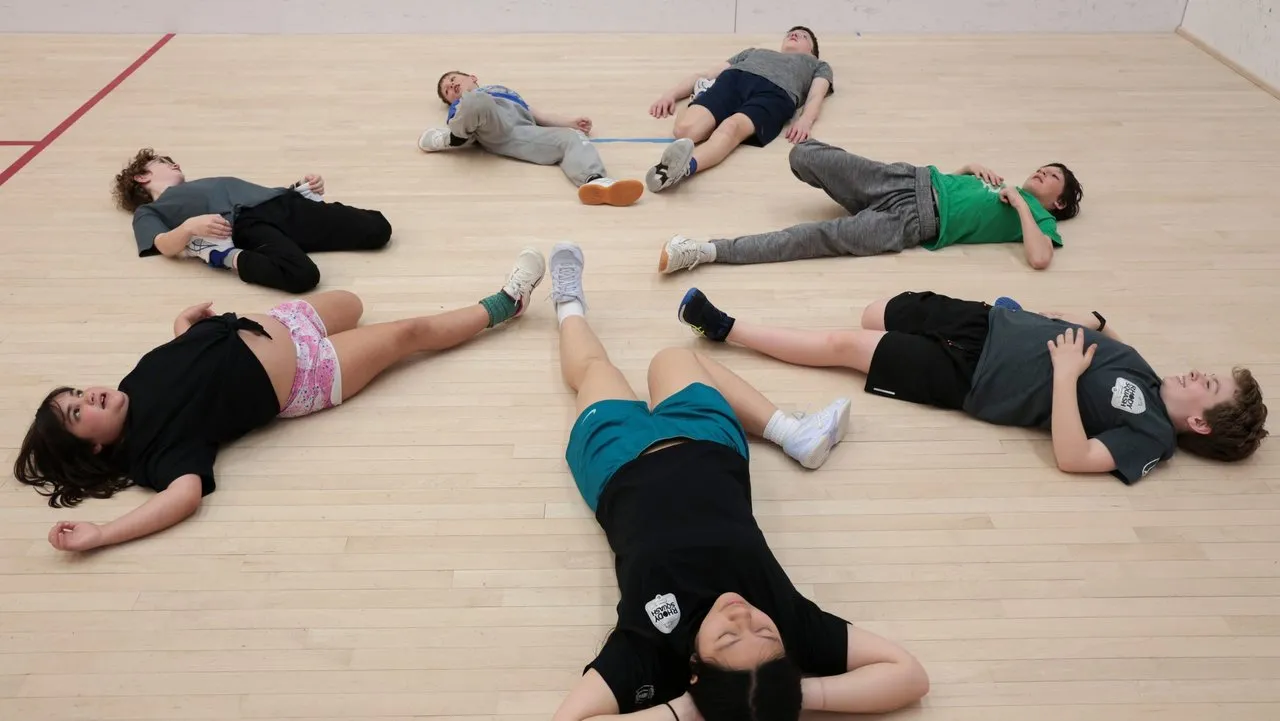
A few static stretches (calves, quads, shoulders), then a quick "Squash Quiz" recapping the grip and the low-to-high swing. Encourage practicing ball balancing or bouncing at home.
Session 2: Backhand Basics and Continuation of Forehand
Main focus: introduce the backhand while reinforcing grip and forehand, so players can distinguish and hit both sides.
Warm-Up (10 minutes)
Bounce and Switch Drill (one ball each). Players bounce the ball on the strings, alternating forehand and backhand faces, like flipping a pancake, keeping it going with a soft touch.
Squash "Tag" Game (court markings only). One player is "It" and tags others within the court lines; the tagged player becomes "It." Play 1-minute rounds. Variation: "Line Tag," moving only along court lines. Hold racquets down for safety, eyes up to avoid collisions.
Skill Drills (30 minutes)
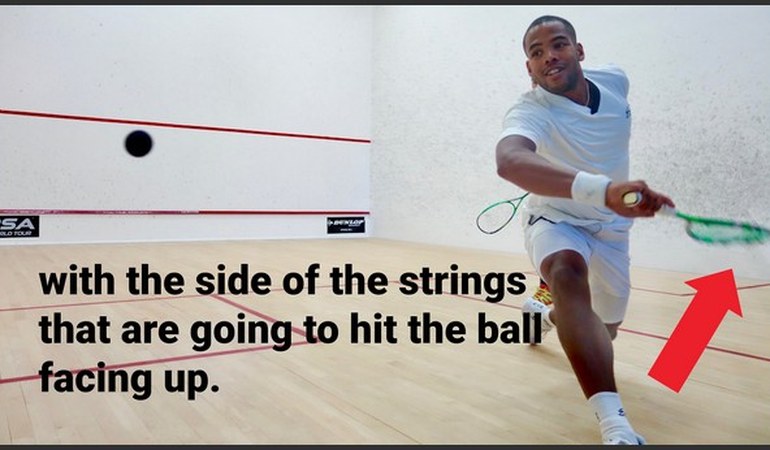
Backhand Introduction. The grip is the same; turning the shoulders sets up the backhand. Demonstrate: racquet high and back, drop the head as the ball falls, swing low-to-high with the wrist laid back and the face slightly open. The fundamentals match the forehand.
Backhand Drop Hit (one ball each). As in Session 1 but on the backhand: drop the ball to the side and hit it to the wall for one bounce. Get the racquet up early, swing forward with an open face, and keep the same V grip (beginners often change grip on the backhand). Any contact is good at first.
Forehand and Backhand Combo Drill (one ball per pair). A feeder tosses the ball off the front wall to either side; the hitter decides and returns a forehand or backhand, then they continue cooperatively and switch. Teaches the first decision (which side) and quick feet to set up. Keep feeds easy.
Game/Play (10 minutes)
Cooperative Wall Rally Game (one ball per court). A modified "Around the World": with 3-5 players, each hits the ball to the front wall then rotates to the back of the line, counting how many hits the group sustains. Use a bouncier or larger ball if rallies are short, and recover to the middle after each shot.
Alternate, "Squash Bowling": set up cones near the back wall as pins and hit the ball to knock them down after it rebounds off the front wall.
Cool-Down (5 minutes)
Gentle stretches (arm across chest, hamstrings). Each player names one thing they learned. Reinforce that the grip stays the same for both sides; only the stance and prep change.
Session 3: Movement and Footwork, The Ready Position
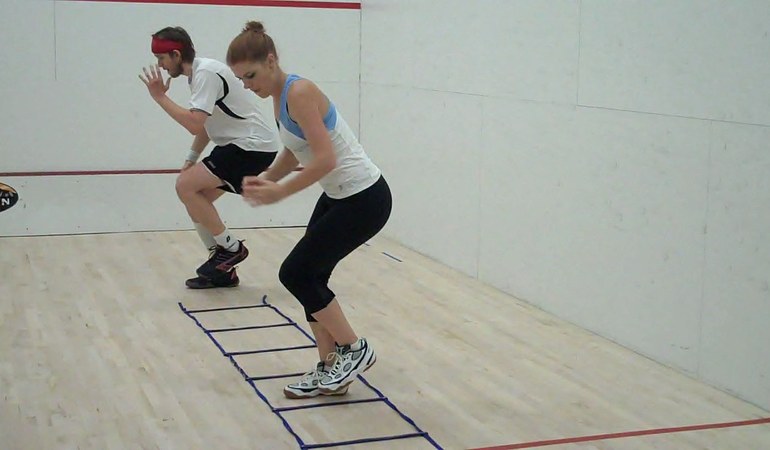
Main focus: the ready position, moving to the ball, and recovering to the T, blending fitness and technique.
Warm-Up (10 minutes)
Dynamic Court Movements (optional cones). From the T, players move on command to a called position (front right, back left, front wall, side wall) and back to center, Simon-Says style, with jumping jacks or fast feet mixed in. Face the front wall while moving to build the side-shuffle habit and the return-to-center idea.
Mirror Footwork (partner drill). One player leads varied footwork (shuffles, lunges, runs to a line) within a half court; the partner mirrors it for about 30 seconds, then they switch. Highlight the athletic ready stance (knees bent, on toes).
Skill Drills (30 minutes)
Ready Position Basics. Feet about shoulder-width apart, knees slightly bent, weight on the toes, racquet up around chest height. Practice dropping into it on the call "Ready," keeping the racquet head up.
Ghosting to Corners (no ball; optional corner cones). From the T in ready position, players move to a called corner (1 = front right, 2 = front left, 3 = back right, 4 = back left), touch the wall or cone, and return to the T, doing 4-6 in a sequence. Focus on balance and form, planting the outside foot and pretending to swing. Keep turns short.
Movement and Shot Drill (corner to hit) (a few balls, a feeder). The coach feeds balls alternately to the two front corners; the player moves from the T, hits a forehand or backhand, and recovers to the T, doing 4-6 feeds. Combines side decision, footwork, and recovery. Call "Back to T" as a reminder.
Game/Play (10 minutes)
Corner Ball Collect Relay (8-12 balls and a bucket). Scatter balls in the corners; players relay-style fetch one ball at a time back to the bucket at the T before going again, until all are collected. Solo: time how fast they collect all four corners. Touch each corner to simulate reaching a shot.
Cool-Down (5 minutes)
A slow walk to lower the heart rate, then calf, quad, and shoulder stretches. Recap why returning to the T matters: it lets you cover the court and reach the next shot.
Session 4: Serve and Return Basics
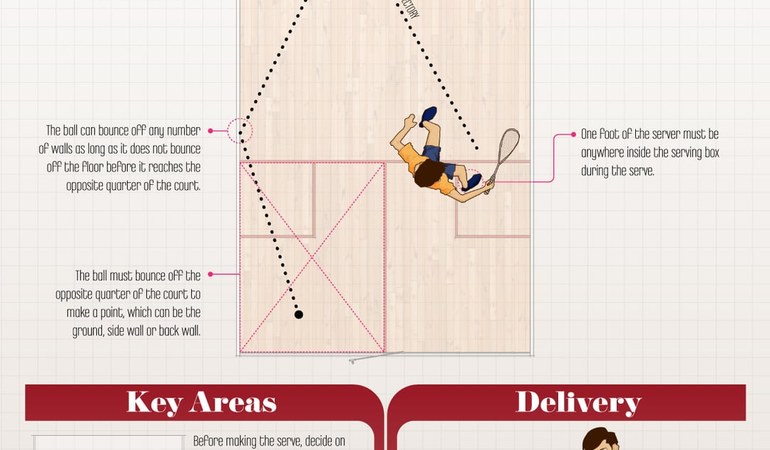
Main focus: how to serve to start a rally and how to return serve, including the basic service rules.
Warm-Up (10 minutes)
Dynamic Stretch and Throwing Warm-up (one ball each). Arm circles, trunk rotations, and wrist rotations, then light jogging. From the service box, players throw a ball underhand high onto the front wall so it lands deep, mimicking a lob serve, stepping forward with the opposite foot.
Service Box Shuffle. Players jump into the service box and trace its lines or a figure-8, changing direction on "Switch." Builds service-box awareness (one foot must stay in the box).
Skill Drills (30 minutes)
Serve Technique Demo. Rules: at least one foot in the service box, hit the ball before it bounces, and hit the front wall above the service line so it lands in the opposite back quarter. Demonstrate a high lob serve: stand sideways, swing low-to-high, and send the ball high on the front wall to arc deep. Show the return: hit it back before it bounces twice. Stress safety, since the opponent stands behind the server.
Serve Practice (one ball each, both service boxes; a wall target). Players practice the motion, aiming above the service line so the ball lands in the back half, from both the right and left boxes. Reinforce hitting before the bounce (not bouncing it like tennis). Try "How many out of 5 land in?"
Serve and Return Pairs (one ball per pair). The server serves, the returner hits it back, and they play a short 2-3 shot rally if they can, then switch. Returners stand ready with the racquet up; servers keep the serve playable. Practice serving to both sides.
Game/Play (10 minutes)
Serving Challenge Game (a marked wall target, for example a 2ft x 2ft square above the service line). Each player gets 3-5 serves: 2 points for hitting inside the target, 1 for a legal serve outside it. With pairs, add a bonus point if the return keeps a rally going. Use a softer or junior ball if needed.
Alternate, Serve and Volley: the returner tries to volley the serve back, mainly to show the skill.
Cool-Down (5 minutes)
Arm and leg stretches, then recap the serve rules: one foot in the box, hit before the bounce, front wall above the service line, land it deep.
Session 5: Volleys and Hand-Eye Coordination
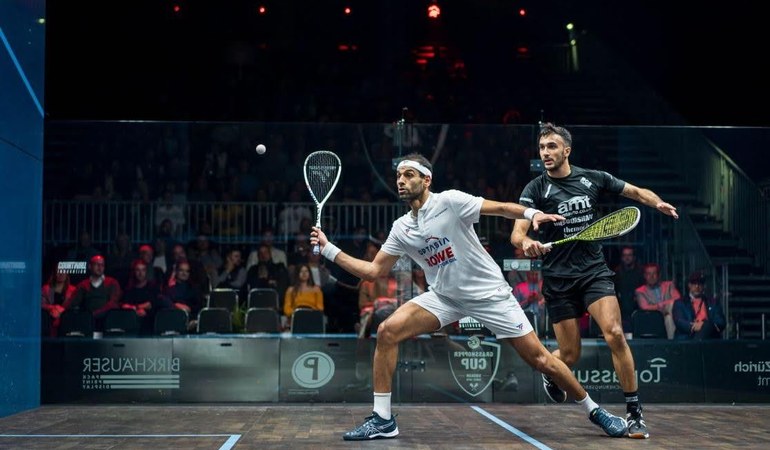
Main focus: volley skills, hitting the ball in the air before it bounces, with reaction and footwork work.
Warm-Up (10 minutes)
No-Bounce Rally Warm-up (one ball each). Standing 1-2 meters from the front wall, players tap the ball against the wall and volley it back without letting it hit the floor, starting close and using a short swing. Variation: alternate forehand and backhand volleys, or do 5, step back, and repeat.
Quick Reactions Game (a few soft balls, a coach to toss). The coach randomly tosses a soft ball to a player, who reacts to catch or gently volley it, then resets. Use a soft ball if racquets are involved. Brings out the ready position naturally.
Skill Drills (30 minutes)
Volley Technique Intro. A volley is hitting before the bounce; it speeds up the game and saves running. Demonstrate a forehand and backhand volley: racquet up, a short punchy swing, contact in front of the body, slightly open face, same grip. Use "soft hands, absorb then push."
Solo Volley Drill ("Tap and Step Back") (one ball each). Starting close to the wall, players keep a continuous volley going with no floor bounce, stepping back as they succeed; then try the backhand side. Acknowledge any 2-3 volley streak.
Partner Volley Feed (one ball per pair). A feeder sends the ball off the front wall toward the volleyer at waist or chest height near the T; the volleyer steps in and volleys it back, 5-6 feeds, then switch. Watch the ball to the racquet, start the swing early and block it. Progress to alternating sides.
Volley Exchange Game (one ball per pair, a bouncier ball helps). Two players on the T volley cooperatively to the front wall with no floor bounce, counting their streak. Emphasize control over power and spacing to avoid collisions.
Game/Play (10 minutes)
King of the Court (Volley Edition) (one ball, one court). With 4-6 players, a "King" and a challenger play a point in which the first shot must be a volley; the winner stays on and the loser rotates out. Solo: the coach throws a high ball for the player to volley, then play out the point. Keep rallies short and fun.
Alternate, "Volley Horse": like the basketball game, one player calls and attempts a volley and others copy it.
Cool-Down (5 minutes)
Wrist and shoulder stretches and trunk twists. Ask when you would volley in a game (to take the ball early, give the opponent less time, hold the T). Encourage volley practice against a wall at home.
Session 6: Front-Court Skills, Introduction to Drop Shots
Main focus: soft front-court shots (drop shots) and the tactic of when to hit short vs. long, with quick forward bursts for fitness.
Warm-Up (10 minutes)
"Traffic Light" Agility Game (verbal commands). "Green" = sprint forward to the front wall, "Yellow" = slow jog or side-step, "Red" = stop and freeze in a balanced ready stance. Use it for shuttle runs with rapid, unpredictable calls. Builds reaction and the change of pace that sets up drop shots.
Drop Shot Demonstration (coach demo). Spend two minutes showing forehand and backhand drops: gently lift the ball just above the tin so it dies near the front wall. Let players see how short the ball stays.
Skill Drills (30 minutes)
Basic Drop Shot Technique. Like a drive but with a much smaller swing and a very open face.
- Grip: the same, perhaps slightly looser for touch.
- Stance: get low (bend the knees) for control.
- Swing: shorter backswing, swing gently upward, and slice under the ball for a little backspin.
Aim to just clear the tin; use it when the opponent is stuck in the back. Cue: lift it like setting an egg on a shelf, gently. Keep waiting players clear behind.
Self Feed Drop Shot Drill (one ball each). From about halfway between the front wall and the service box, players bounce the ball to themselves and play a gentle drop, aiming for the second bounce close to the front wall; repeat and try the backhand. Keep the face open and stay low.
Drop Shot Partner Practice (one ball per pair). A feeder sends the ball to mid-court; the hitter moves up and plays a drop, then they alternate or switch. Practice both sides, and vary the feed height so the dropper adjusts. Recover a step or two after the drop.
Drive-Drop Drill (shot selection) (one ball per pair). The feeder mixes a deep ball (hit a length drive back) and a short ball or boast (move up and drop). The coach can call "Drive" or "Drop." Reinforces the tactic: hit deep when the opponent is forward, drop when the ball is short.
Game/Play (10 minutes)
Drop Shot Game, "Kill the Bunny" (a cone or small toy as a target near the front wall, one ball). Players hit drops trying to make the second bounce die on the "bunny," scoring for hits. Use proper drop form (no big swings). Alternatively, play to 7 where only drop shots score.
Alternate, Boast and Drop: with 4+ players, one side hits only boasts and the other only drops, then switch.
Cool-Down (5 minutes)
Leg-focused cool-down (slow lunges, calf stretch) since drops involve lunging. Discuss when to use a drop: when the opponent is far back or out of reach. Encourage wall practice at home.
Session 7: Basic Tactics and Court Awareness
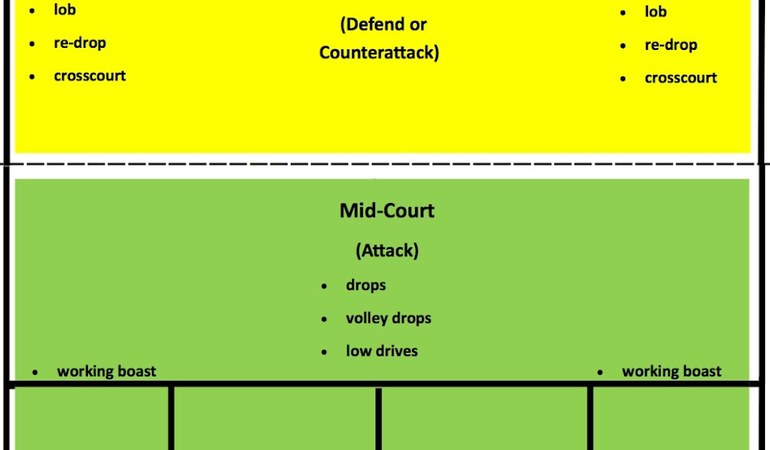
Main focus: simple tactics, controlling the T, hitting to the corners (length), and varying short vs. long, plus safety and interference (lets).
Warm-Up (10 minutes)
Corners and T Game (optional corner cones). A follow-the-leader version of ghosting: the leader runs to a corner, mimes a shot, and returns to the T; everyone follows, then the leader picks a new corner. Reinforces recovering to the T after every shot.
"Keep Away" Throwing Game (one soft ball). Played by hand, no racquets: one side throws the ball to the front wall aiming at open space so it bounces twice before the other side can catch it; if it does, they score, otherwise the catcher's team throws. Reinforces hitting away from the opponent.
Skill and Tactic Drills (30 minutes)
Length Hitting to Back Corners (a back-corner target). A cooperative rally hitting straight drives that bounce in the back quarter, counting how many good-length shots in a row; practice both sides. Hit a bit higher on the front wall for more depth. Keeping the ball deep keeps the opponent off the T.
Width Drill (cross courts). Introduce the cross-court drive from one side to the opposite back corner as a diagonal rally; if too hard, players lob or throw to the opposite corner and hit back. Tactic: if the opponent is on one side, send the ball to the other.
Conditioned Game, One Up One Back. One player may only hit to the back (drives or lobs), the other only short (drops or boasts); play points, then switch. Teaches both attacking short and defending with length: under pressure go high and deep, on an easy ball go short.
Discussion Break (5 minutes)
A water break to cover rules and safety: explain a let (a replay) and giving the opponent room to hit. Cover scoring basics (squash is often played to 11, rally scoring, the serve passing to the rally winner), and clearing after your shot, which links safety with tactics.
Game/Play (10 minutes)
Points Game with Tactics Goals (one ball, full court). Play mini-matches to 5 or 7, awarding 2 points instead of 1 when a rally is won with a learned tactic (a good length the opponent cannot reach, or a drop when they are stuck back). Encourages thinking rather than just hitting hard.
Cool-Down (5 minutes)
Light jogging and stretching, then reinforce the three tactical takeaways:
- Recover to the T quickly after your shots.
- Hit away from your opponent (if they are on one side, go to the other; if at the front, go deep; if at the back, go short).
- Vary pace and height; a high slow ball can reset a rally.
Session 8: Playing Matches, Rules and Scoring
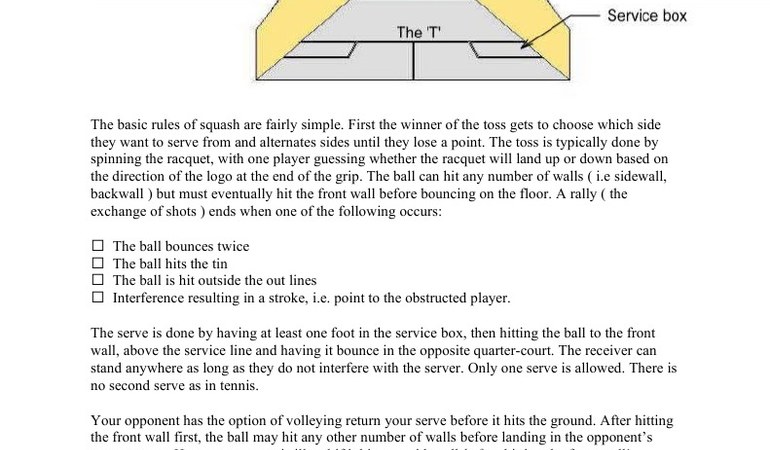
Main focus: move from drills to gameplay, teach the formal rules, scoring, and etiquette, and play simplified matches.
Warm-Up (10 minutes)
Group Dynamic Warm-up. Light jogging or side-stepping, then dynamic stretches (arm swings, trunk twists, walking lunges, high knees, butt kicks), then a short ghosting sequence to all four corners.
Rally Warm-up (cooperative) (one ball per court). Pairs hit cooperatively, one side forehand, one side backhand, switching after a minute, mirroring the pre-match routine of warming up the ball. Safety: do not hit if your partner is directly behind you.
Rules and Scoring Overview (5 minutes)
- Squash is usually played to 11 points, win by 2, with rally scoring (a point on every rally). A match is commonly best of five games.
- One player serves; the serve passes to whoever wins the rally. Win while serving and you keep the serve and switch boxes; lose and the opponent serves.
- At the start of a game the server chooses the box, then alternates sides while winning.
- Let and stroke: if the opponent is in your swing path or blocking the ball to the front wall, stop and say "Let please"; in friendly junior play, replay the point. This is for safety.
- Sportsmanship: call your own double bounces, and be honest and fair.
A ball is out on the outer wall lines and in on the floor lines, except the tin, which is out. The full rule set is available from US Squash.
Skill Review Drills (10 minutes)
"Around the World" Review (a few balls). The coach feeds a sequence to each player: a deep ball (drive), a short ball (drop), a high ball (volley), then a random one (scramble), rotating players quickly. Mimics real rally randomness and shifts them into game mode.
Game/Play, Practice Matches (30 minutes)
Round Robin Matches (balls, optional score sheet). Play mini-matches, a round-robin or simple bracket, games to 7 or 11; spin the racquet for serve. Resist over-coaching during rallies; step in for safety and to help with lets and scoring. Keep games short (to 7 is quicker) so everyone plays often. Have waiting players referee to learn officiating.
Alternate: if skill levels vary, use handicaps or conditions to level the field.
Cool-Down (5 minutes)
An easy lap and stretching. Ask how it felt, reinforce good tactical choices you saw, and clarify any scoring or let confusion for next time.
Session 9: Tournament and Team Games
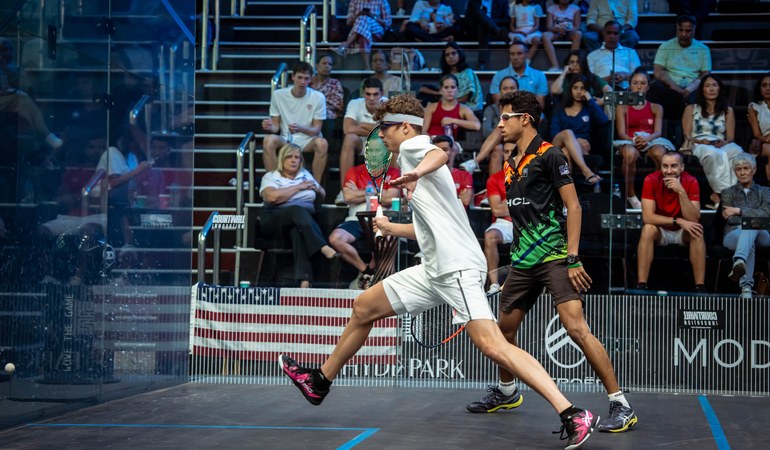
Main focus: mostly gameplay, a friendly tournament plus team formats and creative games to build confidence.
Warm-Up (10 minutes)
Team Relay Warm-up (cones or balls). Two teams run a simple relay: run to the front wall and back, do 5 racquet-ball bounces, then tag the next teammate, or carry a ball on the racquet without dropping it. Mix skill levels per team.
Stretching Circle. In a circle, each player leads a stretch or exercise (5 jumping jacks, arm circles, toe-touch) for about 10 seconds, going around for 4-5 exercises.
Skill Refresher (5 minutes)
- Use all your shots, deep drives, volleys, and drops, and mix it up.
- Recover to the T after each shot, and call a let if someone is in your way.
- Keep your racquet up and watch the ball.
Game/Play, Mini Tournament (20 minutes)
Round Robin or Knockout (courts, balls, optional draw). With 4-5 players, a round-robin (each plays each, one game to 7 or 11); with more, a knockout with consolation so everyone plays at least twice. Solo: set target challenges (win 3 points in a row off the coach, or timed rallies). Award small prizes for "best effort," "best sportsmanship," and "most improved," not just the winner, and teach the handshake afterward.
Game/Play, Team Challenges (15 minutes)
Team "King of the Court": pair stronger and weaker players into teams; the "King" team stays on until beaten in a rally, with each member hitting alternately for teamwork.
Squicket (Squash Cricket) (one ball). One player bats near the T while the rest field; the coach feeds off the front wall and the batter hits to avoid the fielders. A catch before the bounce, or hitting the tin or out, means the batter is out; otherwise each good hit is a run. Field behind the batter for safety.
Cool-Down and Debrief (10 minutes)
- A group stretch, with each player naming a favorite moment or a shot they were proud of.
- Debrief: "What tactics or skills helped you win points today?"
- Note one thing each player did well.
- Build excitement for the final session, and mention any club or next-level program to continue.
Session 10: Final Session, Skills Showcase and Graduation

Main focus: a wrap-up that reviews the whole curriculum with a light skills showcase, plus feedback and celebration.
Warm-Up (10 minutes)
Obstacle Course Warm-up (cones, rope, wall target). Build a small course: shuffle through zig-zag cones, hop a rope, do 5 ghost lunges, 5 racquet-ball bounces, then hit a soft ball at a wall target and sprint to finish. Customize to the space; touches on the skills from across the weeks.
Group Jog and Stretch. A one-minute group jog along the court lines, then dynamic stretches, with players leading some to build independence.
Review "Skills Showcase" Drills (20 minutes)
- Target Serving: 5 serves at a deep back-corner target; count how many land in.
- Rally Challenge: pairs see how long they can rally now (bounce allowed), often much longer than in Week 1.
- Kill Shot Challenge: 3 drop shots each, measuring how many die quickly, or reuse the "bunny" target from Session 6.
- Speed Ghosting: a 15-second ghosting sprint counting corners touched with a return to the T, form over pure number.
- Volley Contest: most consecutive volleys without dropping, or a creative shot.
Use these as final coaching points: correct any persistent issues and praise improvements.
Game/Play, Fun Matches (15 minutes)
- Players challenge the coach in a 5-point game where the coach plays with a handicap (boast only, or off-hand).
- Doubles if the court allows, with a soft ball and two bounces if needed.
- Or a rematch of the closest games from last session.
Give everyone equal play time, and arrange a winnable rally or game for any player who has not won, so all leave feeling they did well.
Cool-Down (5 minutes)
- A slow walk or jog with high-fives.
- Gentle stretching while recapping the journey from Week 1 to now.
- Encourage continuing the sport (an intermediate group, a junior league, or playing with friends).
- Hand out certificates or awards ("Most Improved," "Best Team Player," "Future Champion") so each child gets recognition.
Thank the players and any parents, and let each junior know they are welcome to keep coming for more coaching.
Conclusion
Over this 10-week program, juniors aged 10-13 build a solid foundation: technical instruction (grips, swings, footwork), fitness (agility games, ghosting), tactical basics (length vs. short, recovering to the T, hitting away from the opponent), and games and challenges. Each session uses warm-ups, focused drills with clear objectives, and play to keep engagement high, and the plans scale to group or individual settings. The aim is not just skill development but enjoyment and confidence, so these young players want to continue with the sport.