
Facing a skilled left-hander can feel like playing a mirror image of the game. Unusual angles and surprising shots from a left-handed opponent can catch right-handed players off guard. With only around 10% of squash players being left-handed, many opponents are less accustomed to the patterns a lefty produces.
Yet left-handers are just as capable of reaching the top of the sport. Past champions such as Amr Shabana and Peter Nicol, and current stars like Amanda Sobhy, have all played left-handed at an elite level. This article offers practical tactics to help you adapt your strategy in singles squash when facing a left-hander.
Serve Smart from the Start
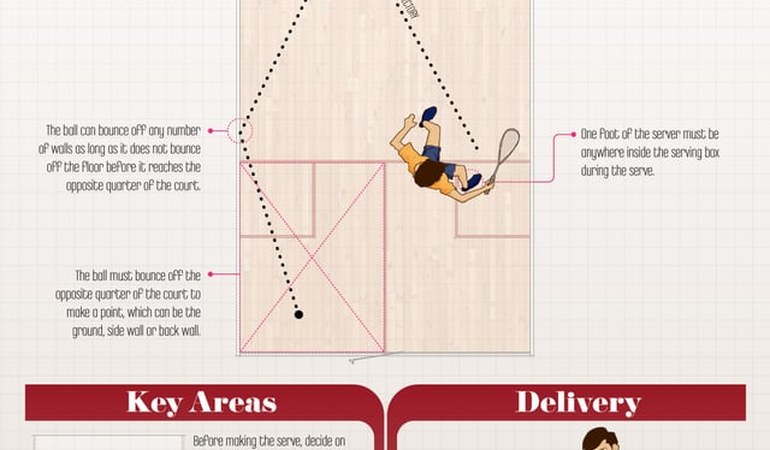
One of the first adjustments to make is on the serve. If you have a choice of service box after winning a rally and earning hand-out, serve from the left service box against a left-handed opponent. Serving from the left side directs the ball toward the left-hander's backhand immediately, which is generally less dangerous than feeding their forehand.
Serving from the right box would send the ball into the lefty's forehand side, a riskier proposition since lefties tend to be more threatening on that wing. A left-hander can often attack a loose serve on their forehand with a volley nick or aggressive return, so it is wise to keep the serve away from that side where possible.
To serve to a lefty's backhand effectively, aim for a high, tight lob serve or a firm serve that hugs the side wall on the left side. This forces the left-handed receiver to use their backhand, ideally deep in the back corner. A well-placed serve here is difficult to attack and gives you the upper hand in the rally.
Be prepared when receiving serves from a left-hander too: if they serve from their left box, the ball will come to your forehand side, an atypical angle for right-handed receivers, so adjust your positioning accordingly. By serving from the first ball with intent, you set the tone and avoid letting the left-hander use their favored forehand early.
Target the Backhand Side
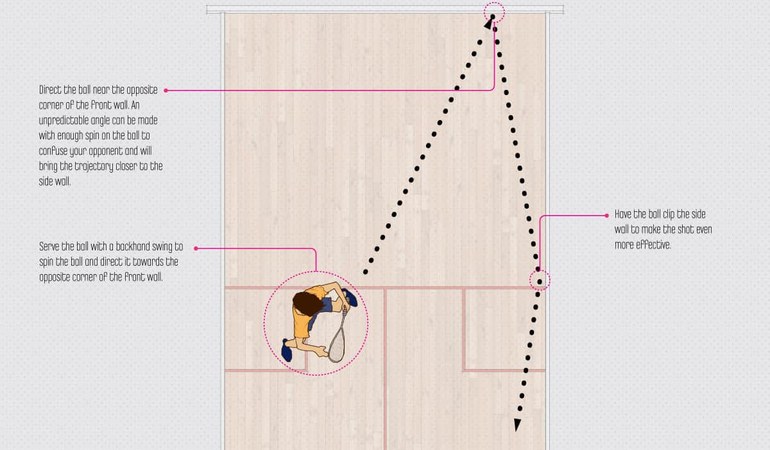
Once the rally is in play, a classic strategy is to keep the ball on the left-hander's backhand side as much as possible. For a lefty, the backhand side is the right wall of the court, the right side from your perspective, which is the opposite of a right-hander's backhand.
Many left-handed players have strong forehands, but their backhand, in comparison, is often not as imposing. By prolonging rallies on that backhand side, you make them play more shots out of their slightly weaker zone. This can draw weaker returns for you to attack, and it reduces their chances to wind up their powerful forehand.
Playing down the wall is a common tactic, and against lefties that wall should be the right wall from your perspective, which corresponds to their backhand side. Hitting deep straight drives or high lobs along that side can force a lefty to respond defensively with their backhand. By contrast, attacking the left side of the court, the lefty's forehand side, is riskier unless you have a clear opening.
A serve from the left box angling toward the opponent's backhand corner starts the rally on your terms, and a tight straight shot on the lefty's backhand side is a staple pattern to control play. Keeping the ball in these areas limits the left-hander's use of their forehand and helps you dictate the rally.
Expect More Crosscourt Angles
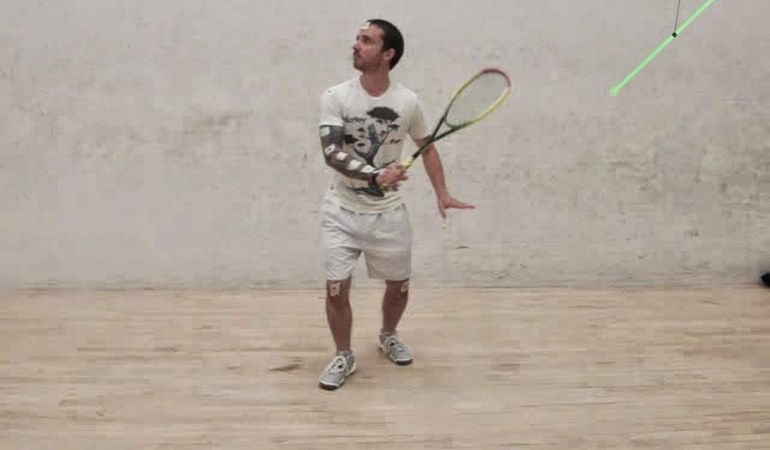
Be prepared to encounter unfamiliar angles when playing a left-hander. Left-handed players naturally hit certain shots from the opposite side of the court than right-handers do, which can feel like a mirror image of the usual patterns. For example, a lefty's forehand from the back left corner can produce a crosscourt that flies across to the opposite side of the court at a tricky angle.
One common scenario: you think you have hit a great deep shot to a left-hander's back corner, expecting a straight defensive return, when they surprise you with a sharp crosscourt instead. These angled replies from their forehand can catch you off guard simply because you are not used to that shot coming from that side of the court.
To counter this, anticipation and positioning are key. Assume a lefty might fire a crosscourt, even from positions where a right-hander would normally play a straight shot. On the T, avoid shading too far toward their straight-drive side. Do not overcommit your position expecting a straight down-the-line ball, or you may leave yourself vulnerable to a sudden crosscourt flick.
Give yourself a bit more space to cover the opposite side. This does not mean abandoning the T, but rather staying balanced and alert. If that crosscourt comes, you will have a shorter distance to move and a better chance to volley or at least retrieve it before it dies in the back. Expect left-handers to use more crosscourts overall, and by anticipating those mirrored angles, you can react in time and turn their angle into a routine defensive retrieve.
Limit Their Volley Opportunities
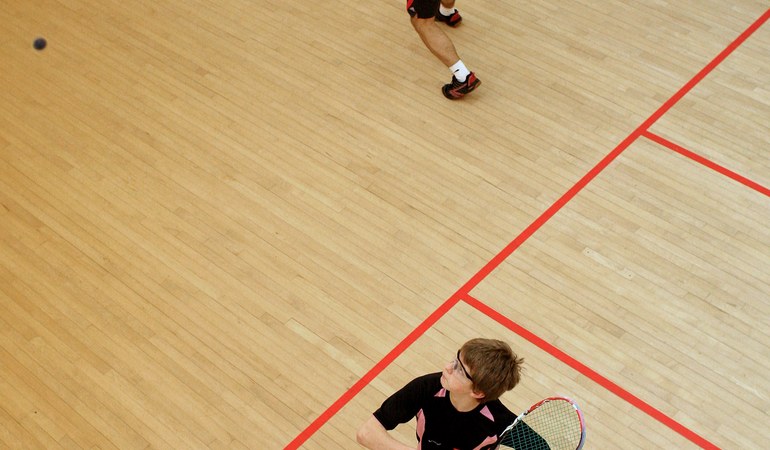
Left-handed players are often very attacking and love to volley, especially on their forehand side. Many lefties play a fast-paced game, looking to cut the ball off and redirect it aggressively. To avoid getting overwhelmed by a lefty who volleys at every chance, focus on denying them easy volley chances. This comes down to the height, depth, and width of your shots.
First, hit a good length. Any loose shot that sits around mid-court is an invitation for your opponent to step up and volley. Keep these principles in mind:
- Drive the ball deep enough to push the left-hander off the T and into the back corners.
- When hitting straight down the walls, keep the ball tight to the side wall so it is hard to intercept.
- When hitting crosscourt, make sure it is either low and fast with enough width, or high and slow beyond their reach.
- Avoid medium-paced, mid-height shots that hang in the middle, which a keen volleyer will pounce on.
One effective approach is to mix your heights: alternate between very low drives and high lobs. Low, skimming drives that stay tight to the wall leave little room for a volley swing. High lobs or lifts give the lefty time but are difficult to volley accurately when the ball is above their shoulder.
By varying high and low, you break their rhythm and frustrate their volley-happy mindset. The goal is to make the left-hander play the ball off the back wall or after the bounce more often, putting you in control of the pace. When lefties cannot volley freely, they cannot attack on their own terms, which helps you impose your style of play.
Don't Get Stuck in Crosscourt Exchanges
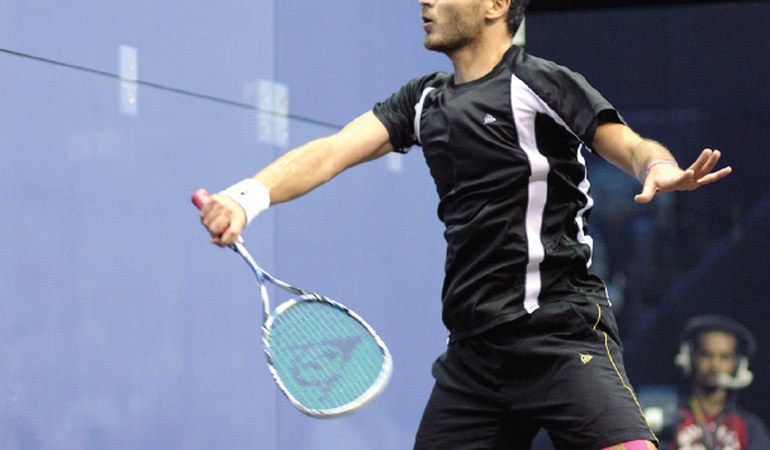
When a right-hander faces a left-hander, a common pattern is for both players to hit a lot of crosscourt shots, each trying to probe the other's backhand. This can devolve into a crosscourt-to-crosscourt rally: you hit to their backhand, they reply crosscourt to your backhand, and so on.
While targeting the backhand is smart, be careful not to fall into an endless crosscourt battle. Left-handers are often very adept at firing accurate crosscourt drives with the perfect width, and they relish a quick-paced exchange of crosscourts. Engaging in a shooting war of crosscourts can play into the lefty's strengths if they thrive on that pattern.
Instead, know when to break the pattern. If you realize rally after rally is just crosscourt trading, consider switching to a different play to regain control:
- Play a straight, soft drive down the wall to reset the rally rather than hitting yet another crosscourt from the back.
- Aim a tight length to the deep backhand corner, their weaker retrieving side, to stop the merry-go-round of crosscourts.
- Vary the trajectory with a high defensive lob straight down the line to take the pace off.
The key is to avoid predictability. If you keep cracking crosscourts every time, eventually one will be slightly loose and the lefty will pounce on it early, volleying or slamming a winner. Mix in the occasional volley drop or change of direction when you have an opportunity, using caution with risky shots.
By diversifying your responses, you stop feeding the left-hander's preferred rally and create openings for yourself. Target the lefty backhand consistently, but do not be robotic: inject some variety to avoid giving your opponent a steady diet of the same shot.
Watch Out for Front-Court Deception
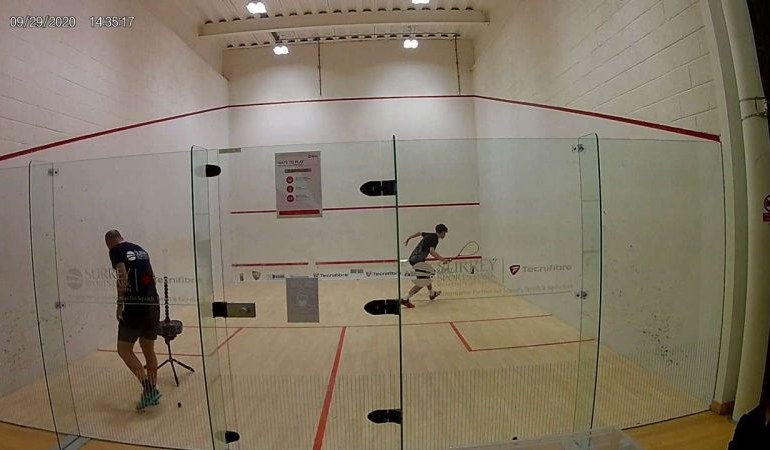
Another area where many left-handers excel is in the front court, especially the left front corner, the lefty's forehand corner. Left-handed players often have a knack for deception here, using their dominant forehand swing to hold and wrong-foot opponents.
In that front left area, a good lefty might approach the ball with an open racket and a big backswing, making it hard to read whether they will play a drop, a drive, or a trickle boast. They can pause to hold the swing and then suddenly snap a low hard crosscourt at the last moment, catching you moving the wrong way. Amr Shabana, one of the great left-handed shot-makers, was known for a forehand hold and flick that could send an opponent one way while the ball went the other.
To handle this, maintain discipline with your movement and positioning when the lefty is attacking in the front. Stay balanced on the T, with your weight centered and ready to move in any direction. Avoid committing too early to one side when you see that big wind-up.
Watch the ball on the racket and be ready for a fast flick crosscourt in particular. Lefties often love to hold the drop shot and then bang it crosscourt to your opposite front corner as you step up. Recognizing this pattern can save you a lot of points; you might delay your split-step for a fraction of a second until you are sure where the ball is going.
The best cure is prevention: limit how often the left-hander gets easy chances at the front. Avoid sending weak boasts or loose balls into that front left zone where they can show off their deception. If you are forced to the front, consider playing a high defensive shot such as a lob straight back rather than a low boast, to buy time and not expose yourself. The main point is awareness: a skilled left-hander can be very crafty in the front court, so give them as few free opportunities as possible.
Adapt Your Positioning and Mindset
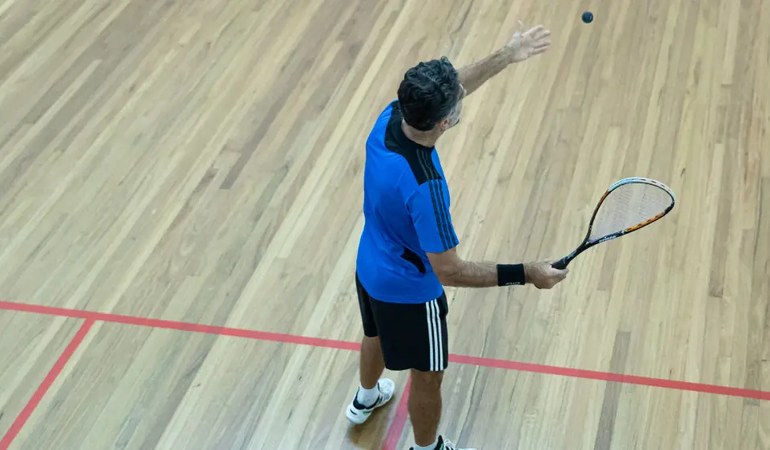
Facing a left-hander may require a few mindset adjustments along with the physical tactics. One adjustment is positioning: since lefties use mirror angles, you might stand slightly differently at the T than you would against a right-handed opponent.
A left-hander's crosscourt from their backhand, the right side of the court, will come across to your backhand side, while their crosscourt from the forehand, the left side, comes across to your forehand side. In practical terms, you may find it useful to read those angles early and stay balanced on the T rather than leaning toward only the straight ball, so you can cover both the crosscourt and the straight drive. It is a subtle balance that you will develop with experience.
Stay patient and focused. It is easy to get flustered by a few unusual shots or by a lefty's streak of points if you are not used to it. Instead of changing your whole game, remember that all the fundamental principles of squash still apply: length, width, and pressure. You are simply applying them in a slightly adjusted way, focusing length on the other side.
Stick to your game plan of targeting weaknesses and minimizing their strengths. If a tactic is not working, maybe the lefty's backhand is strong that day, be prepared to adapt and try another approach, but do not abandon the overall strategy without cause. Sometimes a bit more execution accuracy is needed rather than a new game plan.
If you know you will face a left-hander in a league or tournament, practice with a lefty if you have the chance, or simulate left-handed angles with a coach or partner. The more you see those mirror-image shots, the more comfortable you become. Even practicing serves from the left box and having a partner return as a left-hander can help groove the patterns. With the right preparation and the tactics above, you can step on court ready rather than uneasy when you see a left-hander on the other side.
Key Tactical Takeaways
- Serve from the left box to target the left-hander's backhand on the return. This avoids feeding their dangerous forehand early in the rally.
- Pin them to the backhand side, the right wall for the lefty, during rallies. Prolong exchanges there to limit their attacking options.
- Anticipate more crosscourts. Lefties use crosscourt shots frequently, so do not drift off the T expecting only straight drives. Be ready to cover the opposite front and back corners.
- Vary your shots to deny volleys. Hit deep and tight or high and slow, nothing in between. Make the lefty play off the back wall rather than picking off mid-court volleys on the forehand.
- Avoid endless crosscourt trades. If rallies turn into crosscourt-to-crosscourt, break the pattern with a straight length or a cautious drop to reset the rally. Do not let the lefty get comfortable exchanging fast crosscourt drives.
- Beware the front-left corner. A left-hander's forehand in the front can be very deceptive. Stay balanced, do not lunge early, and try not to feed them easy opportunities there.
Conclusion
Playing against a left-hander in squash offers a unique twist on the game, but it is not an insurmountable challenge. By adjusting your serve placement, rally strategy, and court positioning, you can neutralize many of a lefty's advantages and even turn the tables.
Keep the pressure on their backhand, stay alert for those mirror angle shots, and play your own game with confidence. Many players enjoy the fresh test that a left-handed opponent provides, since it forces you to think a bit more and sharpen your tactics. With the tips above, you will be well-equipped the next time you find yourself up against a southpaw on court.