
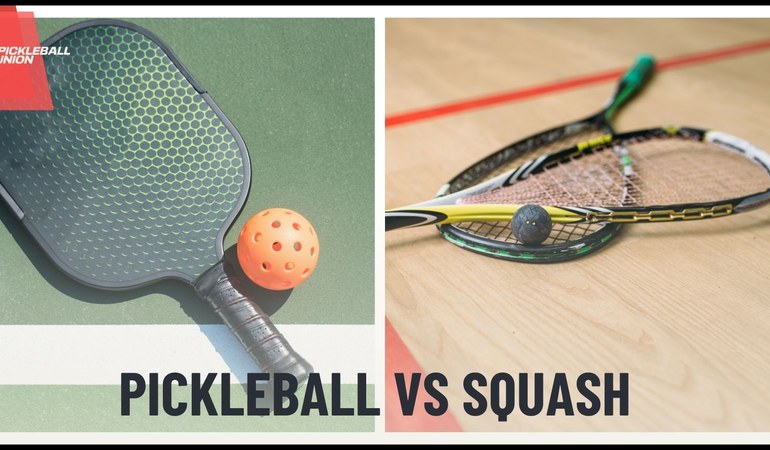
Squash and pickleball are both racket sports that involve hitting a ball for points, but they differ greatly in court design, equipment, rules, and style of play. Squash is played indoors in a small enclosed court with four walls, while pickleball is played on a flat court (often outdoors) with a net similar to tennis.
This guide compares the two sports on key aspects: rules, fitness benefits, popularity, gear, cost, and accessibility, to help a newcomer decide which game suits them best.
| Dimension | Squash | Pickleball |
|---|---|---|
| Court | Enclosed four-wall court, about 32 by 21 feet | Open court, 20 by 44 feet, divided by a low net |
| Setting | Indoors | Indoors or outdoors |
| Ball | Small hollow rubber ball, about 40 mm | Lightweight perforated plastic ball |
| Implement | Strung racket | Solid, non-strung paddle |
| Intensity | High; roughly 750 to 800 calories per hour | Moderate; roughly 350 to 400 calories per hour |
| Learning curve | Steeper | Easier for beginners |
| Olympic status | Debuts at the 2028 Los Angeles Games | Not currently an Olympic sport |
Rules of Play
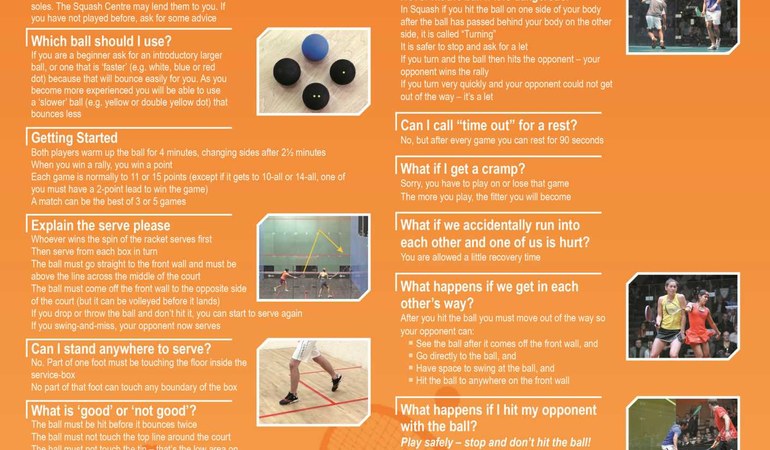
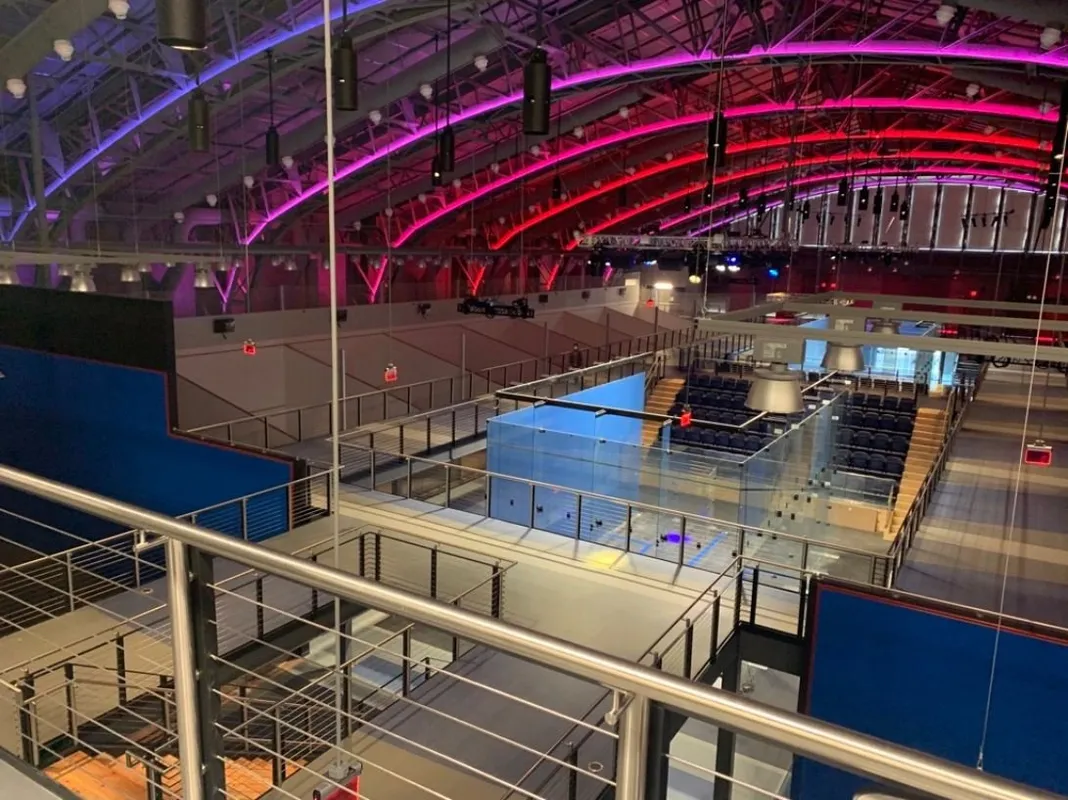
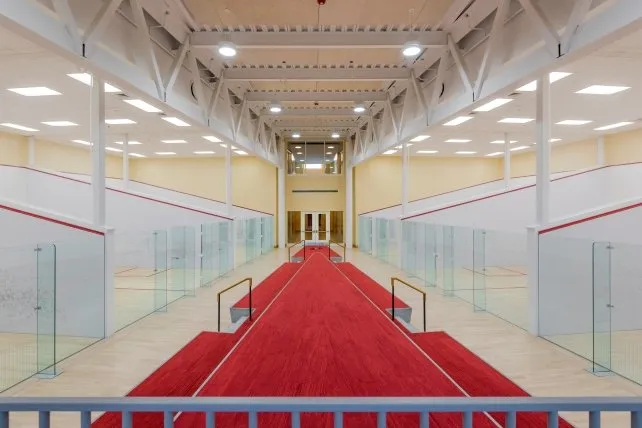
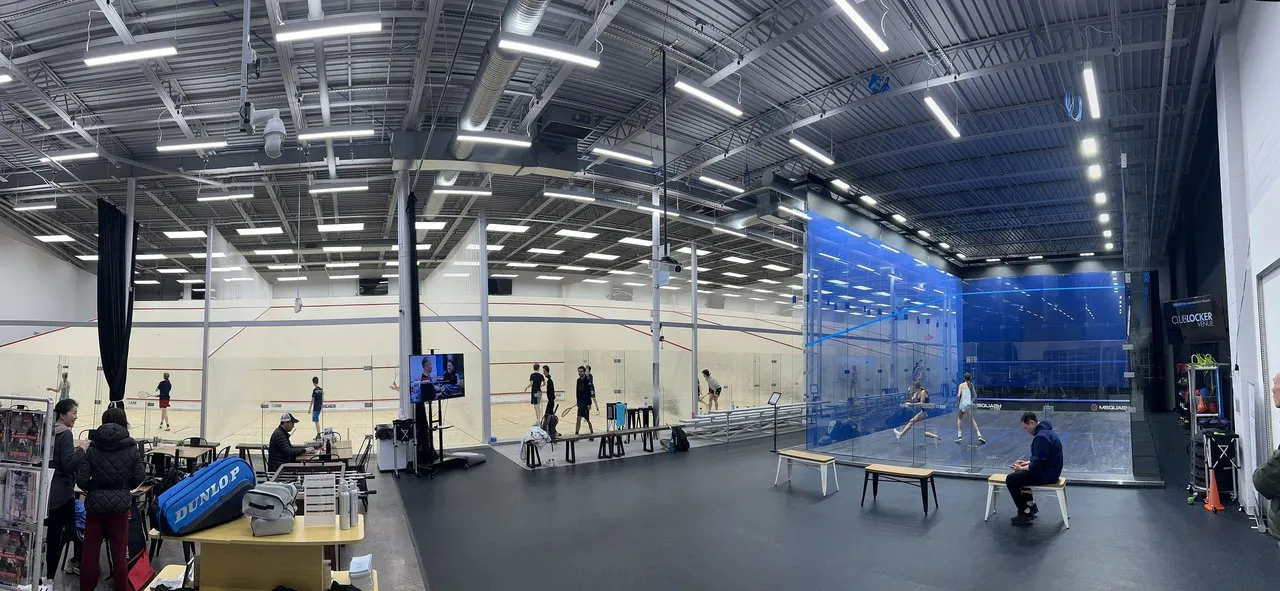
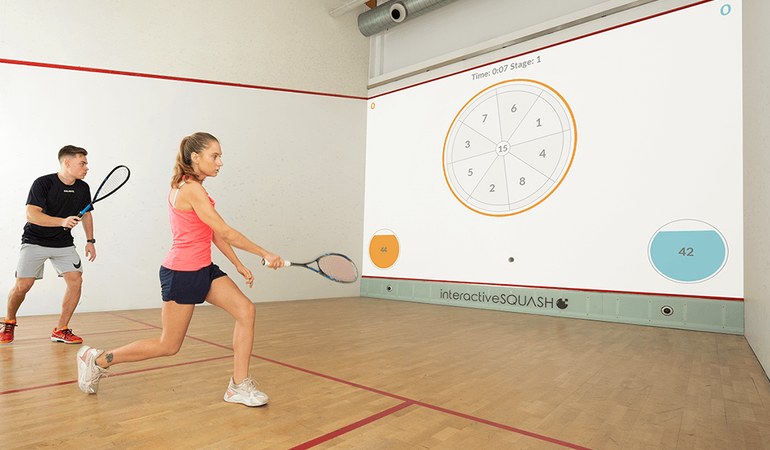
Squash: Two players face off in a narrow, enclosed court (approximately 32 by 21 feet) with the front wall bearing the main target. Play begins with a serve: the server stands in one of two service boxes and strikes the ball so it hits the front wall above the service line and below the out line, then lands in the back of the court.
After the serve, players alternate hitting the ball against the front wall. The ball may hit the side or back walls during a rally, but it must not hit above the out lines or below the tin (a lower boundary line set at 19 inches). Players must return the ball before it bounces twice on the floor; if a player fails to hit a good return, the opponent wins the rally.
Squash uses point-a-rally scoring (PARS): every rally earns a point for one of the players. Games are typically played to 11 points (win by 2 points), and matches are best-of-5 games. This means points are earned on every serve, whether the server wins or loses the rally.
Pickleball: The game is played on a 20-by-44-foot court (the same dimensions as doubles badminton) divided by a low net (36 inches high at the sides, 34 inches at center). It usually features two teams of one or two players (singles or doubles), with doubles being most common. Each rally starts with an underhand serve from behind the baseline, hit diagonally into the opponent's service court.
A few rules shape the rally:
- Two-bounce rule: after the serve, the ball must bounce once on each side before either team can volley it (hit it out of the air). This prevents the serving side from rushing the net immediately.
- The kitchen: a 7-foot non-volley zone on each side near the net, where volleying is not allowed.
- Scoring: traditionally only the serving team can score (side-out scoring), and standard games go to 11 points (win by 2). Some leagues now use rally scoring, where a point is won on every rally regardless of who served, often running to 15 or 21.
Once rallies begin, players hit the lightweight perforated plastic ball back and forth, aiming it over the net but within the opponent's court lines. For the full history and rules, see pickleball on Wikipedia.
Both games have additional rules (let calls for obstruction in squash, fault rules in pickleball, and others), but the above covers the basics. Squash rallies involve continuous alternating shots to the front wall in an enclosed court, with one bounce allowed, while pickleball rallies are played over a net on a flat court with a two-bounce rule and a non-volley zone.
Fitness and Health Benefits
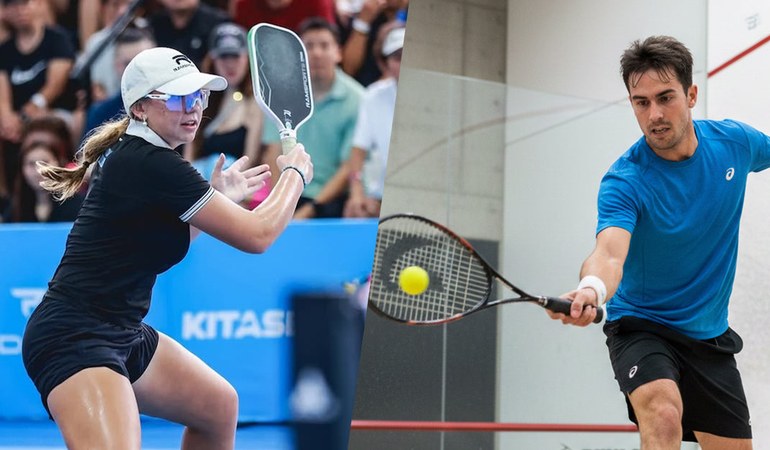
Both squash and pickleball provide good exercise, but they differ in intensity and impact. Squash is a high-speed, high-intensity workout. Players sprint, lunge, and react to fast-moving balls in a small space, which can burn roughly 750 to 800 calories per hour for a 65 kg player.
One ranking rated squash the top sport for fitness because of its intense bursts of running and quick direction changes. It builds cardiovascular endurance, agility, leg strength, and flexibility. Because the ball comes off the walls unpredictably, players must be constantly on the move, which can significantly elevate heart rate and calorie burn.
Pickleball is a moderate-intensity game. Its court is larger and open, and the perforated ball travels slower than a squash ball, so rallies tend to be longer but less frantic. An active pickleball player may burn around 350 to 400 calories per hour (for the same 65 kg weight), roughly half of an intense squash session.
Pickleball still offers good cardio and improves reflexes and balance, but it is easier on the body. One study noted it provides a solid workout without the physical intensity of tennis, making it suitable for older adults or those seeking a low-impact exercise. Both sports engage upper and lower body muscles: squash requires powerful leg pushes and quick swings, while pickleball emphasizes arm motion and lateral movement.
All racket sports have health benefits. A major study reported that people who regularly played racket sports (such as tennis, squash, badminton, or pickleball) were 47% less likely to die of any cause and 56% less likely to die of heart disease, compared to inactive people. This suggests both sports can help longevity through cardiovascular fitness, strength, and coordination. Squash offers a steeper workout, while pickleball offers steady, moderate exercise that can be sustained longer and is gentler on joints.
Global and Regional Popularity
Squash: Squash has a long history and a fairly wide global footprint. It is played in over 185 countries, with an estimated 20 million players worldwide, and the World Squash Federation includes well over 115 national associations. Traditional strongholds include the United Kingdom, Egypt (which produces many world champions), Pakistan, Australia, Malaysia, and parts of Europe and North America.
In recent years, squash has been growing in the United States: one report showed a 66% increase in U.S. participation since 2010, reaching about 1.7 million players. Squash is also featured in international competitions (Commonwealth Games, Asian Games) and will debut at the 2028 Los Angeles Olympics, reflecting its global recognition. Courts remain relatively scarce, though: one analysis found only about 13,500 squash courts worldwide as of 2022, a decline from past decades. In many places, squash is primarily a club-based activity.
Pickleball: Pickleball is a much newer sport (invented in 1965 on Bainbridge Island, Washington) and has grown quickly, especially in North America. It has been the fastest-growing sport in the U.S. for several years running; in 2024 an estimated 19.8 million Americans were playing it (up nearly 46% from 2023). This growth has spanned all age groups, with strong interest among young adults and a surge among seniors as well.
The International Pickleball Federation (created in 2023) counts 77 member countries. Beyond the U.S., pickleball is catching on in Canada, Europe (Spain, the UK), and parts of Asia. It has become popular in India's big cities, Mumbai and Bengaluru, where players of all ages, from children to seniors, have embraced it.
A recent Apple Heart study even showed pickleball workouts were more common than tennis among its users for the first time in 2023, indicating how it is surpassing other racket sports in participation. Pickleball is still not an Olympic sport (it was not added to the 2028 LA roster), whereas squash is. Squash has a long-established global presence but a more niche community, while pickleball is rapidly growing from its North American base into a widely played international activity.
Required Equipment
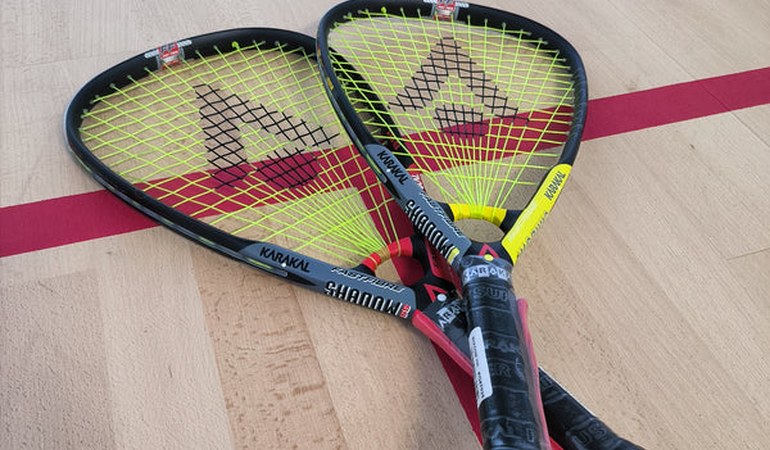
Squash: You need a squash racket (smaller and lighter than a tennis racket) and a squash ball (a small, hollow rubber ball about 40 mm in diameter). The essentials:
- Racket: entry-level around $30 to $100, with high-end professional rackets several hundred dollars.
- Balls: inexpensive at $2 to $4 each, often bought in two- or four-packs.
- Indoor shoes: important for the stop-start movement and quick direction changes ($40 to $120, non-marking soles).
- Protective eyewear: strongly recommended in most clubs and tournaments, about $10 to $30.
Other than these, basic athletic attire suffices.
Pickleball: You need a pickleball paddle (solid, non-strung) and a pickleball (a lightweight perforated plastic ball). The essentials:
- Paddle: beginner models run about $20 to $50, while higher-end paddles may cost $80 or more.
- Balls: a pack of 3 to 6 balls costs around $5 to $10.
- Shoes (optional): court or tennis shoes can enhance stability ($40 to $100), though many players use regular athletic shoes.
- Court access: dedicated courts or converted tennis or badminton courts (adding 20-by-44-foot lines); suitable indoors or outdoors. A portable net system can be bought to set up your own court.
Pickleball gear is generally cheaper and simpler (paddle and balls) than squash gear, which demands specialized indoor equipment (racket, small ball, goggles) and court shoes.
Cost of Participation
Equipment costs: Basic pickleball equipment is inexpensive, with a starter paddle and balls costing around $30 to $60 total. Squash rackets and balls have a similar entry cost, but eyewear and specialty shoes add to the expense. Over time, both sports may require replacing balls or worn gear, but these costs are modest: pickleballs wear out after many hits, and squash balls lose bounce after about 20 minutes of play.
Court fees and clubs: This varies widely by location. Many community centers and parks offer pickleball courts either for free or for a nominal fee (often $0 to $10 per hour). Squash courts are usually inside private clubs or fitness centers; some charge around $10 to $30 per person per hour for open play, and many require paid memberships. As a result, casual pickleball play can be very low-cost, whereas squash often involves joining a club or paying higher court fees.
Memberships and lessons: Both sports offer lessons and leagues. Pickleball clinics and drop-in sessions are common at sports centers and may cost $10 to $20 per session. Squash coaching is often available but typically through clubs at higher rates. Squash club memberships (giving unlimited court time) can range from $20 a month for basic access to hundreds per year for upscale clubs. Pickleball club memberships are less common but do exist.
Pickleball can be very budget-friendly (low equipment cost and many free courts), while squash usually carries higher facility fees due to court scarcity. Beginners might start pickleball with minimal expense, whereas starting squash often requires investing in a racket, shoes, and club dues.
Accessibility and Learning Curve
Courts and availability: Pickleball courts are plentiful and easy to find. In the U.S. alone there are nearly 70,000 places to play, including dedicated and multi-use courts, and many tennis clubs and parks have added pickleball lines or nets. By contrast, squash courts are relatively rare globally: one analysis found only about 13,500 courts worldwide (a 62% drop since 1987). Access to squash usually means finding a private club or sports center, so beginners will generally find it much easier to find a pickleball court in their community.
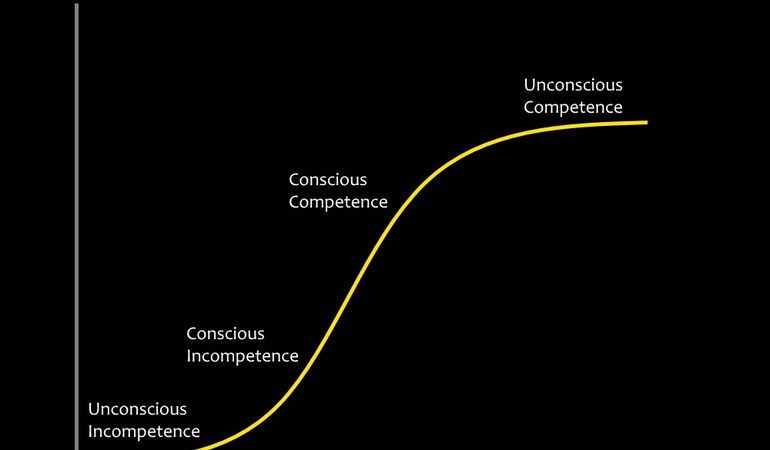
Learning curve and skill level: Pickleball is widely regarded as easier for beginners. Its rules are simple, the ball moves relatively slowly, and the solid, larger paddle is easier to control than a squash racket. The two-bounce rule and no-volley zone also slow the pace initially, giving beginners more time to react.
Squash has a steeper learning curve: the court is fast and enclosed, the ball travels quickly off the walls, and precise shot placement (drives, drops, lobs) matters. Even serving in squash has more technical requirements than the underhand pickleball serve. As one comparison noted, pickleball's larger paddles and leisurely rallies make it more approachable, whereas squash's complex tactics and intense physical demands can be challenging for new players.
Age and inclusiveness: Pickleball is notable for its broad age appeal. It was initially popular among older adults but now attracts players of all ages, including families, young adults, and children. In India's growing scene, participants range from kids to seniors. The low-impact nature and social atmosphere make it very inclusive; even people recovering from injuries or with limited mobility can often play comfortably.
Squash tends to attract a younger, more athletic demographic because of its intensity, though it still has enthusiastic junior and veteran leagues. Because pickleball is easier to learn and gentler on the body, it is often recommended as a first racket sport for children, seniors, or casual players. Squash, being more demanding, typically appeals to those seeking a serious workout or competitive challenge.
In social settings, pickleball is also very beginner-friendly. Its community culture encourages new players, and it is easy to join informal games. Squash communities exist but are usually centered on club members.
Which Sport is Right for You?
In choosing between squash and pickleball, consider your fitness goals, personal interests, and practical circumstances.
If you want a high-energy, competitive cardio workout and enjoy an intense one-on-one challenge, squash may be appealing, just be prepared for its fast pace and hard court environment. Squash yields greater calorie burn and quick reflex training, but it requires access to a court and a certain level of athleticism.
If you prefer a more social, lower-impact game that is easy to pick up, pickleball is likely a better fit. It has a gentler learning curve, a welcoming community, and wide availability, and you can often just turn up at a local park to play for free. Pickleball still provides excellent exercise and is suitable for players of nearly all ages.
Try both if you can. Many players enjoy both sports for their different benefits. Squash will test your endurance and speed, while pickleball offers fun, longer rallies and social play. By understanding their rules, demands, and accessibility, a beginner can decide which sport aligns best with their interests, fitness level, and available facilities.