
Tennis to Squash
Transferable skills
Tennis players bring strong hand-eye coordination, lateral footwork and fitness to squash. Good volleying and baseline consistency from tennis help when learning squash rallies. Quick reflexes and the agility to cover the court, both built in tennis, are especially valuable.
Major differences (rules, court, movement)
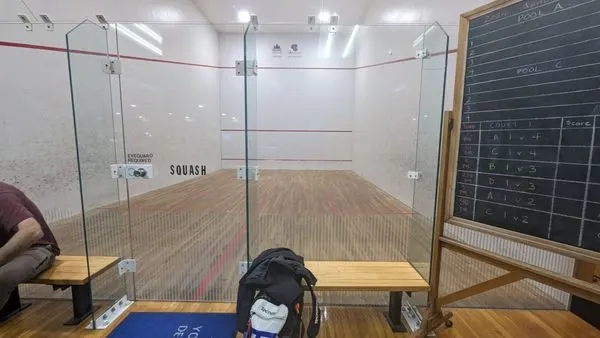
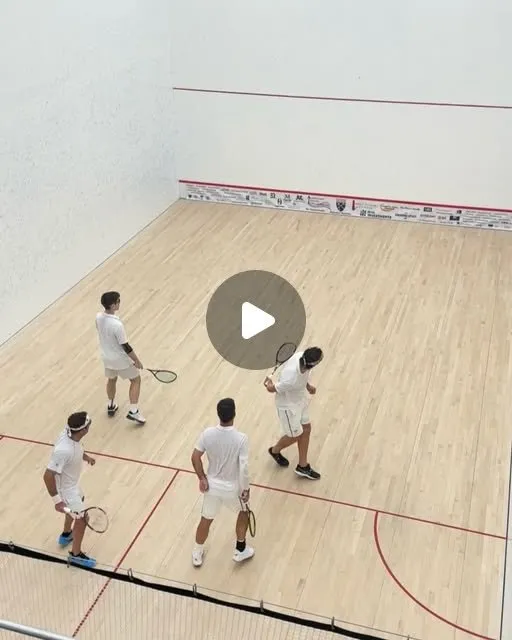
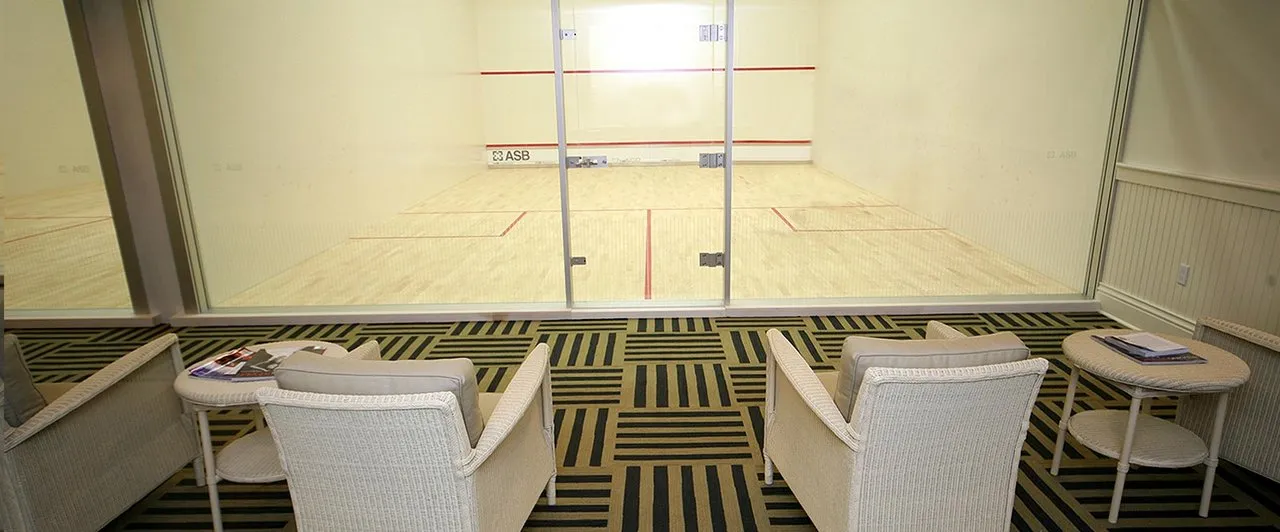
A singles squash court is much smaller and fully enclosed, whereas tennis courts are larger and open. Squash uses a small rubber ball that bounces very low and must hit the front wall before play, while tennis uses a larger, high-bouncing ball.
There is no net in squash; instead players use the front, back and side walls, and ceiling shots are out. Squash rackets are lighter and shorter than tennis rackets, and they are strung at lower tension. Scoring also differs: squash uses point-a-rally scoring, rather than tennis's games and sets.
| Feature | Tennis | Squash |
|---|---|---|
| Court | Large, open | 32 by 21 ft, fully enclosed |
| Ball | Larger, high-bouncing | Small rubber, bounces very low |
| Net / walls | Net divides the court | No net; front, back and side walls in play |
| Racket length | Longer, higher tension | 27 in maximum, lower tension |
| Scoring | Games and sets | Point-a-rally to 11, usually best of five |
Technical adjustments
- Use a more neutral continental or finger grip, since squash avoids the extreme grips common in tennis.
- Shorten your swing: squash drives come from a more compact stroke with emphasis on wrist and forearm rotation, and there is no heavy topspin in squash.
- Stay low in your stance and take small preparatory steps rather than sliding as in tennis.
- Wear non-marking squash shoes for grip.
- Practice clean follow-throughs and quick racket recovery to the ready position after each shot.
Tactical changes
Rather than playing long topspin rallies from the back, focus on controlling the T at the center of the court and moving your opponent. Aim deep straight or cross-court drives into the back corners so opponents hit weak returns you can attack.
Use the side walls, for example a drive that touches the side wall for added safety and depth. Mix in boasts, shots off the side wall to the front, to vary angles. Squash rewards precision and patience, so avoid trying to hit outright winners and serve low to the side wall (a side-wall serve or body serve is usually best). Prioritize placement and recovery over raw power.
Drills, equipment, mental
- Practice ghosting footwork drills, covering front to back and side to side, to adapt your movement.
- Drill straight drives, boasts, volley drop shots, and drives into corners to develop timing and placement.
- Use a proper squash racket, lighter in balance than a tennis racket, and non-slip shoes.
- Choose a beginner-friendly ball, such as a double-yellow-dot ball, and warm it up before play, since squash balls gain bounce with heat.
- Be patient: rallies can be longer and change pace. Focus on consistency and on warming up the ball, rallying until it bounces well, rather than going for winners.
Tennis stamina and reflexes give you an edge, so use them to sustain long rallies and move well.
Badminton to Squash
Transferable skills
Badminton players have very quick reflexes, fine hand-eye coordination and agility. Their experience with fast, explosive sprints and rapid change-of-direction footwork translates well to squash's demand for speed. Badminton also trains tactical shot placement, so a badminton player's strategic habit of moving opponents around the court is an asset in squash.
Major differences (rules, court, movement)
Badminton is played on an open rectangular court with a net set about 5 ft high; squash is on a small enclosed court with no net. Badminton uses a feather shuttlecock that decelerates quickly, not a ball; squash uses a dense rubber ball that does not slow down much and bounces low, and the ball may bounce only once before you return it.
Badminton rackets are extremely light with long, flexible shafts, whereas squash rackets are heavier and shorter. The movement patterns differ: badminton involves vertical jumps and constant net play, while squash requires continuous low lunges and recovery to the center. Badminton rallies are usually nonstop and very fast; squash rallies still move quickly but vary in tempo and can slow down for strategic play. Note also that squash balls must be warmed up for bounce, and eye protection is often worn in squash.
Technical adjustments
- You will need a firmer, fuller swing. Badminton's wristy flick strokes give way to fuller forearm and shoulder-driven swings in squash.
- Because a squash ball is denser than a shuttlecock, use more arm and body rotation for power and follow through fully.
- Badminton players often hit the shuttle downward from the air; in squash you usually hit the ball at mid-height or low, skimming it just off the floor.
- Keep the wrist firm, avoid excessive snapping, and use gentle racket-face angles to keep the ball low.
- On footwork, replace quick hops with controlled lunges and shuffle steps. Stay balanced and squat low between shots.
Tactical changes
The core tactic of moving an opponent around is similar, but squash requires more patience in building a rally. Replace badminton's relentless smash mentality with thoughtful placement. Hit straight drives and cross-courts deep until a weakness appears.
Because either player can win a point on any rally, mix offense with careful defense. Badminton players should learn to settle behind solid drives and wait for an opening rather than always attacking. Control the T and vary pace: for example, a drop shot to the front court after consecutive hard drives will force errors. Learning to play shots off the side wall, such as boasts and drops, will be a new skill.
Drills, equipment, mental
- Focus on squash-specific drills, for example volley-to-length drills (taking volleyed shots and driving them to the back corner) and front-court volley drop and drive combinations.
- Ghosting drills, moving to imaginary balls in all corners, help adapt badminton quickness into squash court coverage.
- Use a medium-weight squash racket and eye protection if desired.
- Wrist-strengthening exercises help with the heavier racket, and shadow-swinging with a squash racket builds a feel for the stroke.
- Emphasize consistency and patience. A useful habit is to warm up the ball by rallying until it bounces reliably.
Without a net to clear, aim to swing level and play tight to the side walls. Your badminton reflexes will show once you adjust to the ball's slower bounce.
Racquetball to Squash
Transferable skills
Racquetball players generally have excellent power, fast reactions and strong fitness. They are used to hard drives and rapid rallies, so their hand-eye coordination and agility serve them well in squash. Racquetball players also tend to be comfortable volleying off the front wall, which can translate to good counter-hitting in squash. The high-paced, reactive play of racquetball conditions players to move explosively and cover the court.
Major differences (rules, court, movement)
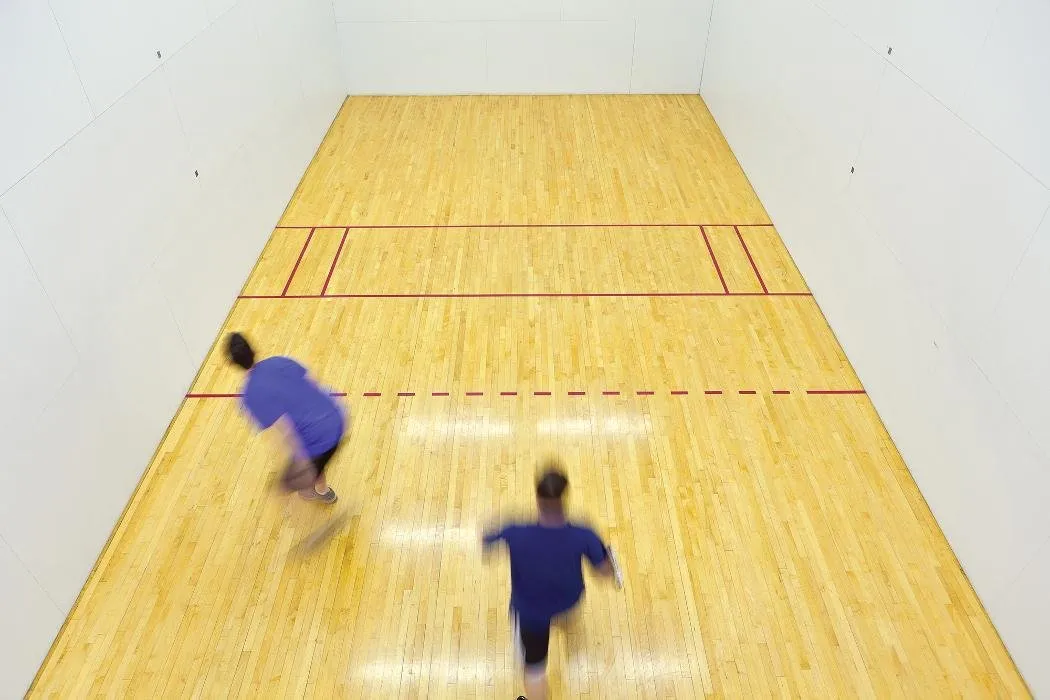
A racquetball court is much larger (40 by 20 ft, 20 ft high) and all surfaces, including the ceiling, are in play. A squash court is smaller (32 by 21 ft) with only the front, back and side walls in play, and ceiling shots are out.
Racquetballs are larger (about 2.25 in) and very bouncy, whereas squash balls are small (about 1.5 in) and low-bouncing. Racquetball rackets are short and wide (22 in maximum); squash rackets are longer and narrower and call for a lighter touch. In racquetball you may strike the ball off any wall first, but in squash every shot must hit the front wall, above the tin and below the out line, first. These rule differences mean squash rallies tend to emphasize strategy.
| Feature | Racquetball | Squash |
|---|---|---|
| Court | 40 by 20 ft, 20 ft high, ceiling in play | 32 by 21 ft, ceiling shots out |
| Ball | About 2.25 in, very bouncy | About 1.5 in, low-bouncing |
| Racket | Short and wide, 22 in maximum | Longer and narrower, lighter touch |
| First wall | Any wall | Front wall, above the tin, below the out line |
| Scoring | Side-out to 15, only server scores | Point-a-rally to 11 |
Technical adjustments
- Squash swings must be more compact than racquetball swings. Reduce your backswing and cock the wrist less; squash strokes come from the hip and forearm with the wrist relatively firm.
- You cannot play the ball off the ceiling, so drop any habit of brushing the ball upward and keep drives low and straight.
- Squash forehands and backhands are usually hit flat or with slight slice to keep the ball low, unlike racquetball's harder topspin strokes.
- Practice volleying close to the front wall and transitioning quickly into drives.
- On footwork, racquetball players often take big turns; in squash use quicker, smaller lunges and recover to the center. Stay on the balls of your feet.
Tactical changes
Squash is generally more about precision and endurance than outright power. Racquetball attackers should learn to value shot placement, aiming drives tight to the side wall and to a good length before trying an attack.
Control the T and mix in drop shots rather than blasting volleys as in racquetball. Use boasts and straight rail shots to manipulate angles. Think several shots ahead; squash is often likened to chess. A good approach is to extend rallies with straight drives until the opponent errs, rather than trying to win the point in one shot.
Drills, equipment, mental
- Work on front-wall drive drills and volley drills, for example hitting volleys deep and moving into the shot.
- Practice ghosting the four corners in sequence.
- Use a squash racket with good reach and wear eye protection (racquetball goggles are fine).
- Warm up with a livelier ball such as a single-yellow-dot before switching to a slower double-yellow-dot ball, so you can learn control first.
- Shift from aggression to strategy: focus on consistency and on making your opponent play, rather than going for outright winners. Recover to the T after each shot.
Since either player can win a point on any rally in squash, steady play is rewarded. With practice, a racquetball player's speed and power become a real weapon once paired with squash's tactical precision.