
Player Opinions: Bare Hands vs. Gloves
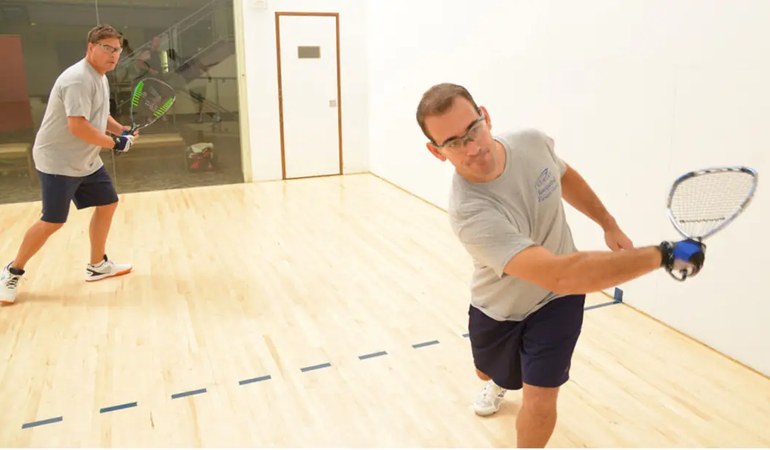
Squash players differ on whether wearing a glove helps or hinders performance. Traditionalists prefer to play bare-handed, arguing it preserves the natural feel and fine touch on the racket. They say gloves rob you of much of the touch, feel and feedback from the racket, which can affect delicate shots and control.
Many experienced players point out that virtually no top professionals use gloves, taking this as a sign that gloves are not needed for squash given proper technique and grip maintenance. In some squash circles wearing a glove even carries a mild stigma, with players joking that it marks you as a newcomer or someone who learned the game decades ago. This camp values the direct contact between hand and handle, believing it builds better grip strength and tactile sensitivity over time.
Players who do reach for a glove are often recreational players or crossover players from racquetball and other racket sports, and they point to practical benefits. For those who sweat heavily or struggle with slippery grips, a glove can provide extra traction and confidence. These players value how a glove absorbs perspiration and keeps a consistent grip on the racket.
They also cite comfort and injury prevention, since a good glove can reduce blisters and calluses by cutting friction on the skin. One club player put it simply: if the hand is sweating a lot and losing grip, put one on, and there is nothing wrong with using a glove when needed. A glove can act as a protective layer for those with sensitive skin or previous hand injuries.
The argument is that anything keeping the racket secure in the hand, especially during long matches or in hot conditions, is a reasonable aid. As one coach noted, while racquetball players commonly wear gloves, in squash it tends to be only a handful of players who do, usually for sweat management or blister prevention. These players treat the glove as optional gear, much like a wristband or a knee brace.
This comes down to personal preference shaped by playing style and outlook. One side prioritizes feel and tradition, the other prioritizes grip security and comfort. There is no formal dispute or rule fight behind it, just two settled habits that rarely meet in the middle.
Tournament Rules and Regulations

Squash's governing bodies take a permissive view of gloves. No current rule from the Professional Squash Association (PSA) or World Squash Federation (WSF) bans or even specifically mentions gloves, so players are free to wear one if they choose. Squash guides confirm that players are allowed to wear gloves during play.
Gloves are treated as part of a player's attire or equipment, similar to shoes or sweatbands, and there is no prohibition on them in tournament rulebooks. WSF rules require that any equipment worn must not be dangerous or cause unfair hindrance, but a normal sports glove falls well within acceptable equipment.
Unlike protective eyewear, which is mandatory for juniors in WSF events and recommended for all players, gloves remain entirely optional. Governing bodies focus on safety matters such as eyewear and have regulations covering clothing, but they do not treat gloves as significant enough to regulate beyond general equipment safety.
In official matches a glove is allowed as long as it introduces nothing illicit, for example a glove cannot carry a tacky substance that transfers to the ball, since that would breach rules on foreign substances. Referees and rule-makers have not treated gloves as an unfair advantage, because any edge gained, such as a better grip when sweaty, is considered fair given that the opponent is equally free to wear one.
A glove falls under the same equipment rules in play: under the WSF rules, if an object other than the racket falls from a player during a rally with no contact from the opponent, play stops and the opponent wins the rally, while a let is allowed if the object fell because of contact. So a player wearing a loose or ill-fitting glove risks a costly stoppage if it slips off mid-rally. Beyond that there are no special time allowances for gloves, and changing a soaked glove would use the normal interval between games or be handled like grabbing a towel.
Although gloves are allowed, they are rarely seen in professional competition. Top players on the PSA World Tour almost never wear them, not because of any rule but as a matter of preference. PSA tour regulations make no mention of gloves at all.
Tournament rules neither forbid nor require gloves, so their use is left to the player's discretion, with a glove treated as just another piece of equipment. Governing bodies stay neutral, concerned only that any attire, gloves included, creates no safety hazard or rule breach. Because of this hands-off approach, the question of gloves plays out informally among players and coaches rather than in rule committees.
Safety and Performance Factors
Beyond opinion and rules, the case for and against a glove in squash comes down to safety and performance. Players weigh several practical factors when deciding whether to wear one.
Potential advantages of gloves
- Improved grip in sweaty conditions: The main reason to wear a glove is to keep a secure grip when the hand would otherwise be slick with sweat. A glove's material, often leather or synthetic with a tacky texture, can improve traction on the racket handle and stop the racket slipping during fast rallies. This helps in humid conditions or for players who perspire heavily, keeping strokes consistent as the match intensifies.
- Blister and injury prevention: A glove sits between skin and grip, and by cutting friction it reduces the chance of painful blisters or calluses during long play. For players with torn skin, or beginners whose hands are not yet conditioned, a glove offers protection. Some gloves add a little wrist support through wrap-around straps, giving stability on hard swings. Padding in certain models also absorbs some vibration and shock from ball impact, which can ease strain on the hand and forearm.
- Consistent feel in extended play: As a match goes on, even a good racket grip can become slick. Gloves help with moisture management, since many are made from breathable materials that wick sweat and keep the hand relatively dry. That preserves grip and confidence, so the player worries less about the racket slipping from the hand. Some players also find a glove keeps their hands warmer on cold courts. By reducing distractions like wiping hands on the wall or changing damp grip tape, a glove can help a player stay focused.
Potential drawbacks of gloves
- Reduced tactile sensitivity: The trade-off for a drier, cushioned grip is less direct contact with the racket. Even a thin glove adds a layer between the fingers and the handle, which many players say dulls the feel for the ball. Squash rewards finesse, and small changes in grip pressure or finger position affect shot control. A glove can lessen the feel and feedback of the racket, which may interfere with fine control. Drop shots and delicate volleys can suffer if a player feels disconnected from the racket. This loss of feedback is a top reason professionals give for avoiding gloves.
- Grip and swing adjustments: Some coaches warn that a glove can encourage bad habits, such as holding the racket too tightly. The added padding can mask how firmly the hand is gripping, leading a player to squeeze harder than needed, which hurts stroke fluency and causes fatigue. A player who becomes dependent on a glove may also struggle without one, for example if the glove tears mid-match or is left at home, since the change in feel can be jarring.
- Heat, sweat buildup and slippage: Although gloves are meant to manage sweat, they become damp over time. A saturated glove can turn counterproductive, with the inner surface getting slippery or the glove sliding around the hand, which can cause the racket to slip, the very problem it was meant to fix. A glove also adds insulation, and in long matches some players feel their hand gets hotter inside one. Perforated leather and mesh panels help, but in long games a glove can still end up heavy with sweat, at which point a player may need a dry spare or has to play on with a soggy one.
- Maintenance and other concerns: Gloves bring minor costs and inconveniences. They are an extra item to carry and keep track of. Good gloves are not cheap, and frequent players can wear them out quickly, leading to ongoing expense. A used glove needs to be dried or washed, or bacteria and odor set in, a complaint familiar to racquetball players. Some squash players say gloves smell bad and need more upkeep than simply changing the overgrip on a racket. And as noted in the rules, a glove that is not well secured can slip off and cost a rally, so glove users need a good fit, often with the strap fastened tightly.
Weighing these points shows why gloves stay a niche in squash. They solve specific problems such as sweat and blisters, at the possible cost of touch and feel. For players who face those problems the benefits can outweigh the downsides, especially at club level where matches run long and conditions vary.
For elite players who want maximum precision and have conditioned their hands, a glove is usually seen as an unnecessary extra. There is no evidence that gloves improve performance for players who have no grip issue, so they work best as an aid for particular circumstances. As one analysis put it, with the right grip size, quality grip tape, and good technique, gloves are usually unnecessary.
The effect of a glove depends on the individual, and the practical approach is to test one in practice and see whether the added grip stability outweighs the loss of bare-hand feel. Many players end up dropping the glove as their grips and skills improve. In squash the margins are fine, so every player works out a slightly different answer.
Historical Context and Evolution of Glove Use
Gloves have a small place in squash history. In the 1970s and 1980s it was not unusual to see a player wearing a single glove on the racket hand. Racket technology and grips were different then: wooden or early composite rackets often came with smooth leather grips that could get slippery, and overgrip tapes were less advanced.
Long-time players recall that quite a few people played with a glove on their racket hand back then, before tacky synthetic grips became common. Gloves were a stopgap for grip problems that equipment had not yet solved. The late 1980s brought replacement grips such as the Karakal PU Super Grip, which was far tackier and more absorbent than old leather grips.
As these high-traction grips spread, players could keep a firm hold even with sweaty hands, which reduced the need for gloves. Over time, re-gripping a racket or wearing a wristband to keep sweat off the palm handled most issues, and glove use in squash declined.
The idea of a glove came partly from other sports. Racquetball and handball players have long worn gloves, and in North America racquetball players still use a glove almost universally for grip and hand protection. Many squash players who tried gloves also played racquetball or came from that background.
In the 1980s there was less specialization, with clubs often offering both squash and racquetball courts, so equipment crossover was common. As squash moved into the 1990s, leading players did not wear gloves and the practice grew rare. By the 2000s a glove on a squash court was a curiosity, usually linked either to beginners or to older players.
Design and technology evolution
The gloves themselves improved over time, largely thanks to racquetball and other sports driving the development. Early racket-sport gloves were usually plain leather, often suede or Cabretta, which gripped reasonably well but got sweaty and stiff and tended to fully cover the hand, making it hot.
Modern gloves are more advanced. HEAD, for example, makes models such as the AirFlow Tour with perforated Cabretta leather palms meant to keep the hand cool and dry while keeping grip. The palm leather is tanned to be tacky and vented with small holes, addressing both grip and sweat.
The back of the glove and the joints use stretch and mesh fabrics for elasticity and breathability, and many gloves add cushioned, breathable padding over the knuckles for impact protection, which matters more in racquetball than in squash. The result is a glove that is lighter, cooler, and more comfortable than older versions.
In appearance, older gloves were usually plain white or brown leather, while today they come in a range of colors and designs. One thing has not changed: typically only one glove is worn, on the racket hand, since the other hand needs neither grip nor protection.
The sight of a glove in professional squash remains rare, and many players still assume a gloved player is either a newcomer or more used to racquetball. Attitudes have softened a little as sport in general puts more weight on comfort and injury prevention, so players who use gloves are less likely to be teased and it is recognized as a matter of preference. The overall trend has been toward better grip technology in the racket and less reliance on gloves.
Brands and Market Dynamics
One notable point is that there are essentially no gloves made specifically for squash. As one experienced player put it, there are no gloves made or branded specifically for squash. A squash player who wants a glove is really buying a product from an adjacent sport, mainly racquetball, but also tennis, pickleball, or general fitness gloves.
The market for racket-sport gloves is driven by racquetball and handball, where glove use is mainstream, and squash is a small afterthought for those manufacturers. Major racket brands still list gloves in their squash catalogs simply because they already make them for racquetball, so a squash retailer's catalog will often show HEAD and Dunlop gloves under accessories. These are not squash-only products but the same gloves used in other sports.
The glove brands a squash player encounters are mostly racquetball names:
- HEAD offers gloves, including its Web and AirFlow Tour models, which are bought by players dealing with sweaty hands.
- Dunlop has produced gloves as well, sometimes branded for racquetball.
- Python is a specialty brand focused on racquetball and pickleball gloves, with tacky synthetic palms, and some squash players use them.
- Wilson has a racquetball glove line, and brands historically big in racquetball such as Ektelon and Prince also feature.
- Karakal, often associated with squash, is best known for its grips rather than gloves.
- Niche products such as winter gloves for outdoor racket sports are occasionally used by indoor squash players in very cold courts, though that is rare.
Because there is no squash-specific glove development, there has been no technology race or manufacturer-driven dispute around gloves in squash. Unlike rackets or balls, where new materials or ball changes prompted debate, gloves have not gone through a squash-focused overhaul.
There have been a few odd attempts, such as early concepts that tried to stick the racket to the hand using a glove and grip system, but these did not catch on, partly because they edged into gimmickry and raised questions about changing the nature of the game. A glove that excessively boosts grip through stickiness or mechanical attachment could be seen as an unnatural advantage. No specific rules were needed because such products never became widespread, and the community settled the matter informally, with pros not using them and amateurs following suit.
Sponsorship and marketing in squash largely bypass gloves. Since no top pro wears one, companies have little reason to sponsor players to showcase a glove, so you do not see leading players wearing logo-covered gloves on court, unlike racquetball champions who are often sponsored by glove makers.
In squash, glove marketing is low-key, presenting gloves as a fix for specific problems such as sweat and comfort rather than as performance enhancers endorsed by champions. Brands like HEAD and Python rely on word of mouth among club players and the occasional coach recommendation. Online, a player asking about gloves often gets a wave of replies, many of them discouraging, and that peer feedback sways new players more than advertising does. The traditional view that a serious squash player does not need a glove has effectively kept demand low.
Glove makers have still adapted their messaging for squash players, emphasizing features like better grip for control and a dry hand for comfort, which match the practical reasons someone tries a glove. HEAD's product descriptions, for example, highlight keeping the hand cool and dry for grip and swing feel, addressing the concerns squash players raise.
A modern high-end glove can feel minimal, almost like a second skin with extra tack when new, which some players find confidence-inspiring. Some club players report that once they got past any teasing, using a glove consistently improved their confidence and let them play more freely without fear of losing the racket.
Market dynamics show that gloves are a niche in squash but not disappearing. Retailers still stock them in small sections and often label them as multi-sport gloves, and the crossover with other sports keeps them in production. As pickleball grows, where some older players also wear a glove, the general idea of using a glove in racket and paddle sports is becoming more normal at recreational level, which may carry over slightly into squash, especially for older players or those in hot climates. Even so, squash leans on tradition, and the bare-hand grip is part of that.
In the end, the question of squash gloves is less about formal disputes or rule changes and more about culture and personal choice. There is no rule against wearing a glove, and it can help in certain situations, yet the choice still carries some symbolic weight about how a player approaches the game.
Most competitive players will keep playing without gloves, citing feel and the example of the champions, while a minority will quietly use them for the comfort and consistency they provide. The practical takeaway for a new player asking whether to wear a glove is that it is allowed and it is up to you. Whether gloved or bare-handed, what matters most is how you handle the racket and read the game.