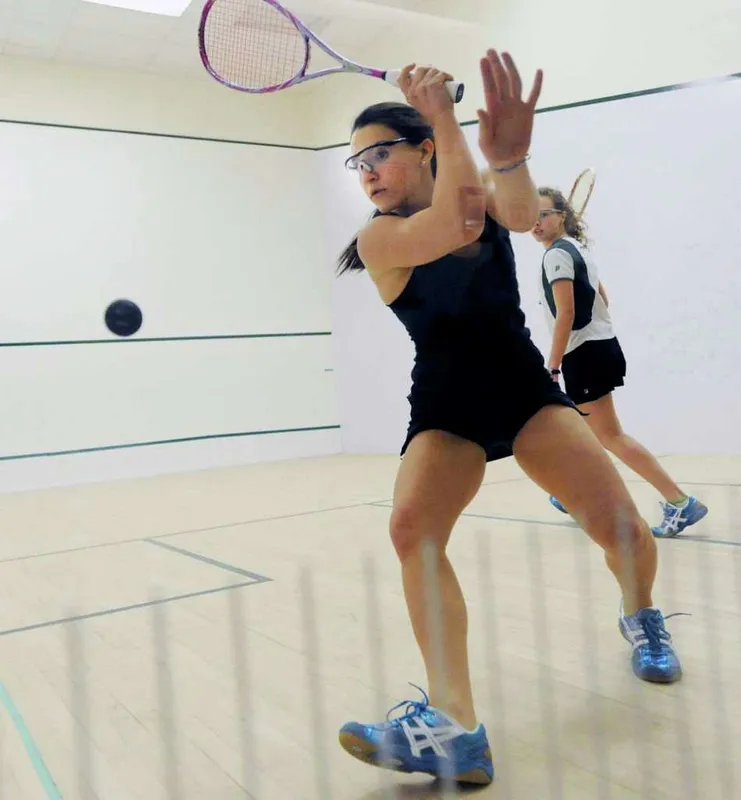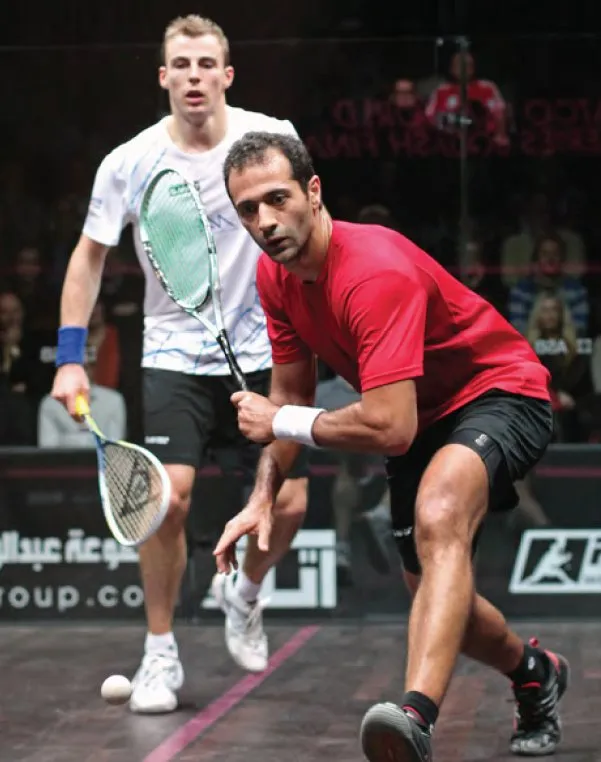
Buying a squash racket for your child, especially if you have no squash experience, can be confusing. The right racket can make learning squash fun and safe, while the wrong one might hold your child back. Below we outline the mistakes parents often make when choosing a squash racket for kids aged 10 to 15, why each one matters, and what to do instead. The goal is to help you choose a racket that fits your child's needs without pushing specific brands or gimmicks, just solid, practical guidance.
Mistake 1: Choosing the Wrong Racket Size or Weight
One common mistake is picking a racket that is too heavy or too large for the child. A frame that is too heavy or too long can force awkward, late swings and slow a young player's progress. If a racket is oversized for a kid's strength, they may struggle to swing properly. A racket that is too heavy often leads to poor swing mechanics and even potential wrist or elbow strain in juniors. Your child might tire quickly or use bad form to compensate for the weight.
What to do instead: Choose a racket size and weight appropriate for your child's age and strength. Junior squash rackets are designed to be shorter and lighter for a reason, they are easier for kids to maneuver. Kids around 10 to 13 years old typically do well with a medium-light racket, roughly 125 to 140 grams, which offers control while still being manageable. This lighter weight lets them swing freely without strain, helping them focus on correct technique rather than wrestling with a heavy racket. Make sure the racket's length suits their height too: junior models, often 23 to 25 inches long, are ideal for most kids under about 5 feet tall, as they are scaled for shorter arms. As your child grows and gains strength, you can gradually move up towards standard adult rackets (27-inch length, usually 140 to 155 grams) when they are ready, more on that later. The aim is to start with a racket your child can comfortably handle from day one.
Mistake 2: Ignoring the Grip Size
Another mistake is overlooking the grip size of the racket handle. The grip size refers to the thickness and circumference of the handle, and it has a big impact on your child's comfort and control. Too large a grip and the child will not be able to hold the racket securely; too small and they might overgrip or strain their hand. The wrong grip size can hinder proper technique, as the child may compensate with a tense or awkward hold, reducing control of the racket face. It can also lead to blisters or wrist stress if they are constantly gripping too hard due to a poor fit.
What to do instead: Size the grip to your child's hand. A simple test is to have your child grip the racket and check the gap between their fingers and palm. You should be able to fit about one finger's width in that space, which indicates a comfortable grip size. If there is no gap (fingers fully wrap around touching the palm), the grip is too small; if the gap is much bigger than a finger's width, the grip may be too large. As a general guide, many older kids around ages 10 to 13 use grip sizes in the range of roughly 3.5 to 3.625 inches in circumference (often labeled as size 1 to 2 in European grip sizing). This is a moderate junior grip that fits most pre-teens' hands. Always check the racket's grip before buying. If it is not a comfortable fit, you can often adjust it by adding or removing an overgrip, but it is best to start with a handle size that feels natural for your child.
Mistake 3: Overlooking String Tension and Material
Many parents focus only on the racket frame and forget about the strings, but strings play a big role in how the racket performs. Two aspects to consider are the string tension (how tightly the strings are strung) and the string material. If you ignore these, your child's racket might be hard to play with. A racket strung at a very high tension will have a small sweet spot and require more effort to hit the ball with power. Beginners and junior players who are still developing consistency will actually get less power and more frustration from strings that are too tight. On the other hand, strings that are extremely loose or worn out can feel dead or make the ball hard to control. String material matters too: some high-performance strings, like stiff polyester monofilament, are designed for advanced players and can feel harsh, offering little bounce for a weaker swing. If a child's racket is factory-strung with a cheap, overly stiff string, it can make the game less forgiving for them.
What to do instead: Make sure the string setup is beginner-friendly. This usually means a slightly lower string tension and a softer string material for more bounce. For young players, a multifilament or synthetic gut string, which is more elastic, strung at a moderate tension around 20 to 24 pounds, works well. This tension range creates a larger sweet spot and launches the ball more easily, so your child can hit good length with less effort, and it also cushions the arm to reduce strain. Avoid very stiff strings, like polyester tennis strings, or cranking the tension up high, at least until your child is older and generating a lot of their own power. If you are unsure, ask a squash coach or a sports shop to check the racket's strings. They can often re-string a junior racket with a more suitable tension if the factory settings are not ideal. Properly tensioned strings will give your child a more forgiving, powerful hit, which builds their confidence and enjoyment on court.
Mistake 4: Buying a Full-Sized Adult Racket Too Soon
It can be tempting to buy a full-size adult racket for your child, thinking they will grow into it and you will not have to buy another later. This is a common mistake. Adult squash rackets, standard 27-inch length with heavier frames and larger grips, are designed for adult strength and reach. Giving a 10 or 11 year old an adult racket too early can hinder their development. An adult racket's extra length and weight can upset a junior's timing and technique. It often leads to late, lumbering swings that rely on the shoulder rather than the wrist, forming bad habits that are hard to fix. An oversized racket can be too much racket for a kid, making the game harder than it needs to be and even risking injury.
Why it matters: Junior squash rackets were created to solve this exact issue. A good junior racket shaves down the weight and length to match a child's proportions. Junior models might weigh around 120 to 150 grams and be 23 to 25 inches long, with a thinner grip, all of which help young players swing comfortably and learn proper form. A smaller racket lets kids prepare their swings earlier and use their wrists properly, instead of muscling the ball with poor technique. The excess weight and length of an adult racket will encourage wrong swings now, which become hard habits later. A junior frame promotes better early technique and easier preparation.
What to do instead: If your child is under roughly 12 years old or is still a beginner, stick with a junior-specific racket that fits them now. Let them use it until they have developed a full swing and grown a bit in size and strength. There is no magic age to switch to an adult racket, but look for signs of readiness. If your child, perhaps around 12 to 14 years old, is consistently hitting the ball cleanly, can sustain longer rallies without getting tired, and their swing is starting to use the whole racket fluidly, they may be ready to transition to a full-size racket. Often, by the time they are a young teenager, or about 5 feet tall, a light adult racket can be appropriate, provided it is not too heavy for them. When you do move up, consider an intermediate step: some adult rackets come in extra light weights that are great for juniors moving up. Make the switch when your child is physically and technically prepared, not simply based on age or the assumption that bigger is better. Until then, the right junior racket will actually help them progress faster.
Mistake 5: Prioritizing Price Over Comfort and Playability
Budget is always a consideration, but a mistake is choosing a racket solely because it is the cheapest, or sometimes the most expensive, without regard for how it plays. On the low end, very cheap squash rackets, often around 25 to 30 US dollars or less, tend to be made of basic aluminum alloy. While these budget rackets are durable and can survive knocks and scrapes, they are usually much heavier and less finely balanced than a proper composite racket. A heavy, clunky racket can frustrate a junior. The weight makes it hard to swing and the feel off the strings is dull, meaning the ball does not spring off as lively. This can discourage your child or slow their skill development. Spending a lot on a high-end professional model can also backfire if the racket is too stiff or demanding for a beginner, since many advanced rackets assume the player can generate plenty of power on their own. Either way, focusing only on price or marketing features, rather than your child's comfort, is a mistake.
What to do instead: Aim for a quality, kid-appropriate racket within your budget, not just the cheapest. You usually do not need the latest top-tier model, which can run well over 150 to 200 US dollars, and you also want to avoid the very cheap toy racket. Look for a lightweight graphite or composite frame in a junior model, as these materials offer a good balance of lightness and durability. Graphite-composite rackets provide much better feel and performance for a young player compared to the super-cheap aluminum ones, and they are not excessively heavy. If you are worried about a graphite racket getting damaged, remember that with a bit of care (teach your child not to smash the racket on walls or the floor) they hold up well, and the improvement in playability is worth it. There are also ways to save money without sacrificing quality: look at last year's models or reputable second-hand options. Sports retailers and squash clubs sometimes sell older model rackets at a discount once new models come out, and these older ones can be perfectly fine for juniors. The point is to get a racket that is comfortable for your child to use. Invest in the correct fit and feel rather than the flashiest or the cheapest option. Choosing the right junior racket is less about clever marketing tech and more about matching the racket's basics to your child's needs. A well-fitted racket, even if it costs a bit more than the cheapest option, will make the game more enjoyable and help your child improve faster.
Mistake 6: Neglecting the Child's Skill Level and Development
Do not forget to consider your child's individual skill level and physical development when selecting a racket. Not all young players are the same. A 10 year old who is just starting squash needs a different racket than a 15 year old who has been playing for a couple of years. Some parents buy a racket without taking into account whether it suits the child's current ability. Getting a very advanced racket, perhaps one a high-level adult would use, for a beginner child can be counterproductive. That racket might have features like extra stiffness, a smaller head, or a head-heavy balance that assume a high skill level and strength the child has not developed yet. On the other hand, sticking too long with an overly junior racket once your kid has improved can also hold them back. One size does not fit all with junior squash rackets, and a child's needs will change as they grow and improve.
What to do instead: Match the racket to your child's current stage, and be ready to adapt as they develop. When starting out, prioritize rackets that make the game easier: lightweight frames, maybe a slightly larger head or larger sweet spot, and balanced handling that forgives off-center hits. As your child's skills progress, say they move from beginner to intermediate junior level, you can adjust their equipment accordingly, perhaps moving from an ultra-light introductory racket to a sturdier, more standard junior racket that can hit harder as they swing faster. Take your child's physical growth into account too. Kids can grow quickly between ages 10 and 15, so a racket that was perfect last year might need revisiting as they get taller and stronger. It is wise to plan periodic check-ins on the racket's fit: reassess the racket size and weight roughly every 12 to 18 months during growth spurts. This does not mean you must buy a new racket on a fixed schedule, but at least evaluate whether the current one is still appropriate. If they have gained significant strength or outgrown the racket's length, it might be time to size up. Some manufacturers offer junior progression series, from small to medium to full size, to make these transitions easier. Even without those specific products, you can create your own progression by choosing a slightly larger or heavier model as the next step. Stay attentive to your child's needs: a developing player benefits most from a racket that suits their present level. Do not be afraid to ask a junior coach or experienced player for feedback, as they can often tell if a child is ready for a different racket.
Do Not Forget Eye Protection
One piece of kit that is easy to overlook is protective eyewear. For junior players, eye guards are not optional. Under World Squash, England Squash, and US Squash rules, players under 19 must wear approved protective eyewear in competition. Even outside formal matches, eye protection is strongly recommended for kids, since a squash ball travels fast and the courts are enclosed. When buying eyewear, look for a recognized safety standard, such as ASTM F3164 in the US or BS EN 18527-2:2021 in the UK, and make sure it fits your child's face comfortably so they will actually wear it. Building the habit early keeps the game safe.
Choosing a squash racket for your child comes down to avoiding these common pitfalls and using a bit of informed common sense. Make sure the racket is appropriately light and sized for your kid, check that the grip feels comfortable, and do not ignore the strings. Opt for junior models or lighter rackets until your child is ready for full-size, and prioritize how the racket feels for your child over marketing hype or rock-bottom prices. A good approach is to visit a sports shop and have your child try a few rackets to see what weight and balance feels right, which can be very helpful for beginners. By avoiding these mistakes, you will help your young squash player start off with the right racket. The right equipment lets them focus on learning the game, building proper technique, and enjoying their time on court, which is the best way to support their squash journey.